

Make sure to subscribe to Avory Around the Desk Podcast

Big Picture
💡 Netflix attention battle is getting more intense. Labor? Inflation in 2008 was…
Happy Friday! I had a chance this week to spend some time in Philly connecting with fellow asset managers at a conference. Thanks to Wes Gray and Patrick and team for the invite. It was quite different being that it was a marine themed event. Good conversations throughout.
Now today we're covering a couple of different things. As we exit what feels more and more like an extended earnings season, one company we keep thinking about is Netflix, and what’s taking place in the battle for attention. We found some cool stats for that.
Then we'll walk through what happened in AI this week, both on the model side and on the businesses actually benefiting.
We got earnings from Snowflake, a name we don't own, and UiPath, a name we do. Both lifted on AI. From there we can zoom out to the macro as jobs hit this am, and we finish on inflation of course, because the underlying data is a lot more muted when you deconstruct it, so more data there.
Lets get into it!
[1] Entertainment battle goes beyond direct competition.
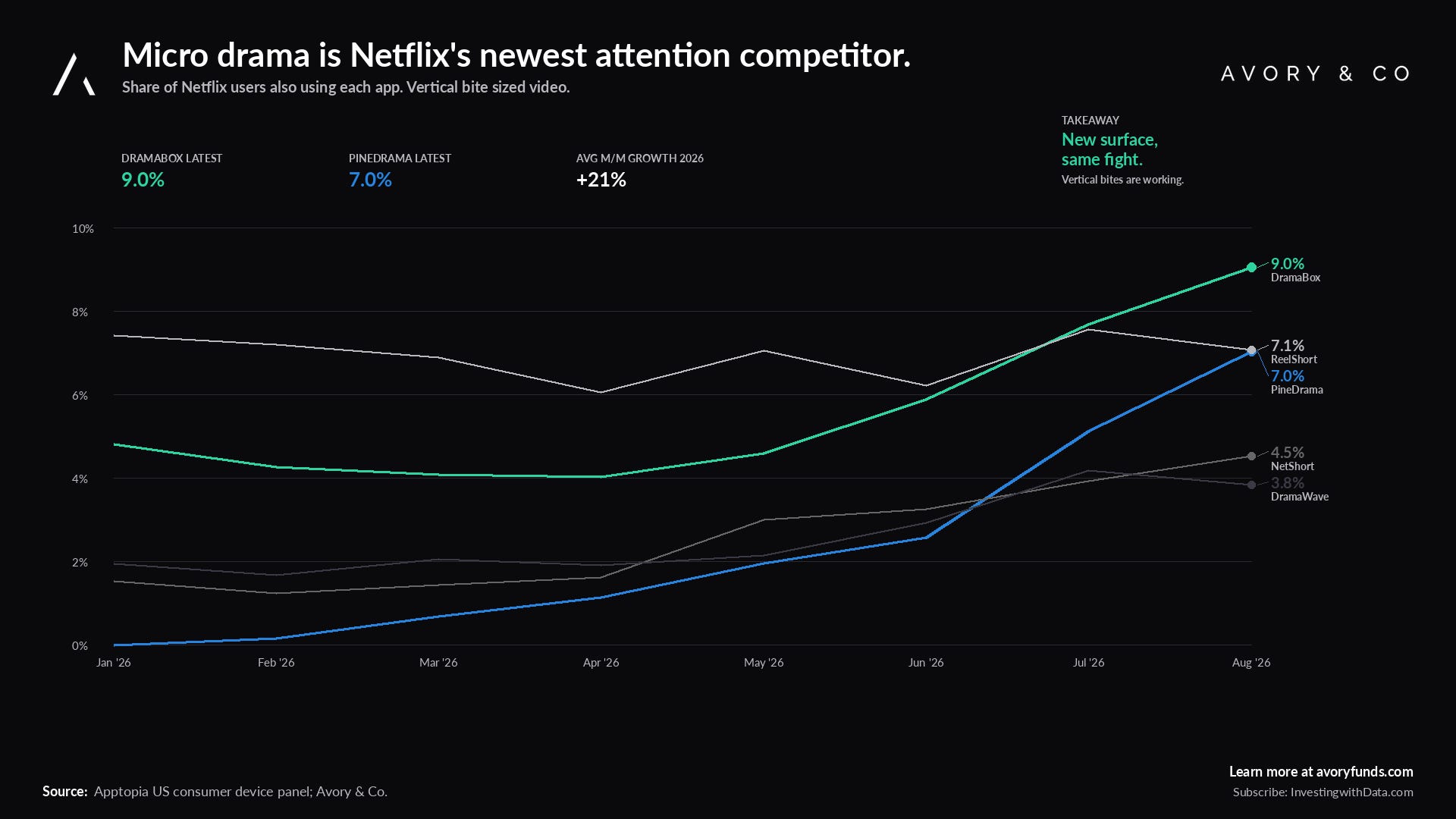
So as we mentioned, we dug into the Apptopia data to look at the battle inside entertainment, and is becoming more clear that entertainment now spans well beyond traditional media.
The newest form showing up in the mix is micro drama, which is essentially bite-sized vertical video, and you can see the overlap between Netflix users and micro drama apps starting to become meaningful.
This type of entertainment mimics the impulses we all get on things like Instagram. Shorter attention grabbing on a format that’s easier to consume regularly. You can see the rise in users using this that also use Netflix, going from less than 2% to 9% in about a year.
Something to monitor.
[2] Netflix competes with everyone.
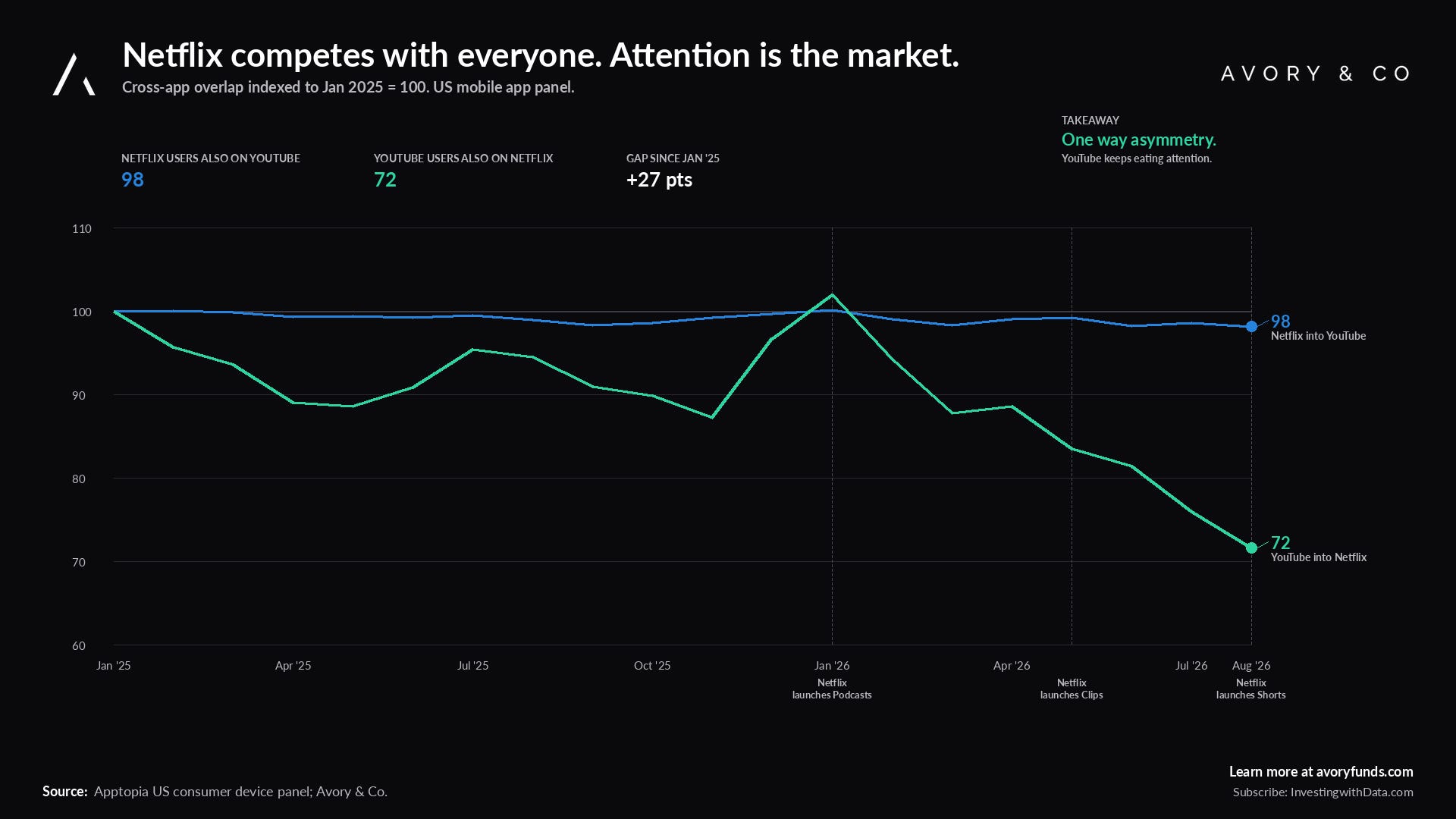
The follow-on point is that Netflix isn’t just fighting the streamers anymore.
When you look at the overlap using Apptopia data, between Netflix and YouTube, the story flips from who has the best content to who owns your attention.
Attention is the market, and it’s fragmenting all over the place. Ai will probably accelerate this trend.
The stat is 72% of YouTube users are also on Netflix but that number is falling. YouTube is becoming more of a main consumption platform for all things. Which is why Netflix is fighting back by launching podcasts and more live events.
[3] Meta Muse puts Meta in the model race. Again.
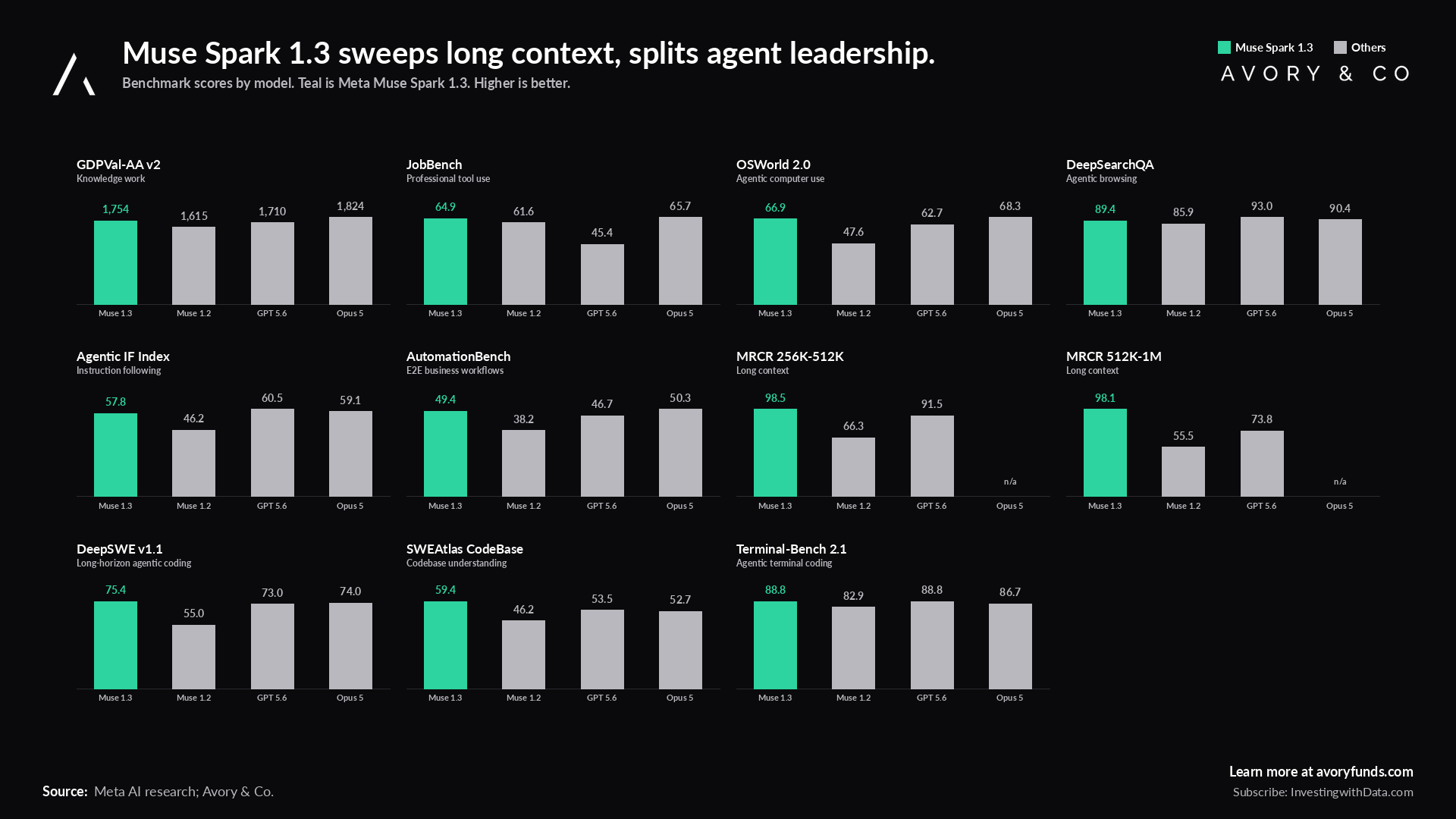
Moving over to AI, we had continued model launches this week. As we get closer to an Anthropic IPO, I think you’re going to see even more of a race to launch models.
We also saw Hugging Face get acquired by Nvidia. Not going to spend time on that specifically, but it’s another signal that you’re starting to see some consolidation and a little bit of maturity taking place in parts of this market.
The one we do want to dig into is Meta Muse. Meta launched Muse Spark 1.3 and it puts them right at the front of the line, in real competition with peers again.
The important thing here is that Meta has a real cash-flowing business that can subsidize this. If you compare that to the AI labs, it’s a much different story. So if you are the labs you should be quite worried again.
[4] And engagement is showing up for Meta.
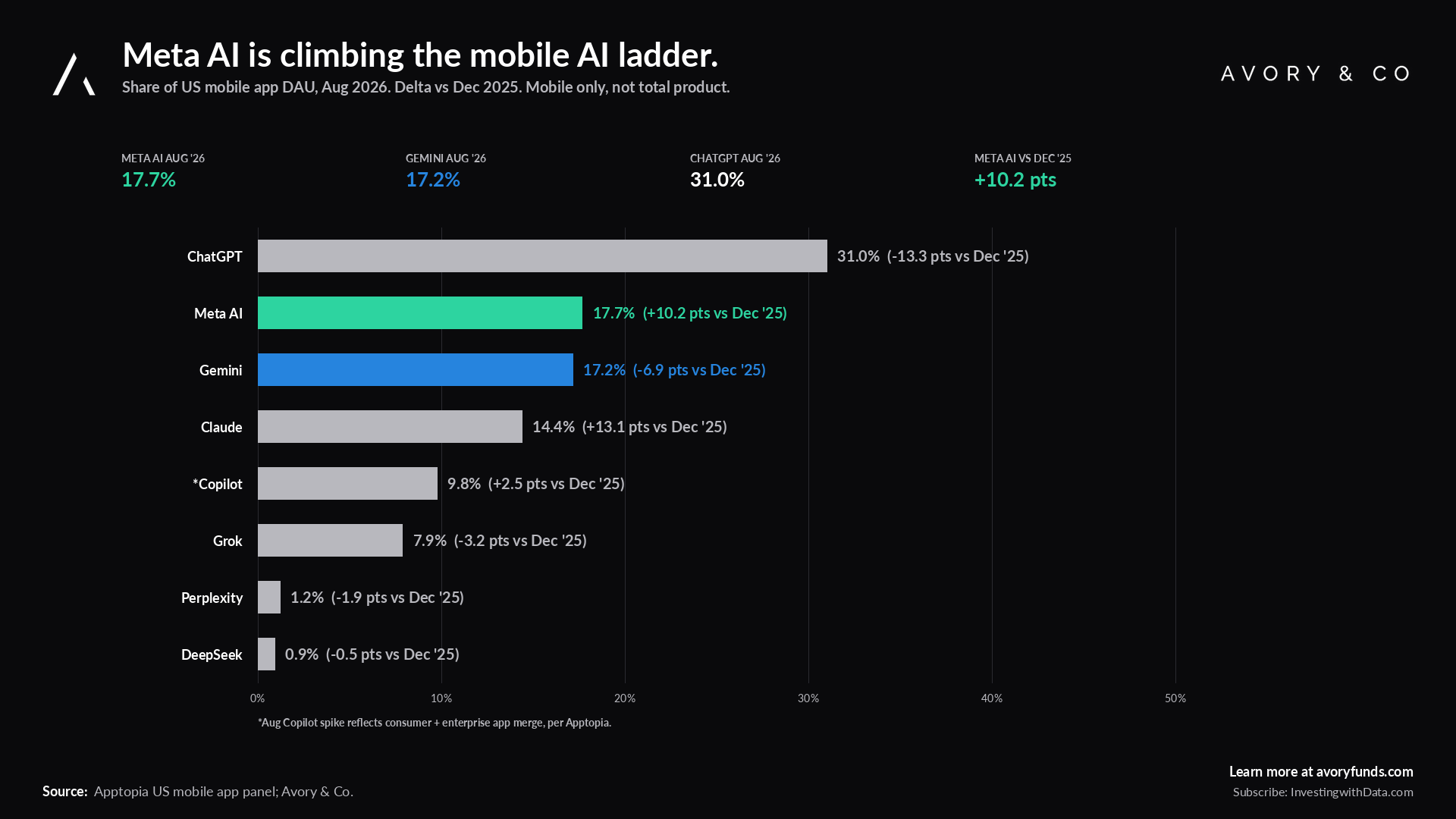
The model performance is one thing. The other thing worth considering is that Meta AI is climbing the mobile AI ladder.
Some folks aren’t going to love the exact dollar amount being spent here, but it’s showing up in advertising, it’s showing up in people using and engaging with the AI app, and the models themselves are getting more performant. Somewhat congruent with the Netflix section too. More AI = more content. More AI = more relevant content surfaced to users, and more AI = happier advertisers = more spend.
All three at once is pretty impressive.
Again this data captures Apptopia app usage. So pretty good proxy. And directionally is positive for Meta.
[5] Snowflake is a real beneficiary of the AI wave.
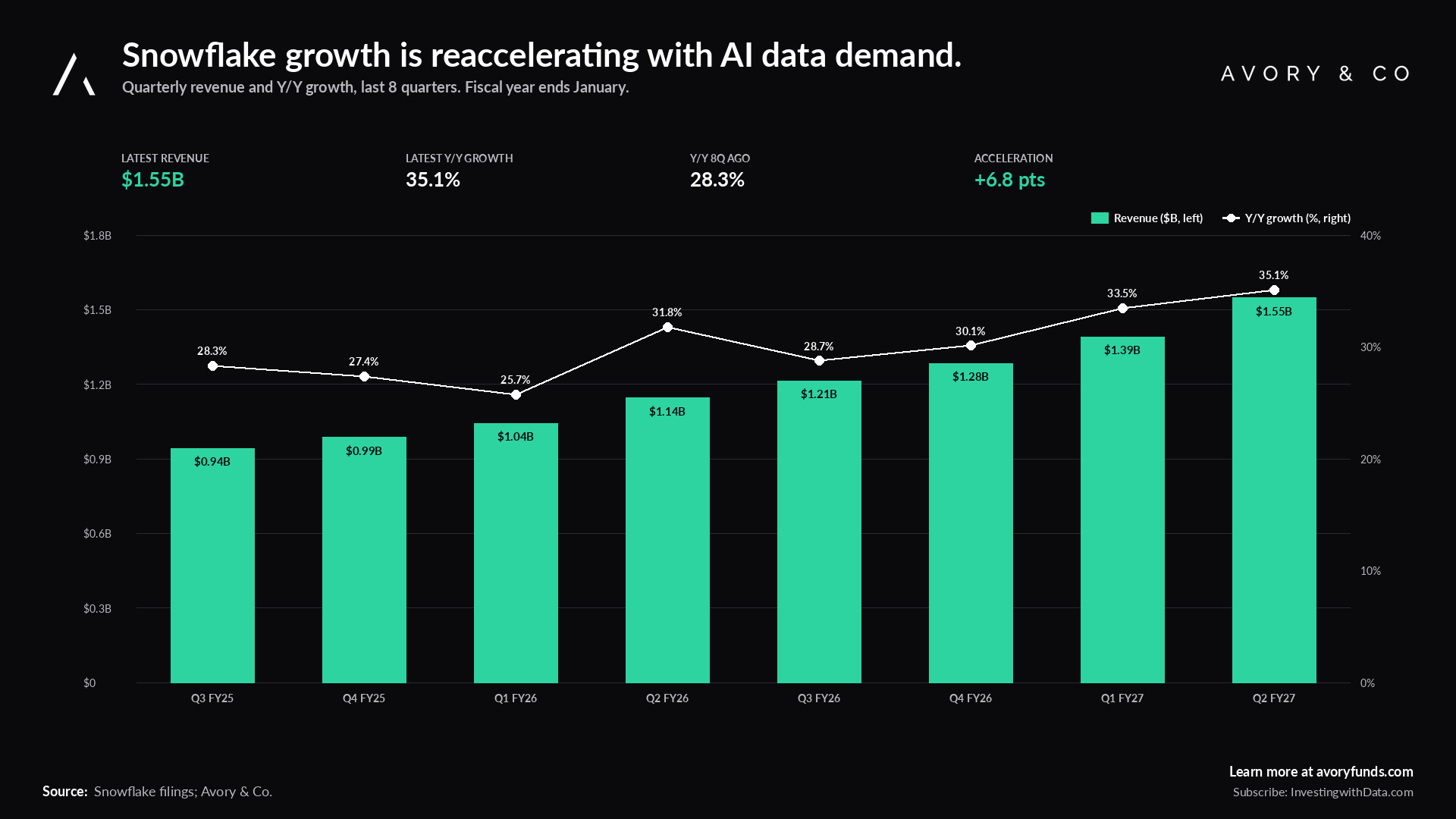
Branching slightly away from the models themselves, Snowflake reported and grew 37%. This is a company we really like and follow very closely. What we’re learning is that data is starting to find its place in the enterprise.
The ServiceNows and Salesforces of the world are keeping data on their platforms, and then Snowflake becomes a central hub for governance and data management across the enterprise.
This is so key to the defensibility for software names. Snowflake benefits from the same AI wave as rest of the ecosystem. Valuation is a little bit of a concern, but the demand they are seeing is impressive. Keep in mind it is a consumption model business already, so this isn’t ARR.
UiPath had a similar read on the print, AI orchestration finding real budget in the enterprise.
[6] But dilution is still a story.
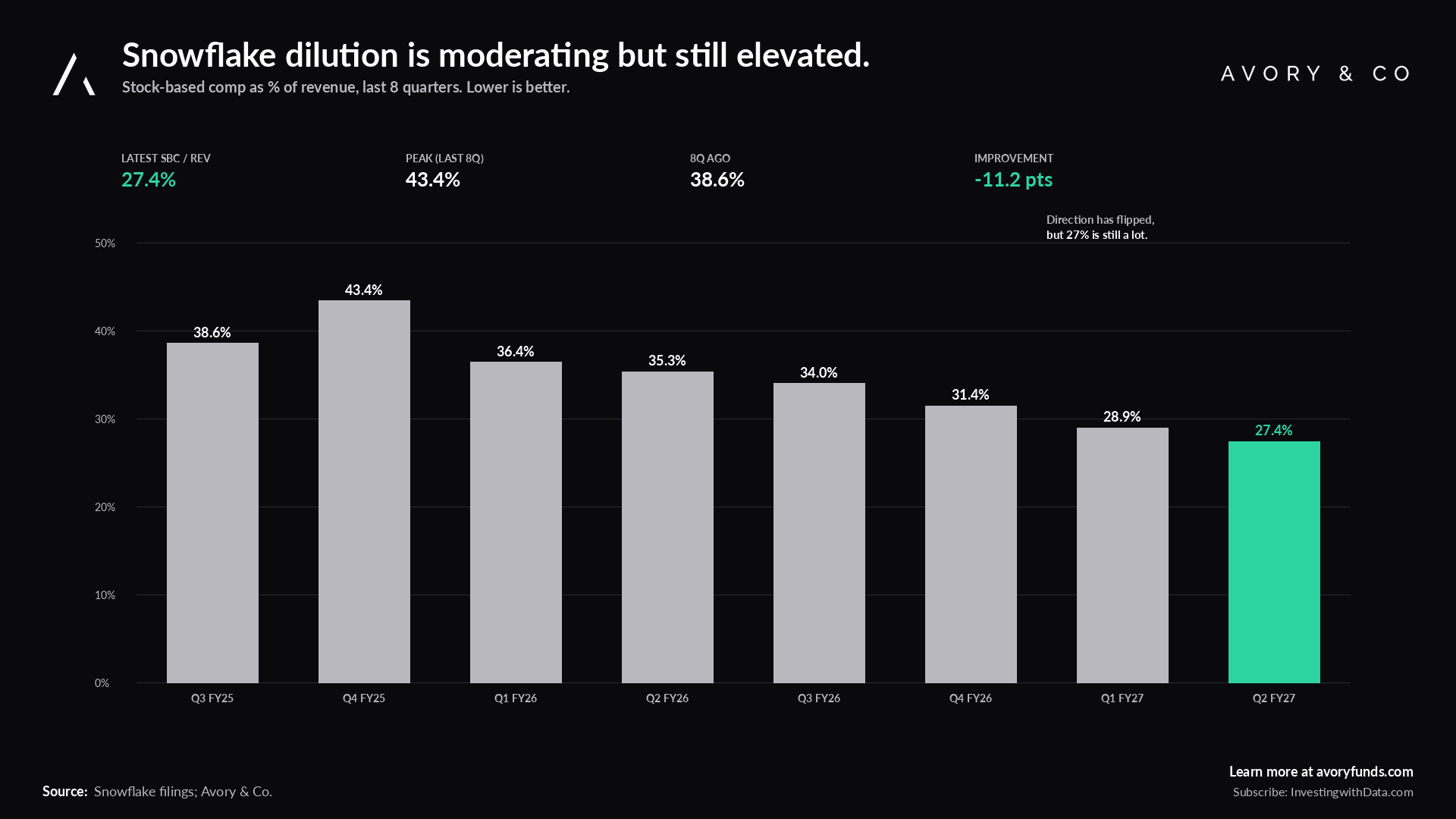
Now I have to do it. But one thing worth flagging on Snowflake is that stock based comp continues to be very elevated. They’re funding some of that growth via equity for employees, which is fine for a while and can even be efficient, but it can work against you as we’ve seen before with other names. Watch this line as time goes on.
[7] Labor is stable enough and not cracking.
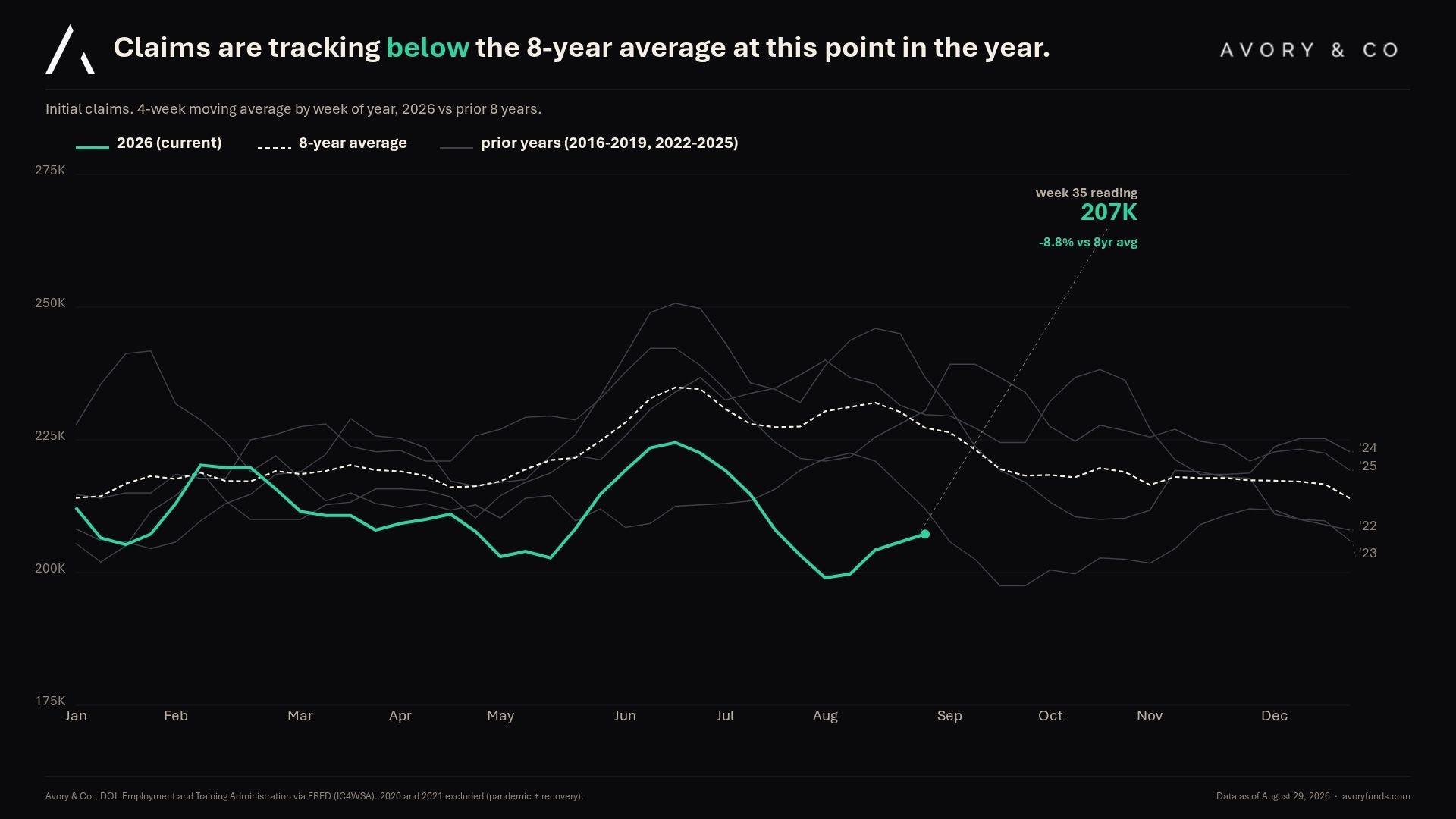
Zooming out to the macro, jobless claims continue to be modest. Running well below prior years and below historical seasonality. It’s not something we’re overly concerned about. But we also wouldn’t want to raise rates here.
What’s driving the inflationary impulses is less rate-sensitive than the market assumes at the moment, and hikes wouldn’t do all that much. In a strange way, a hike could actually push housing inflation higher. Higher rates raise landlord input costs, and in a steady economy that flows into rents.
[8] Waller signals a hold.
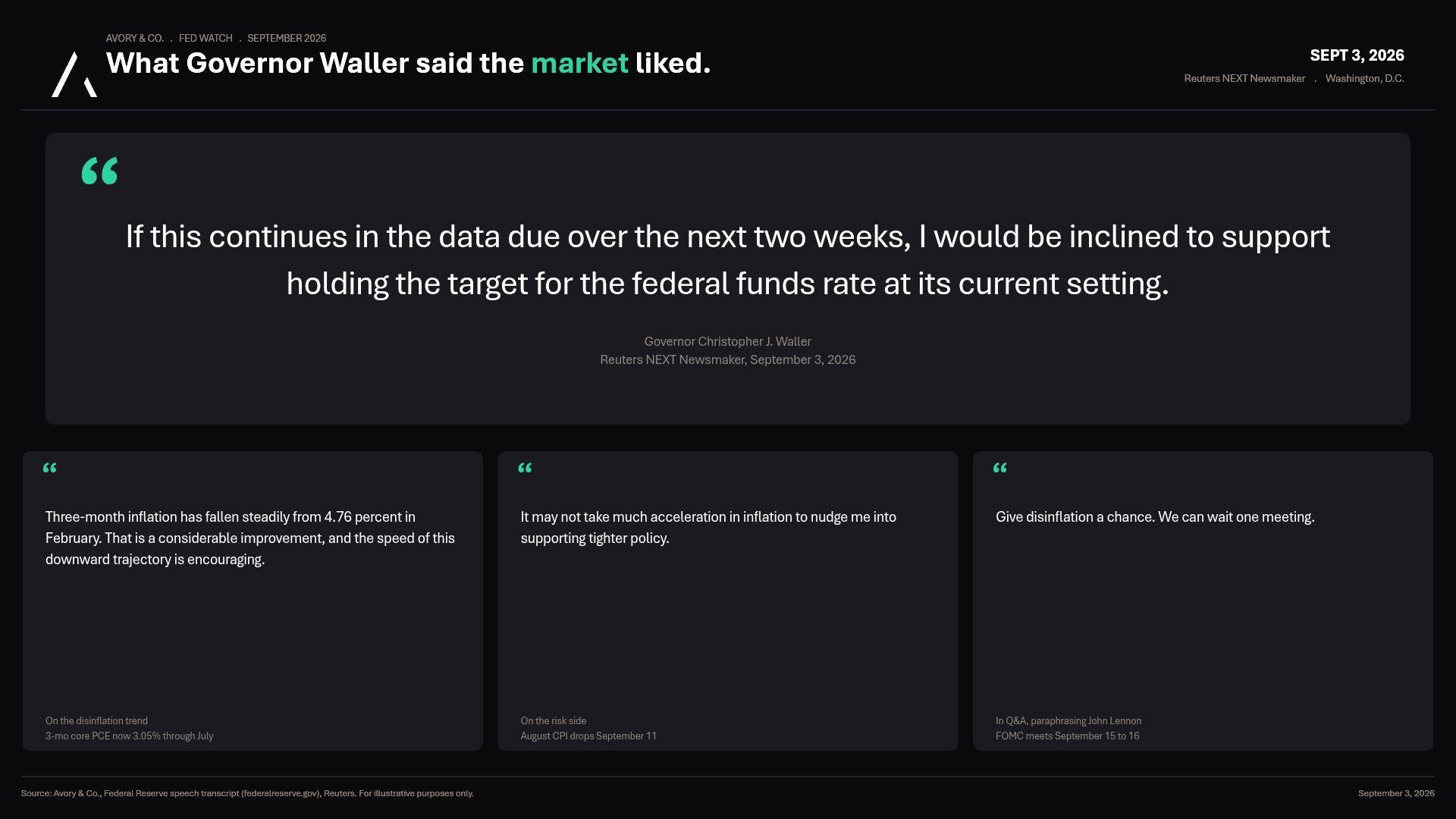
We got a Waller quote from the Fed this week, and the basic read is a desire to hold, with a willingness to move if inflation drifts against the mandate in a more meaningful way. But he flagged that the trend he sees is still favorable. Expectations for hikes in September dropped. Rose a little after the jobs report but still seesawing.
Working forward from here: no hike in October in our view, midterm elections make that a no-no unless you absolutely have to.
By December we’re close to when Chairman Warsh’s committee is going to come back with findings on how they want to manage parts of the Fed, and it’s not obvious you want to move policy right before or right after those findings are known.
So the path becomes challenging, and a lot of it is predicated on inflation staying where it is and slowly migrating in the direction we want.
We agree with a hold should it happen. Here’s why…
[9] Why we’re comfortable with a hold, shelter.
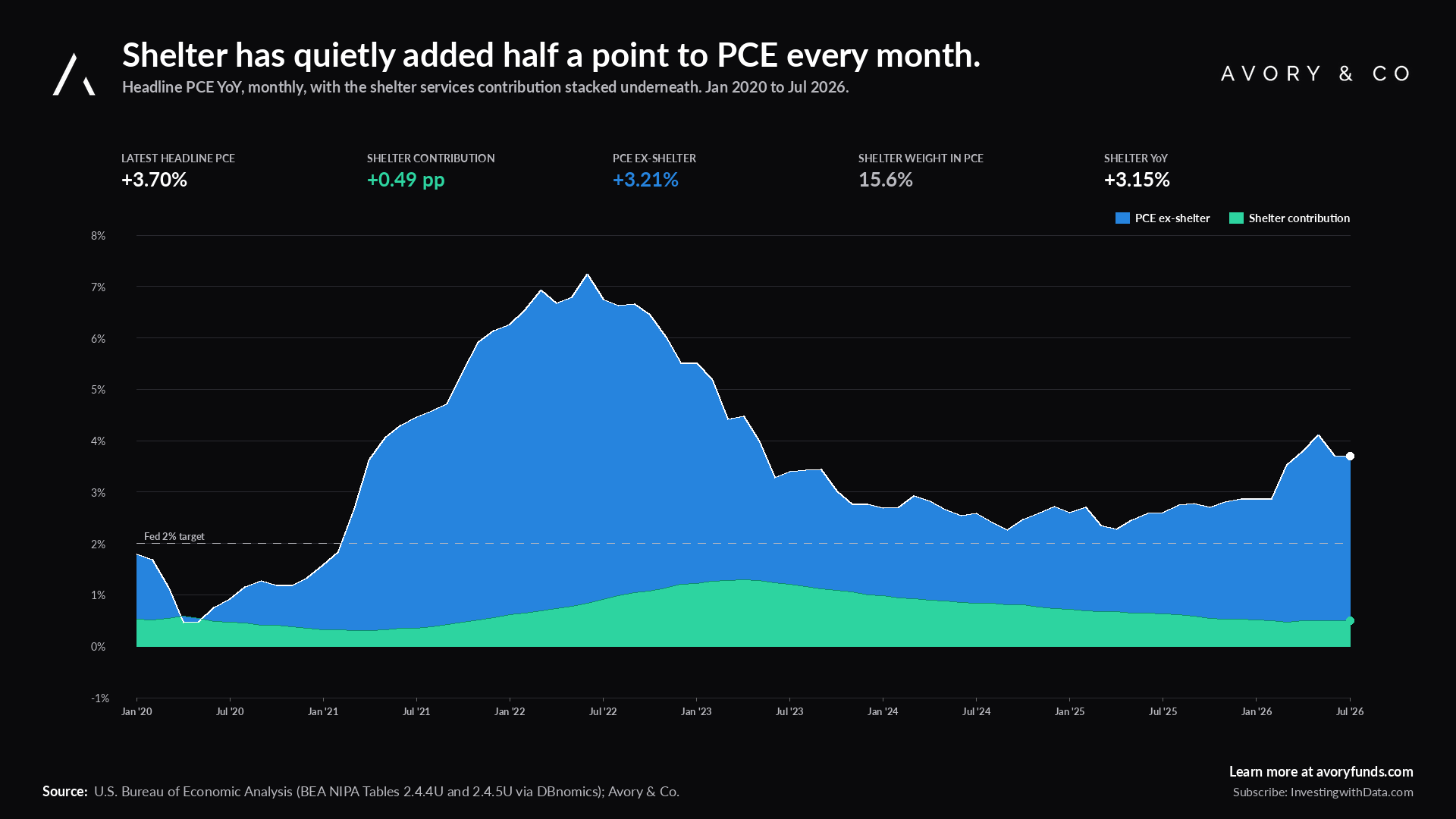
I sound like a broken record on this one, but the reason we’re comfortable with a hold is that the underlying components of inflation are a lot more muted. Shelter is doing the heavy lifting. It’s adding roughly 50 to 60 basis points to the underlying every month.
Current spot rates in housing are much closer to negative 1.5% to plus 1.5%. Net that out at zero and shelter shouldn’t be contributing anything.
Take out the energy impulses on top of that, and you quickly get into the 2.5% range on the underlying.
[10] And shelter is structurally a bad housing gauge.
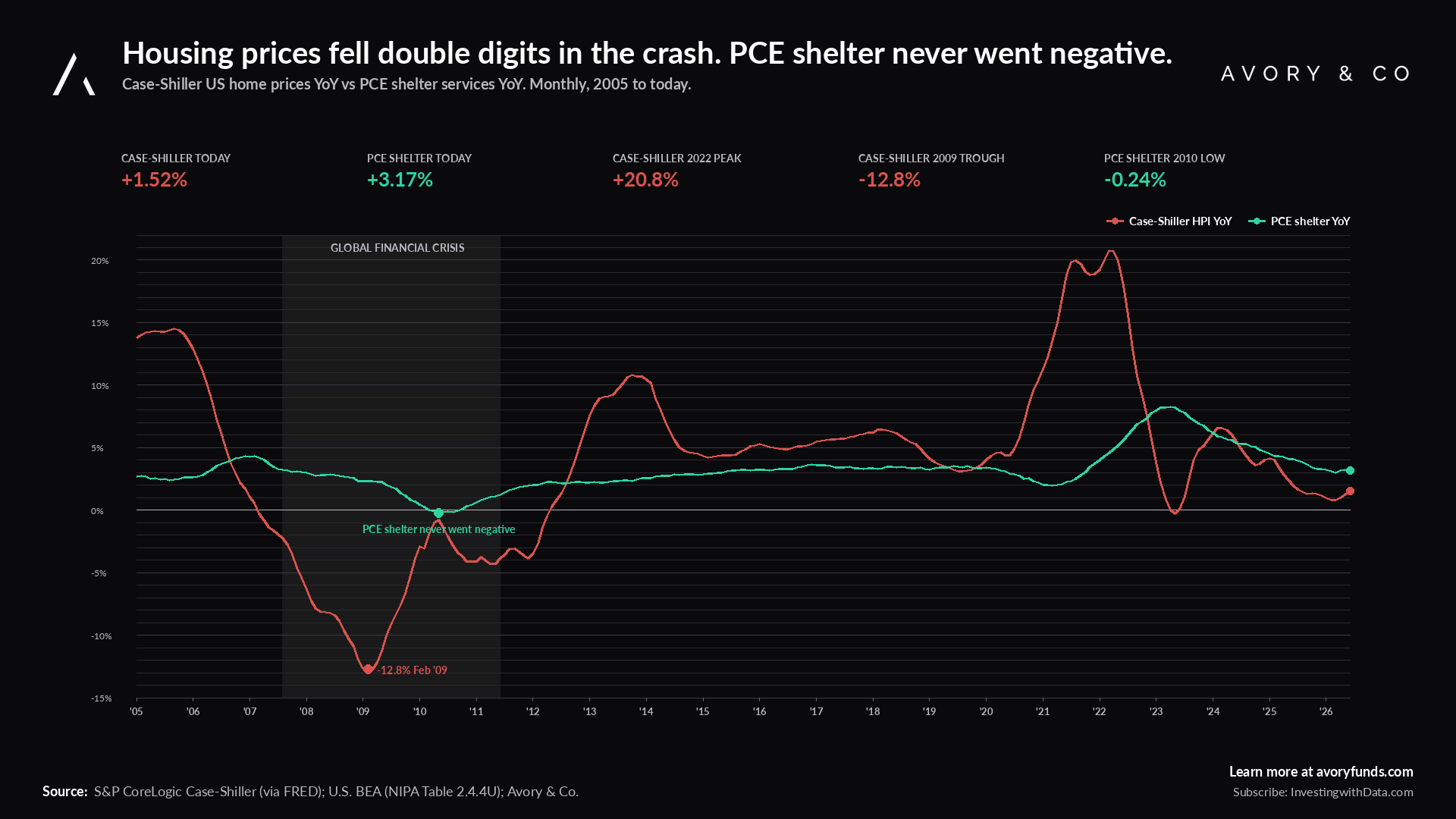
The reason shelter is such a bad measurement of what’s actually happening in housing: in the last housing crash, housing prices fell double digits, roughly 15% at points during the financial crisis.
Yet the green line here, PCE shelter inside inflation, never actually went negative. You can see the lag, and you can see how it didn’t even turn negative, which is a little crazy and hopefully Warsh is solving for this.
Not even sure how this is seriously considered.
[11] And expectations are still anchored.
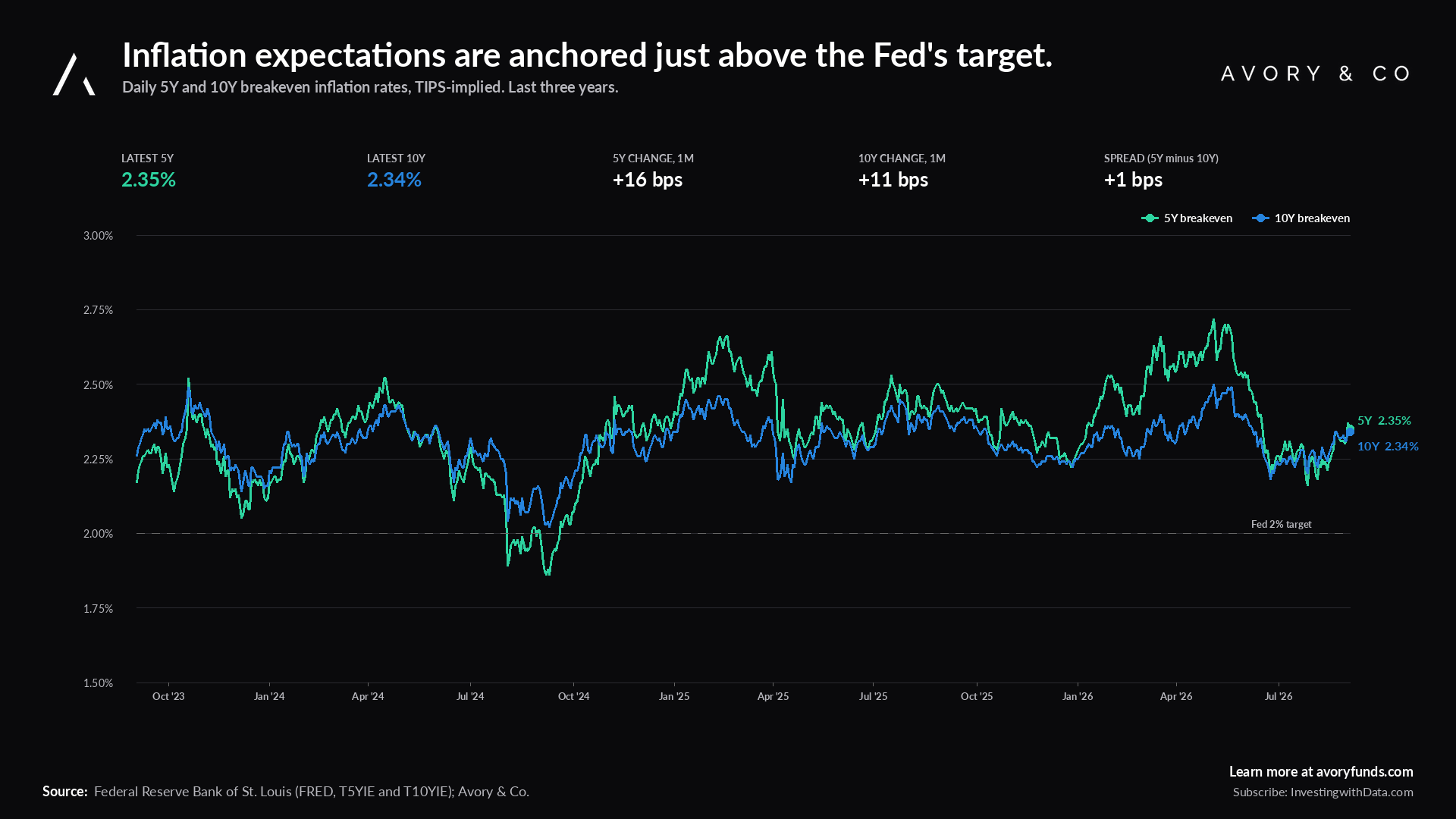
Now if you use breakevens to gauge whether inflation expectations are anchored, and Chairman Warsh and most others agree that’s a fair read, they continue to show the same thing. Anchored, just above target.
That gives the Fed cover to be patient.
Net Net
More the same here. Companies continue to report quality results, and we’re starting to see AI demand migrate into more interesting areas. Software in some cases will be a real beneficiary. Some of the AI shakeout has been needed.
The thing to remember: not all AI is good, and not all AI is bad. You want to be hyper-vigilant on what you own and why. We’ve always preached that motto, but in a world with this much euphoria and emotion, you want some grounded discipline underneath the decisions you’re making.
See you next week. Go Canes.
That’s all for this week!
About Avory & Co.
Investing Forward.
Avory specializes in high-conviction equity strategies, emphasizing Secular Growth and Transformation Stories driven by exceptional teams. Data guides decisions. We cater to high net worth investors, family offices, and institutional investors. Note: This information doesn’t constitute a recommendation to buy or sell any mentioned securities. Avory is based in Miami, Florida with clients all across the globe.
Speak to us:
Send us an email: Team@avoryco.com
Want to invest? We are on most platforms.
Want More
🎥 Avory YouTube: Channel
🎙️ Avory: Podcast
Disclaimer: Not a recommendation to purchase or sell any securities mentioned. This is for educational purposes only.
The Netflix YouTube data is interesting to think about.