

Big Picture
💡 The jobs market was out this am, tariff refunds are quietly funding the consumer, and our companies keep executing (but volatile).
The July jobs number just hit and the print was actually negative for the month, on the surface not great but private sector hiring came in at +30k, inline with month prior. As always for us, the way that data gets calculated matters a lot. It takes a single reference week and roughly 25K jobs got impacted this month due to weather among some other nuances. We tend to look at data sources like Revelio that take a combination of various inputs to calculate the labor picture and they’ve proven to be fairly accurate once the eventual revisions hit. Our read is that the labor market is stable overall, not boom or bust. Good news is it likely keeps Federal Reserve more balanced.
Also, tariff refunds continue to be an interesting driver for the economy this year. That boost combined with tax refunds has completely offset any impact that elevated oil prices would have made, which is something we’ve been discussing for some time. It’s showing up in the data.
On the company side, Meta’s superintelligence team came out with a new model and it is impressing folks. Meta is climbing up the intelligence ladders and getting closer and closer to closed-source frontier models. Not only are they catching up in terms of intelligence, but the cost per token is impressive, and ultimately given their size and scale they are in a position where they can put financial strain on competitors that don’t have the cash machine that Meta has to help fund development.
Then the earnings, our favorite time of year. We saw lots of validating information in the quarter. Category leaders keep executing. Block, Paycom, Atlassian, First Watch, Xometry, Zillow, Airbnb, Clear Secure, Duolingo. Price reactions differed, with some strong moves higher and some not so much, but fundamentals will drive return overtime. We remain long some of those operators (not all). Lets dig in.
[1] Seems like category and foundational leaders are winning across the board.
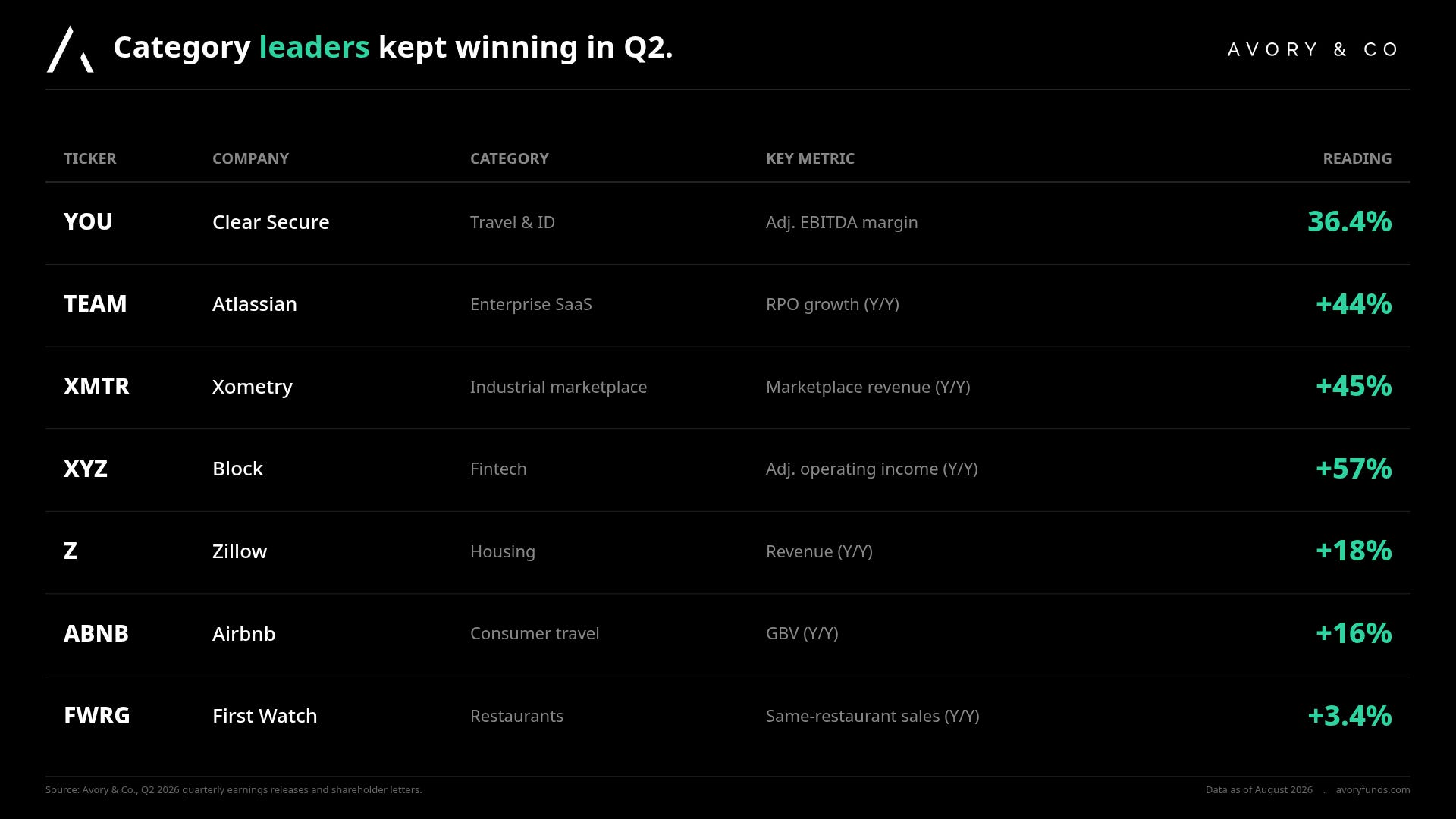
The through-line this quarter is that the operators keep executing. Nine names we tracked and same financial outcome. Software, restaurants, marketplaces, real estate, travel, identity, education, payments. All accelerating or holding the line while the broader market worries about AI, housing, and the consumer. This is what we mean when we say category leaders keep executing.
[2] July jobs printed negative, Revelio tells a different story.
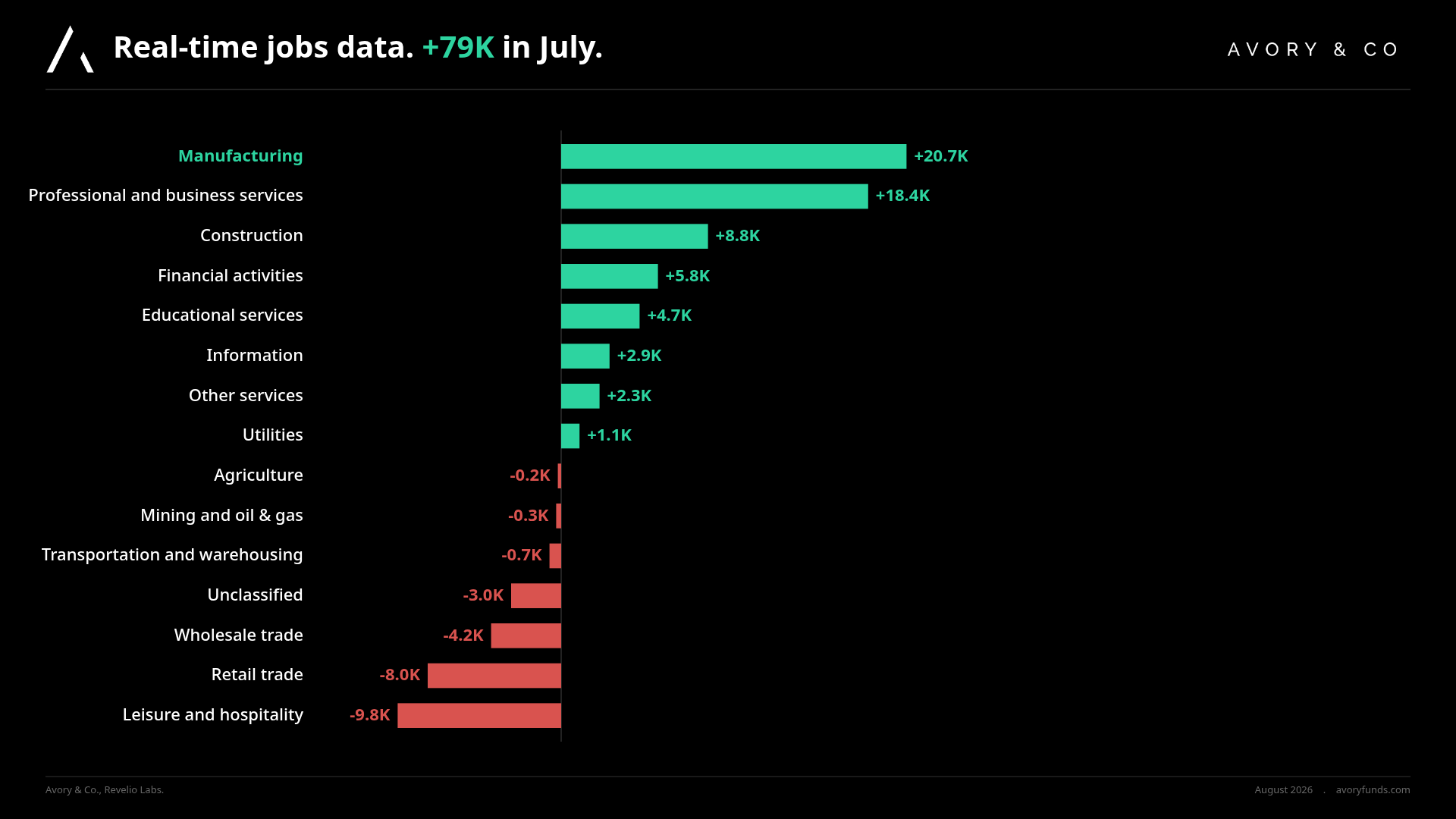
The BLS print for July came in at -23K jobs and revisions took May and June down another 103K combined. This is the first negative payroll month outside of the pandemic. But the methodology here matters. BLS uses a single reference week that includes the 12th of the month, and roughly 25K jobs got dinged from weather and other nuances that show up on that single week. Private payrolls grew +30k which is a better figure for what’s taking place outside of government. We tend to look at Revelio’s data because they pull from a wider set of inputs, and once BLS revisions eventually roll in Revelio has proven to be fairly accurate. Their July read shows Manufacturing +20.7K on the strong end, Leisure -9.8K on the weak end. Market for jobs remains pretty stable overall.
[3] Tariff refunds keep offsetting oil.
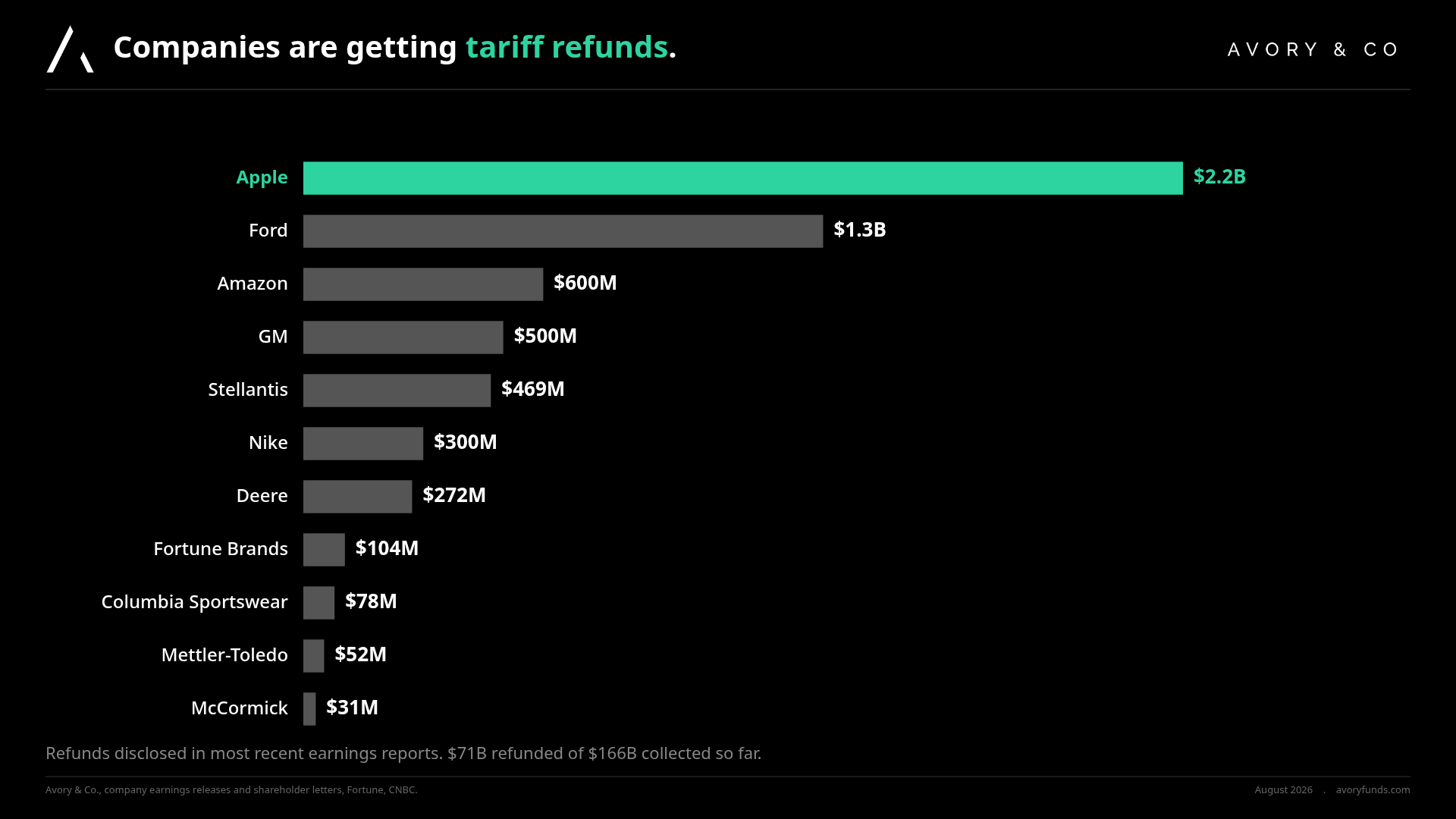
$71B of the $166B in tariffs collected has been refunded to companies so far, and Apple alone is sitting on $2.2B of refunds. Combined with tax refunds, this has completely offset the impact of elevated oil prices this year. This is something we’ve been talking about for a while now, and it’s showing up in consumer resilience across the data we track. We think it is only starting and will likely help companies and consumers throughout the rest of 2026.
[4] Meta is back in the AI game.
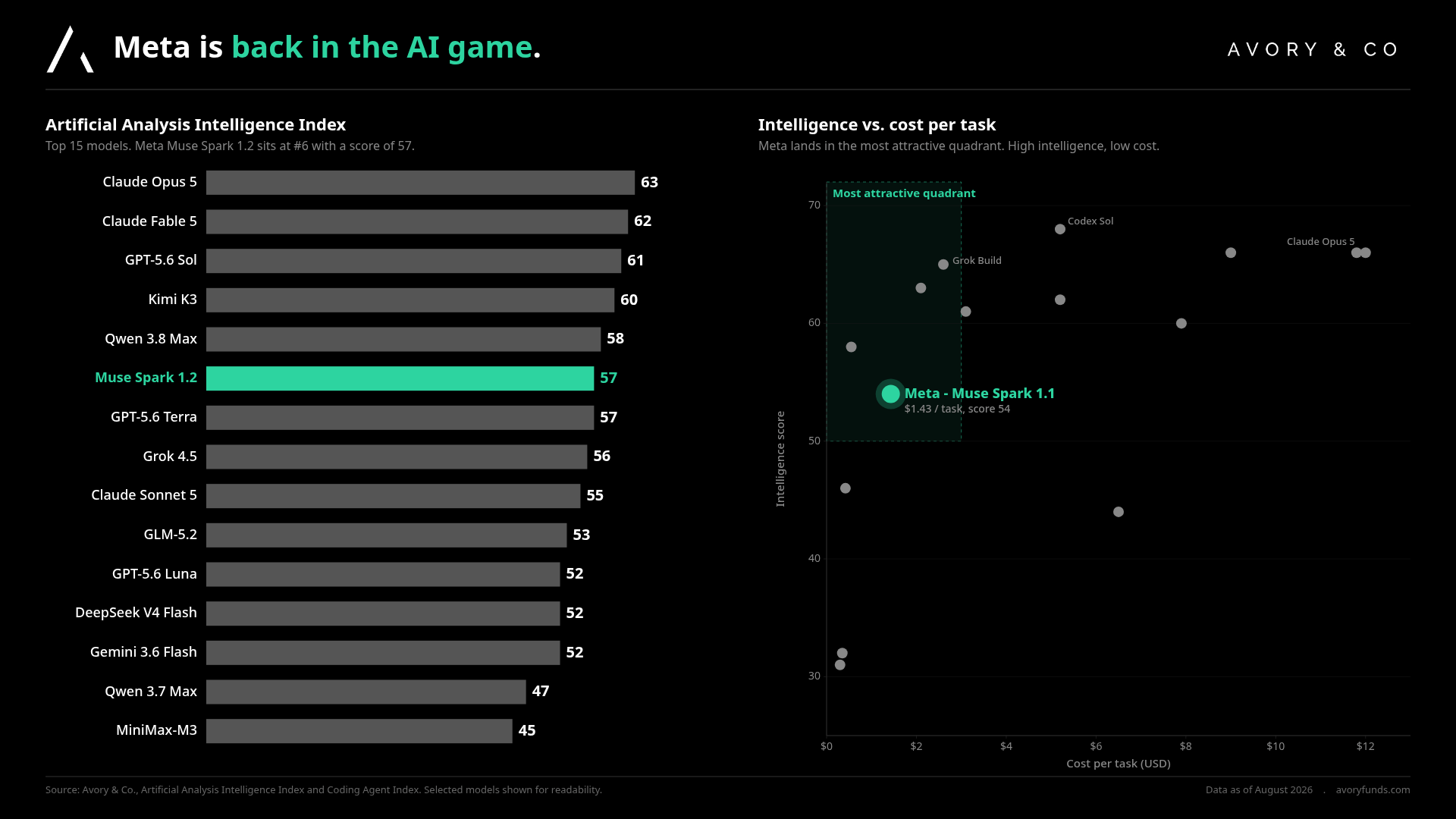
Now onto Meta. Meta’s superintelligence team just released a new model and our take was straightforward. They are climbing up the intelligence ladders and closing in on closed-source frontier models. Muse Spark 1.2 sits at #6 on the Artificial Analysis intelligence index with a score of 57, shoulder-to-shoulder with GPT-5.6 Terra and just behind Claude Opus 5, Fable 5, and GPT-5.6 Sol. The more interesting read is on the right panel. Muse Spark 1.1 lands squarely in the most attractive quadrant, delivering an intelligence score of 54 for $1.43 per task while Claude Opus and Fable are running $8 to $12 for a similar or slightly higher score. Given Meta’s size and scale, they are in a position where they can put real financial strain on competitors that don’t have the cash generation to fund development at this pace. We’ve been explicit about our thesis on Meta and this is exactly why.
[5] Block accelerated across the board.
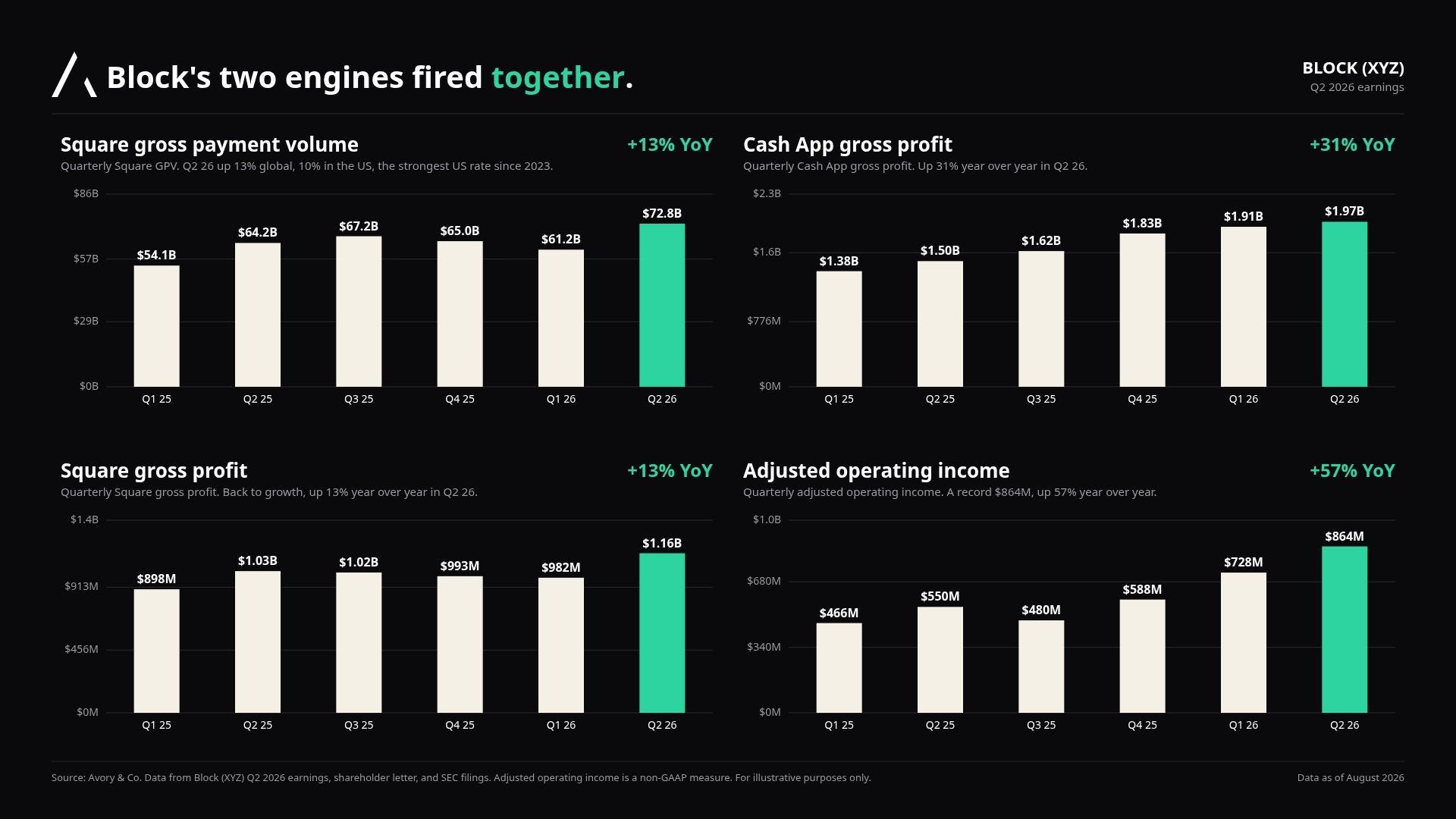
Block put up a really strong quarter accelerating in many parts of their business. They beat and raised their guidance for the full year. They’re seeing efficiency gains driven by AI adoption, most of which has been built organically. They launched two open source projects within the last 6 months or so, Goose and Buzz, both of which have been met with real excitement. These may not be monetization drivers by any stretch, but one way to look at it is the internal talent inside Block that’s building the systems and tools, which is driving both internal efficiency and product velocity as we continue to see newer products.
The investor community is focused on Neighborhoods, which is really their method of connecting their ecosystem. Something they’ve talked about for nearly a decade. The disclosures they provided gave us a little bit of positivity on the fact that Neighborhoods has reached product market fit, and they provided various data points to support that in terms of payment volume flowing through neighborhoods and followers of certain stores. They’re iterating their way through this.
Which is why we think Block is much healthier and stronger than maybe even bulls expect. Everything they’re doing is very vertical, from Square Financial and their charter bank, to their hardware team building multiple hardware products. That’s only really possible if you have the talent inside. They own the consumer relationship and the merchant relationship, they have self-onboarding, and they’re also leaning into field sales. This is becoming a much more mature company on the sales and product side, but in many ways they still operate like a startup through product velocity and cadence. That keeps us excited.
[6] Paycom spiked 25% on record profits.
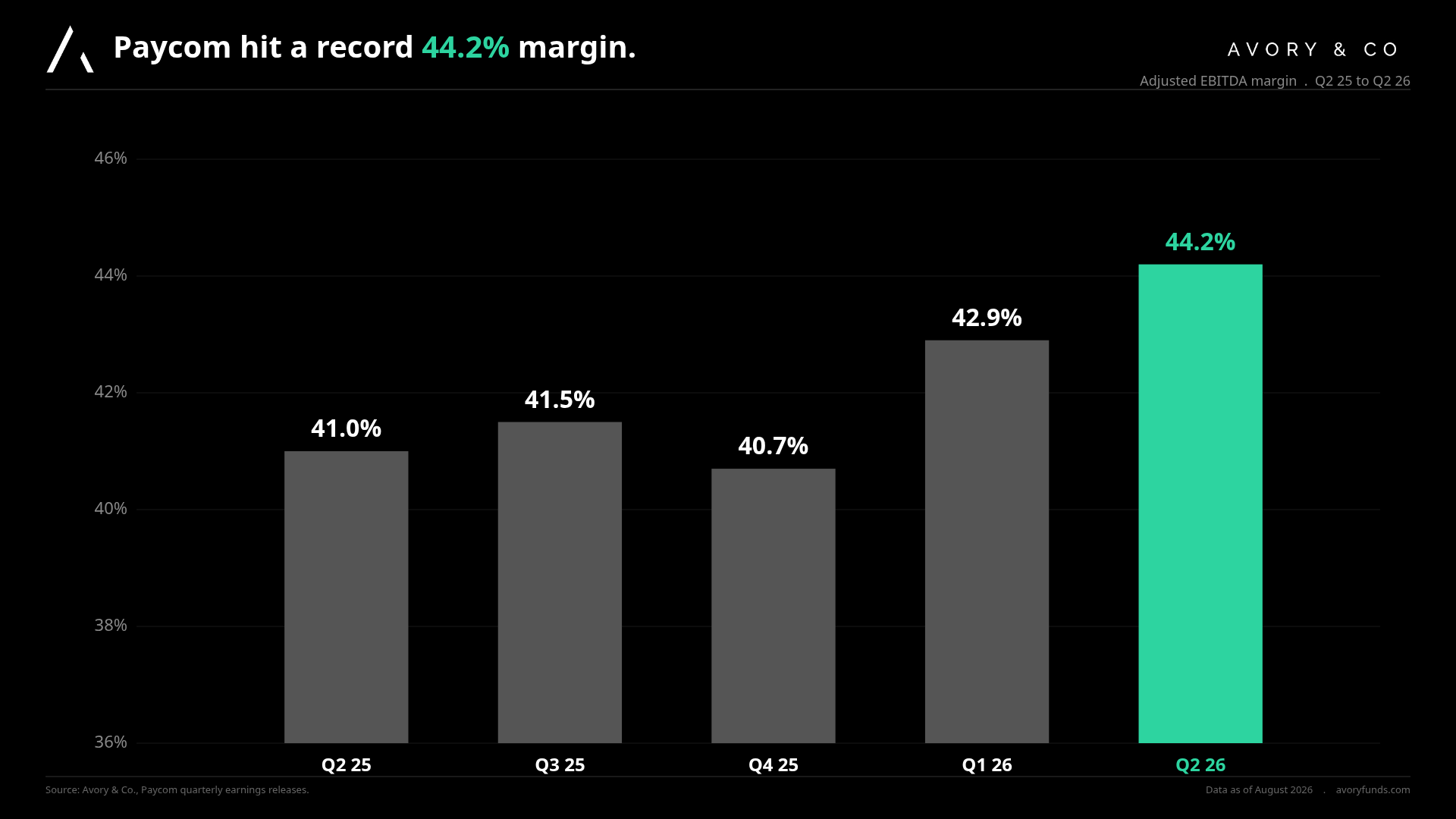
Paycom hit a record 44.2% adjusted EBITDA margin in Q2 26, and the stock ripped nearly 25% on the print. The company is finding ways to accelerate growth again, and AI is giving them a real tailwind to launch new products and modules that are driving results. Automation from Beti and GONE keeps compressing operating cost per client, which is exactly what you want to see in a software business at scale.
[7] Atlassian is proving the AI-impairment thesis wrong.
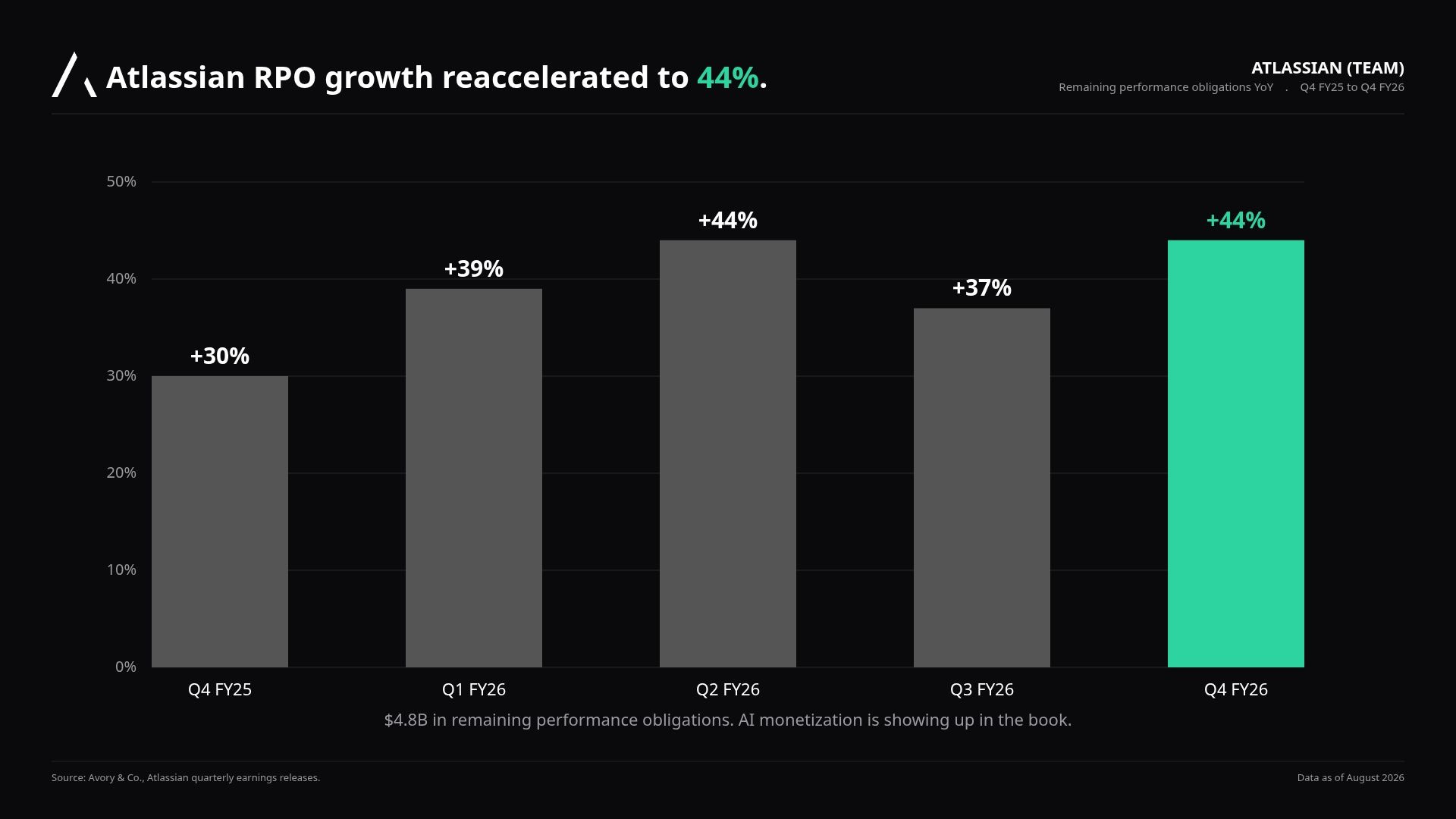
We called Atlassian out last time as one of the bullseyes for the “AI is going to kill this business” narrative, at least that’s what the street was implying by the drastic move in the stock over the course of the last year. Now they’re two of four quarters in a row proving they’re finding ways to re-accelerate growth.
RPO growth hit +44% Y/Y in Q4 FY26. We have our own views on stock-based compensation and some other factors inherent in the business, but from a pure revenue standpoint they seem to be doing just fine four and a half years after ChatGPT launched. There’s certain platforms out there that stand to benefit in a world of AI, and Atlassian is proving that now.
[8] First Watch keeps outpacing the industry.
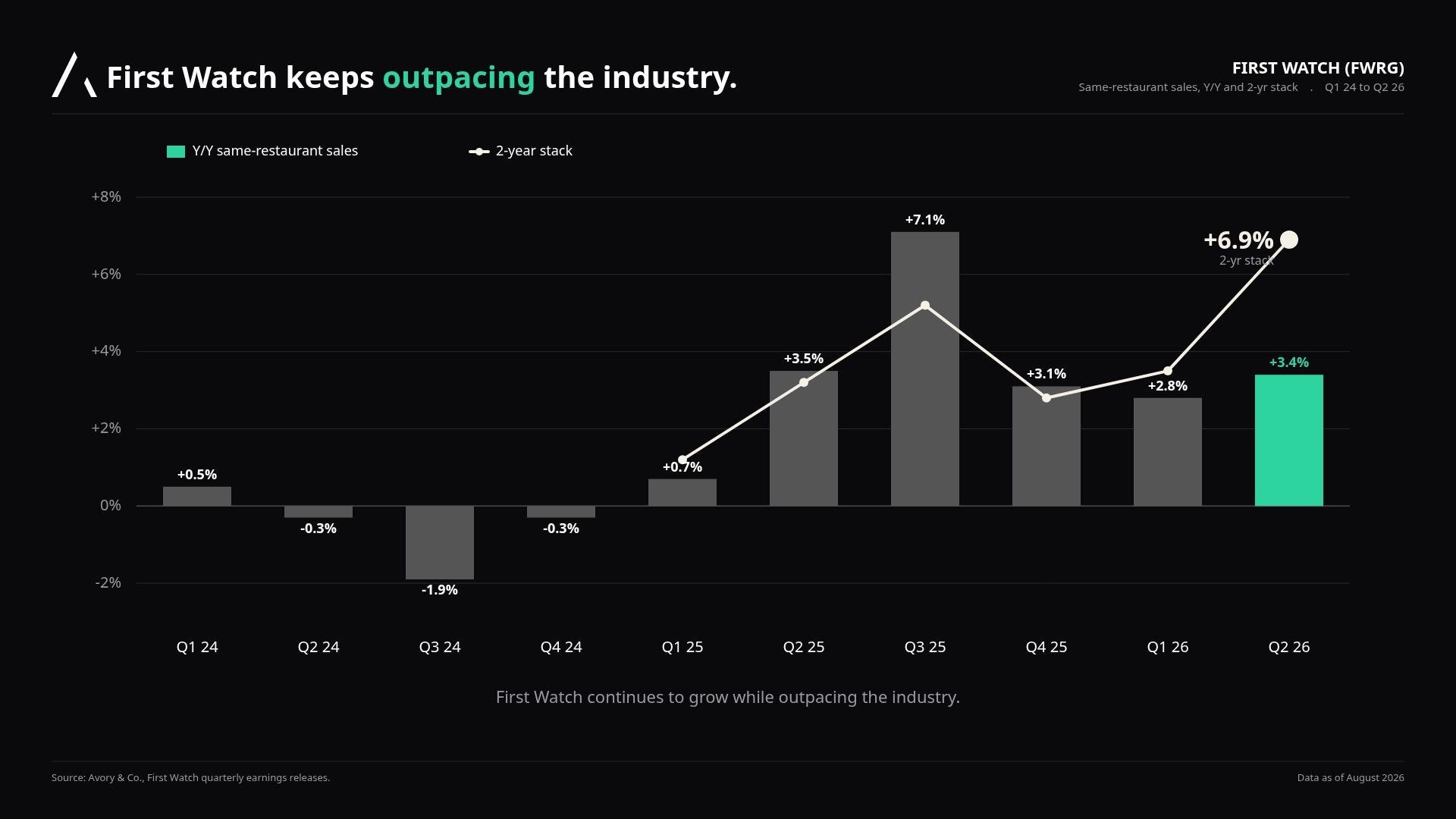
First Watch continues to execute well in a market where investors remain on edge about the consumer. Q2 26 same-restaurant sales came in at +3.4% and the two-year stack is +6.9%, both outpacing their own guidance and outperforming peers again. This quarter should help alleviate any concerns about how they’re going to fund their future growth. On the call they echoed that they plan to fund future growth from organic cash generation and committed to opening around 50 stores a year. That’s the kind of self-funded discipline we look for and part of the original thesis.
[9] Xometry marketplace accelerated for the fourth quarter in a row.
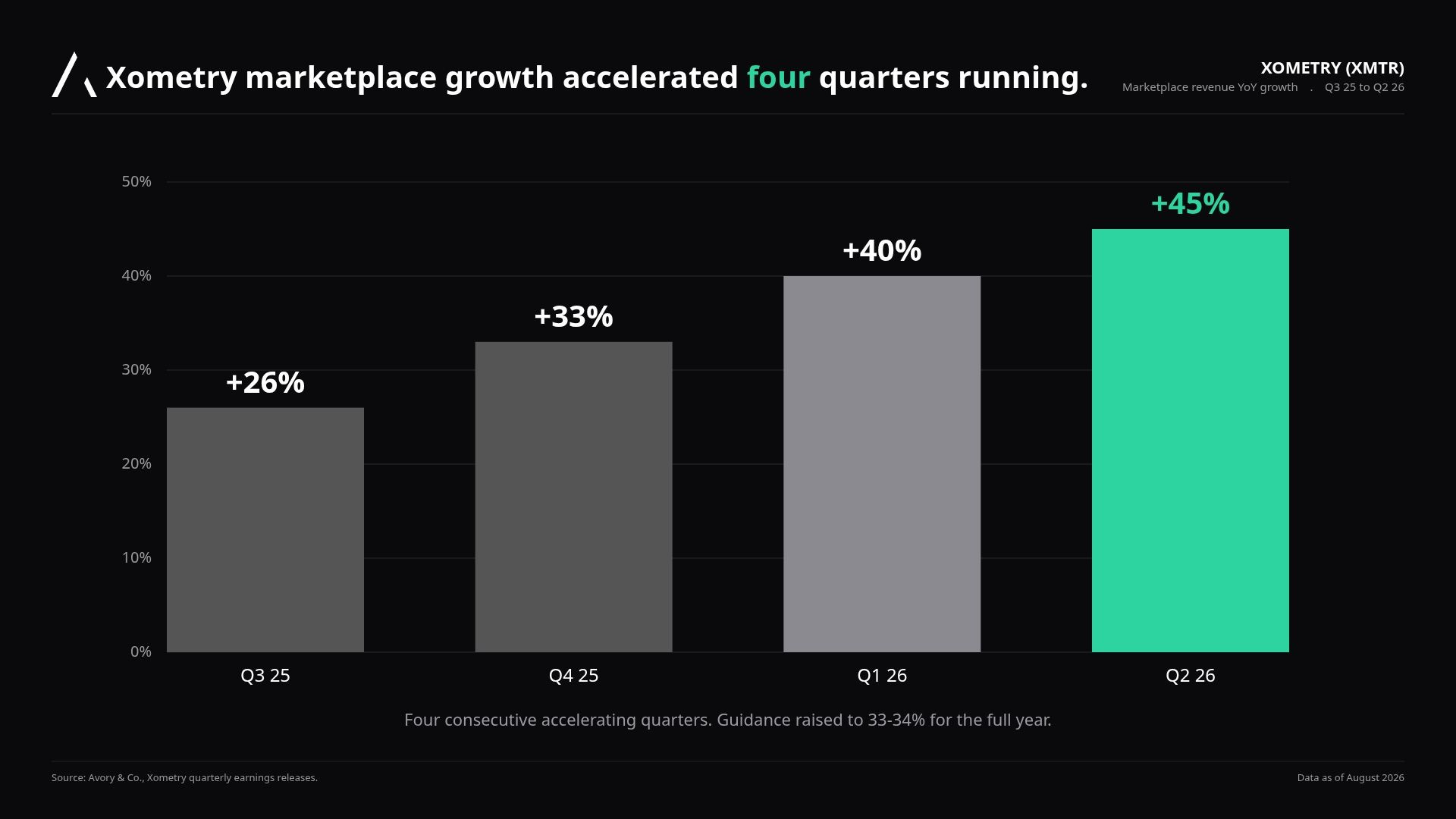
Xometry’s marketplace revenue grew +45% Y/Y in Q2 26, extending the acceleration to four consecutive quarters at +26%, +33%, +40%, +45%. Guidance for the full year got raised to +33-34%. This is a name that has been quietly building a network effect between buyers and sellers of custom parts, and every quarter the flywheel gets more obvious. Reshoring, AI-driven design, and small-batch manufacturing are all tailwinds that fall right into their model. Valuations are getting up there though, as a source of caution.
[10] Zillow put up +18% revenue in a flat housing market.
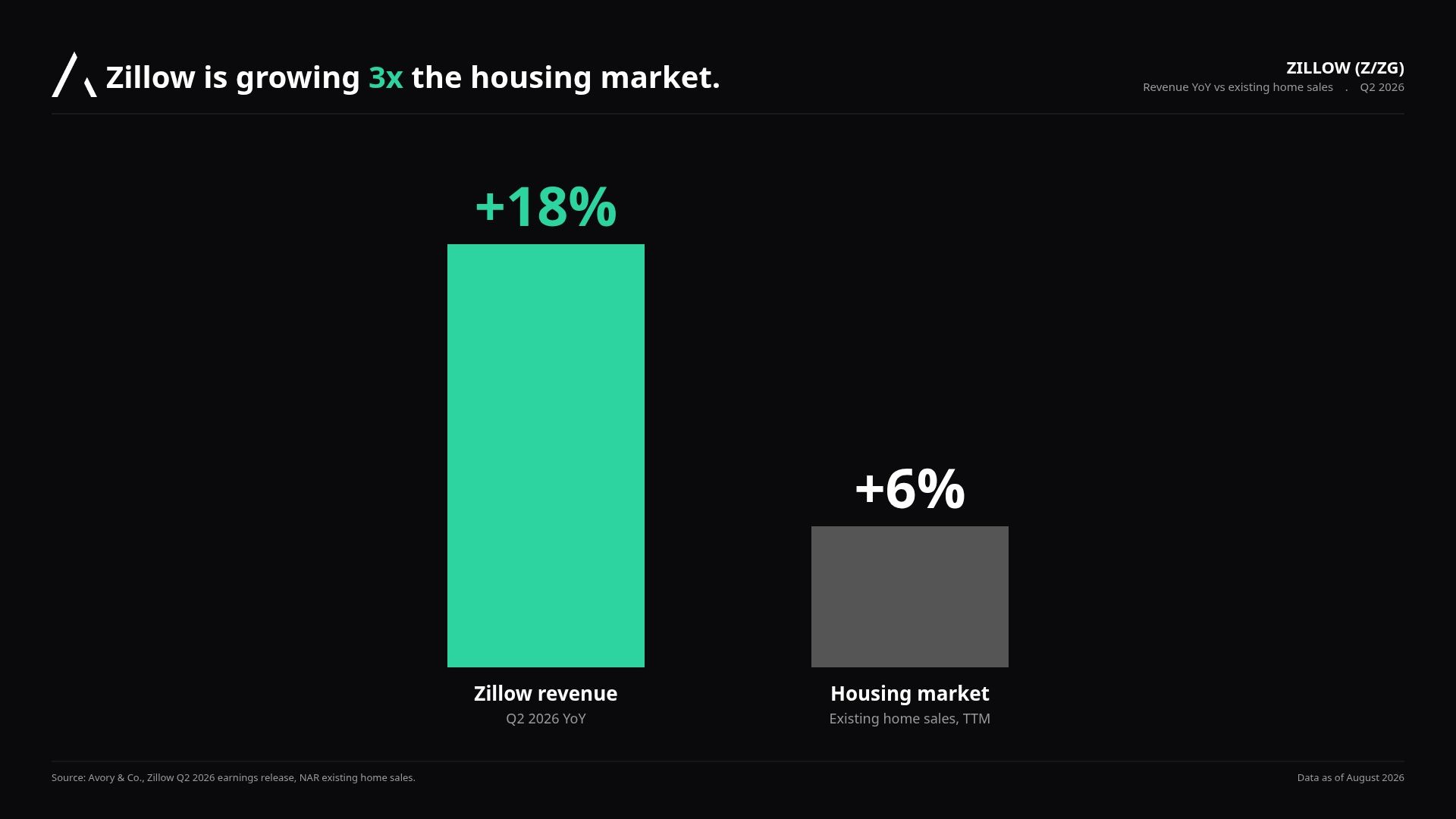
Zillow continues to execute well in a housing market that’s essentially flat to negative, something we’ve also been discussing for quite some time.
Existing home sales TTM are running at just +6% while Zillow put up +18% revenue growth along with margin expansion.
Despite a housing market that is virtually seeing little to no activity, they’re growing three times faster than the underlying market. They have a couple of changes they’re making to drive the combination of rentals, for sale residential, and mortgages, and they are now a top 25 mortgage lender in the country. The model keeps working.
[11] Airbnb GBV kept accelerating.
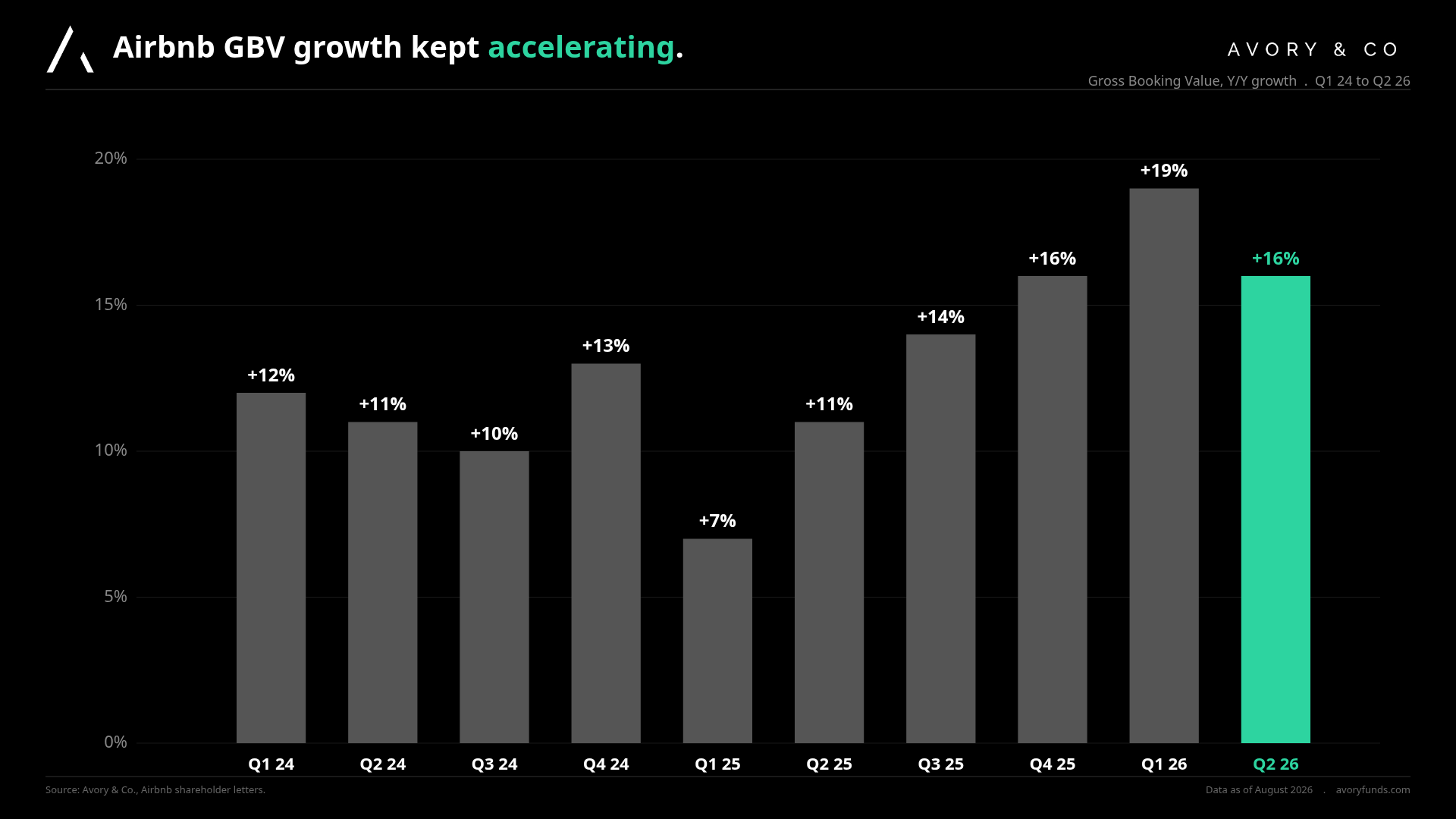
Airbnb also continues to execute well. Bookings are growing and accelerating across the board, with Q2 26 GBV up +16% Y/Y and $27.2B in bookings for the quarter. Their newer categories like experiences and services are attaching to their existing base.
Brian Chesky articulated it well across the different phases they’re executing here. People come there for staying at homes, then they lean into experiences, and now hotels as a category is driving additional traction. Ultimately this is heading toward a platform that has AI infused in it, both inside the product and as the means of putting together your vacation travels in an AI-first way. If there’s anyone that can do it, Brian seems like one that can execute here, and the fact that their inventory is inherently much different than anybody else makes it interesting.
[12] Clear Secure hit a record margin on accelerating bookings.
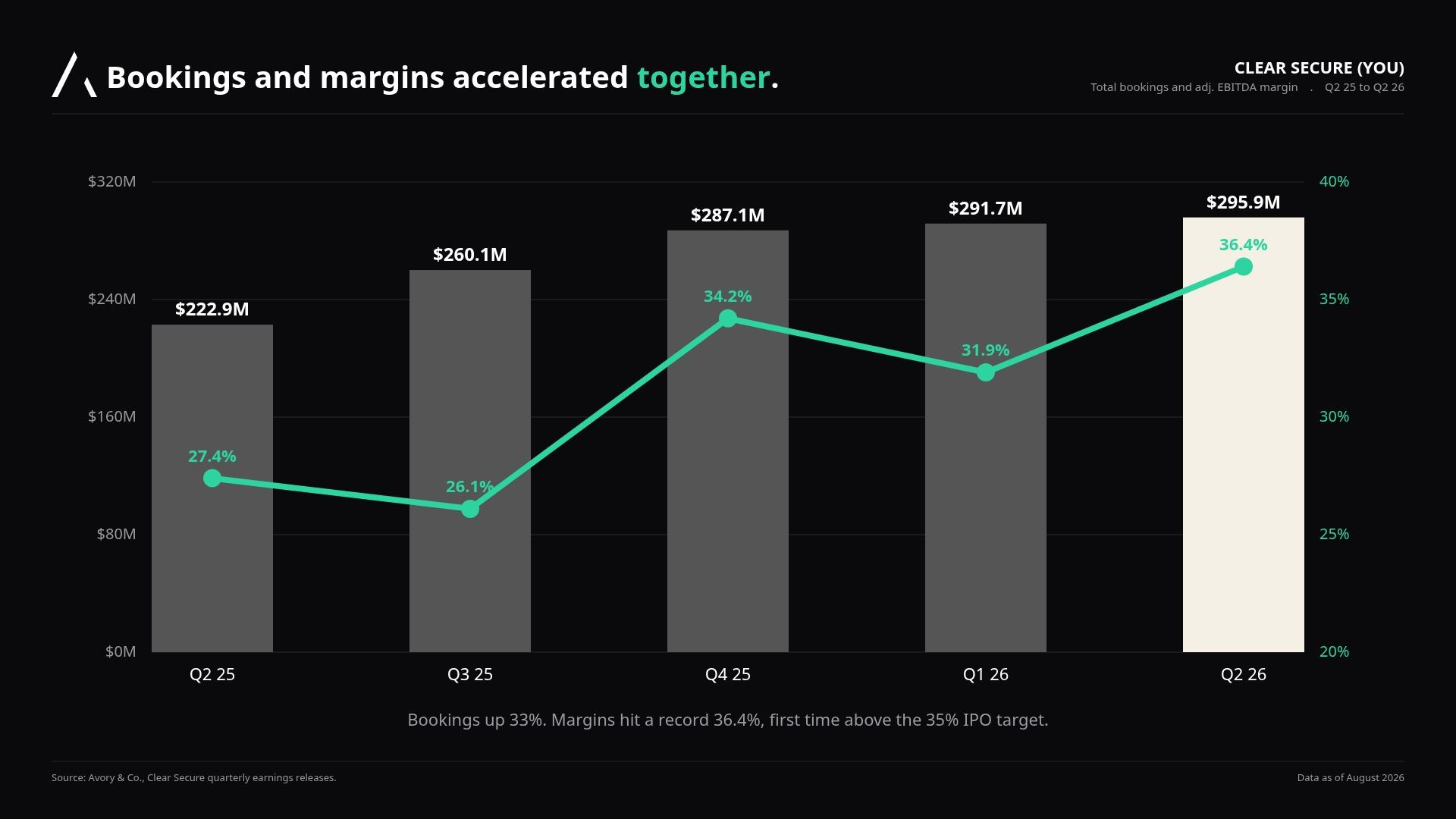
Clear Secure reported $295.9M in Q2 26 bookings, up +33% Y/Y, and adjusted EBITDA margin hit a record 36.4%. That’s the first time the margin has run above the 35% target they laid out at IPO.
Bookings and margins accelerating together is the ideal combo, and it’s happening at a company that owns identity infrastructure across airports, and now moving that identity platform into other parts of business like healthcare and financial services.
[13] Duolingo DAU growth reaccelerated.
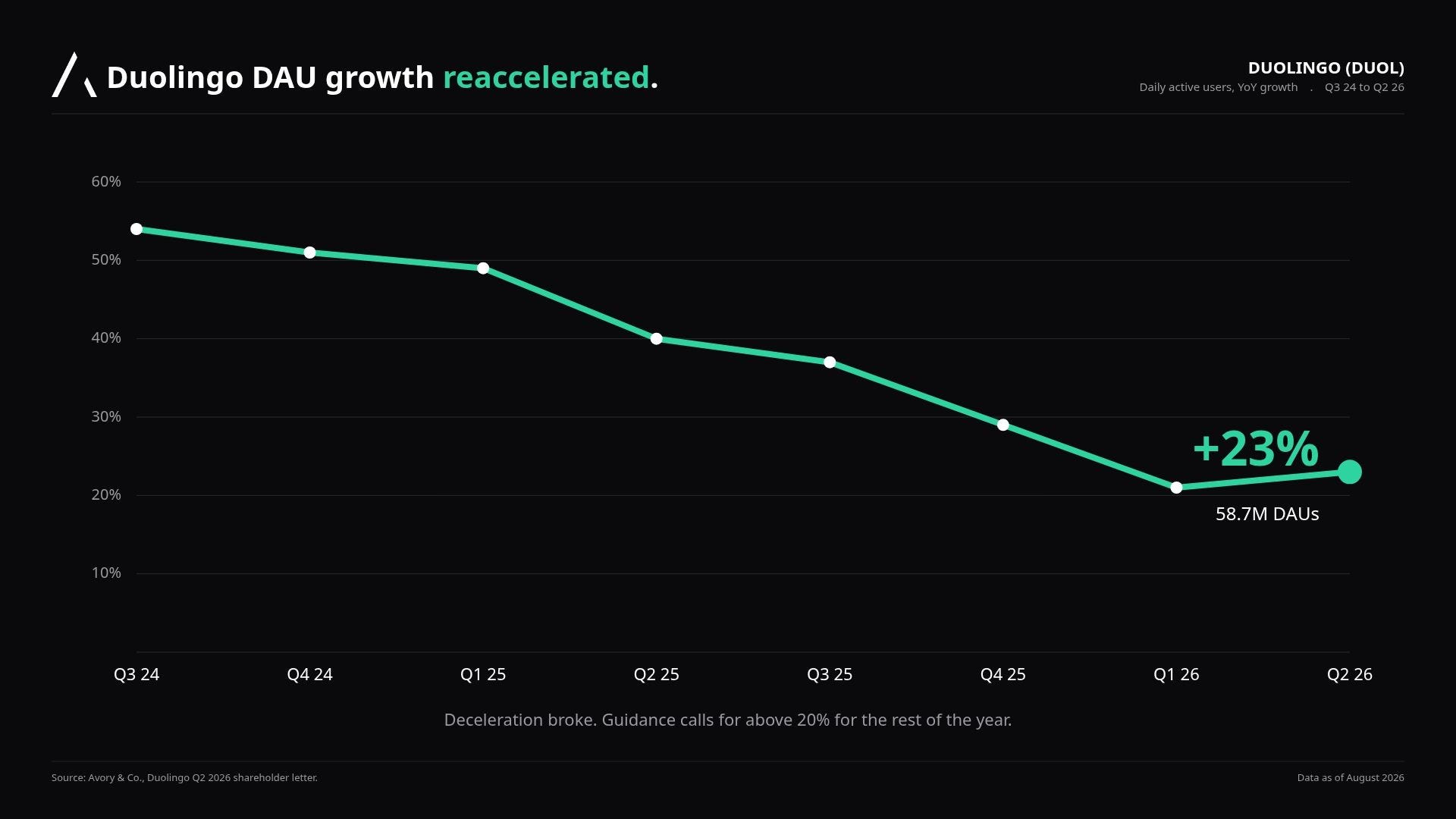
Duolingo is a name we’ve done well in in the past but sold on valuation exuberance, and since then it has gotten hit pretty hard. We still watch it closely. There are fears around AI and what it could do to the education and learning side, plus translation both across the internet and voice. I think those fears are generally overblown. Duolingo continues to prove recently that they can drive daily user growth and re-accelerate that number, which is key to the durability story.
Q2 26 DAUs grew +23% Y/Y to 58.7M, up from +21% in Q1 26.
Net Net
Big week with lots of earnings. Tariffs plus tax refunds are acting as a tailwind, and that likely continues throughout 2026. Jobs are stable enough, but not too strong, which still gives the Fed some pause on hikes. Meta keeps climbing the intelligence ladder in a way that could change the competitive shape of the entire AI stack. Time will tell what the strategy is with some of these models and how it all comes together. And the operators we own or watch kept doing what they do. Block, Paycom, Atlassian, First Watch, Xometry, Zillow, Airbnb, Clear Secure, and Duolingo all executed. We have some portfolio changes coming over the next week or so. More on that soon!
That’s all for this week!
About Avory & Co.
Investing Forward.
Avory specializes in high-conviction equity strategies, emphasizing Secular Growth and Transformation Stories driven by exceptional teams. Data guides decisions. We cater to high net worth investors, family offices, and institutional investors. Note: This information doesn’t constitute a recommendation to buy or sell any mentioned securities. Avory is based in Miami, Florida with clients all across the globe.
Speak to us:
Send us an email: Team@avoryco.com
Want to invest? We are on most platforms.
Want More
🎥 Avory YouTube: Channel
🎙️ Avory: Podcast
Disclaimer: Not a recommendation to purchase or sell any securities mentioned. This is for educational purposes only.