

Make sure to subscribe to Avory Around the Desk Podcast

Big Picture
💡 AI fears, AI launches, Salesforce, Fed, and more!
Happy Sunday! I am here reviewing some of the data and thoughts we accumulated this week.
Lots going on, as we sit here in that awkward period between earnings season. We have a war that continues, we have midterms, we have AI fear mongering, we got a 25 basis point hike, and Meta launched a very interesting agentic product.
Starting with the Fed. They hiked this week. Pretty much something expected, and priced in for weeks. When futures are pricing a move, the Fed almost always falls in line with futures, so that is exactly what happened.
Should they have hiked? Our view is no, and we are in good company on that. Rick Rieder at BlackRock and Mohamed El-Erian have both made the same call.
Hiking does not fix the actual issue, which is mostly energy driven, so yields are going to be tied to what happens in the energy market more than anything the Fed does with the front end. We showed last week that the rate-sensitive parts of inflation are actually running softer than the non-rate-sensitive parts, so raising here mostly buys the Fed a layer of perceived credibility. I am not sure I buy that framing, but it is the discussion with some folks. Also if you just draw out another 5 months, the energy shock will be lapping in the inflation data, and that will naturally take the government inflation rates much lower. I think Warsh knows this… and so does the committee, which is maybe why they only have about 1 hike embedded in their forecast.
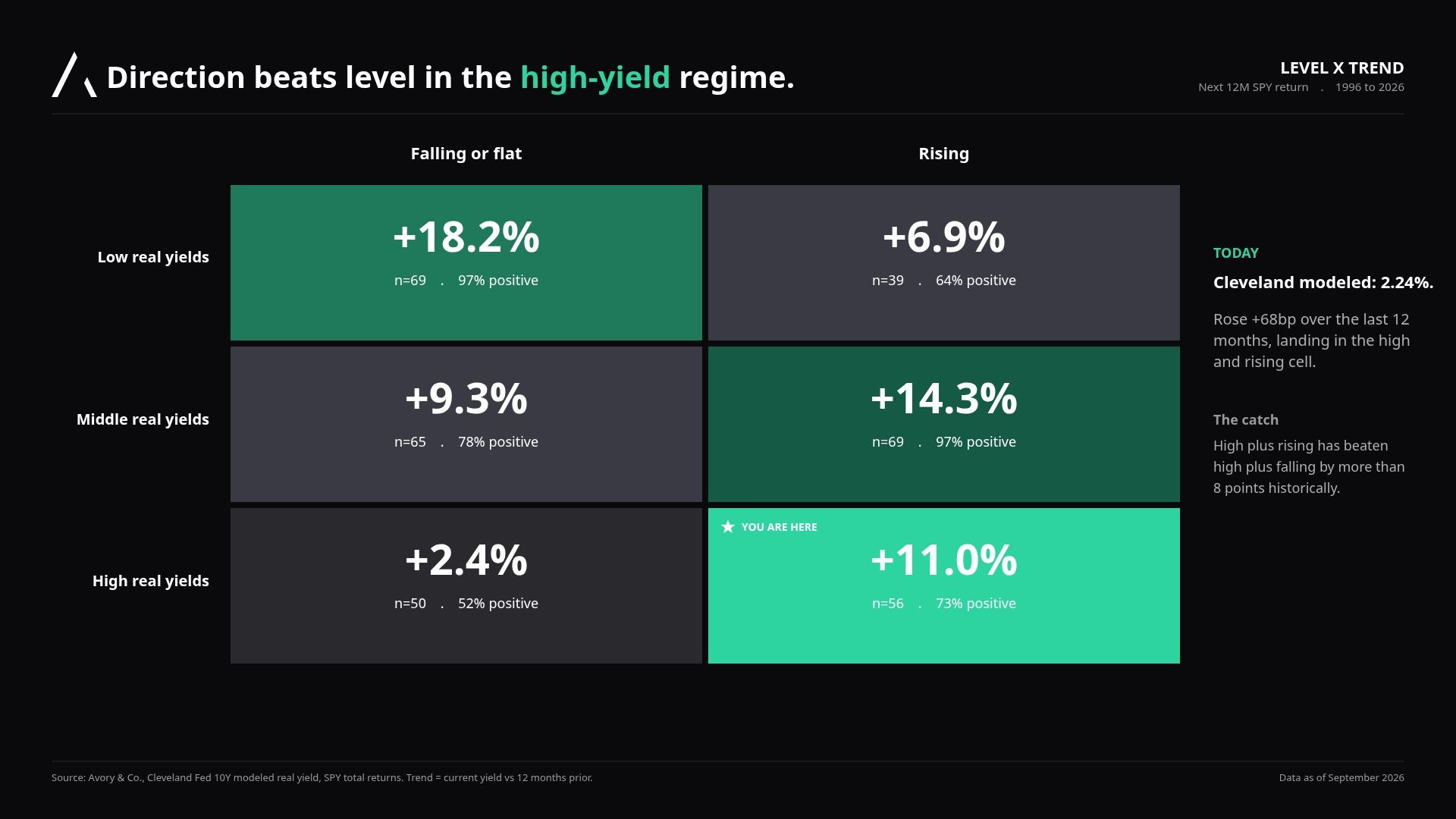
As always, we take the info we know and analyze the data to understand whether we should be concerned or stay on course. Interestingly, in periods where you have both a rate-cutting cycle and elevated-and-rising rates, the market has historically performed fine, averaging 11% annual returns 12 months out. That lines up with a view that the economy is holding up and earnings and revenue are growing alongside.
There is real precedent here, so investors should not be overly concerned that rate hikes have arrived. Unless inflation spikes meaningfully in the next months, October is most likely a hold, and the ceiling I see is 50 more basis points of hikes from here, which does not change the economic picture given we were 50 basis points higher inside the last three years.
Under the hood, we have seen a little rotation back and forth between software and semis, and both areas are still executing at the company level. On AI, the “AI ends humanity” narrative that ran from last weekend through Monday pushed a sharp rally in cybersecurity and added some fear to software. I think people are extrapolating. If AI can do that, it can also do software. Then Salesforce Dreamforce happened, with Sam Altman, Jensen Huang, and Dario Amodei all on stage, and that for me says a lot about how strategically important the larger software players are to the model labs. The labs need the distribution, they need the buy-in, and these are arguably their biggest customers.
The smart software vendors are attacking AI in three ways. They are building a harness so businesses can orchestrate and govern AI through a single interface. They are embedding AI across their existing platform. And they are going headless, exposing their database so other AI tools can interact with it inside a customer’s own harness. Salesforce laid all three out this past week.
Lastly… Meta Muse also launched this week, Meta’s personalized agent app, and I have a podcast on it worth queueing up before our take below.
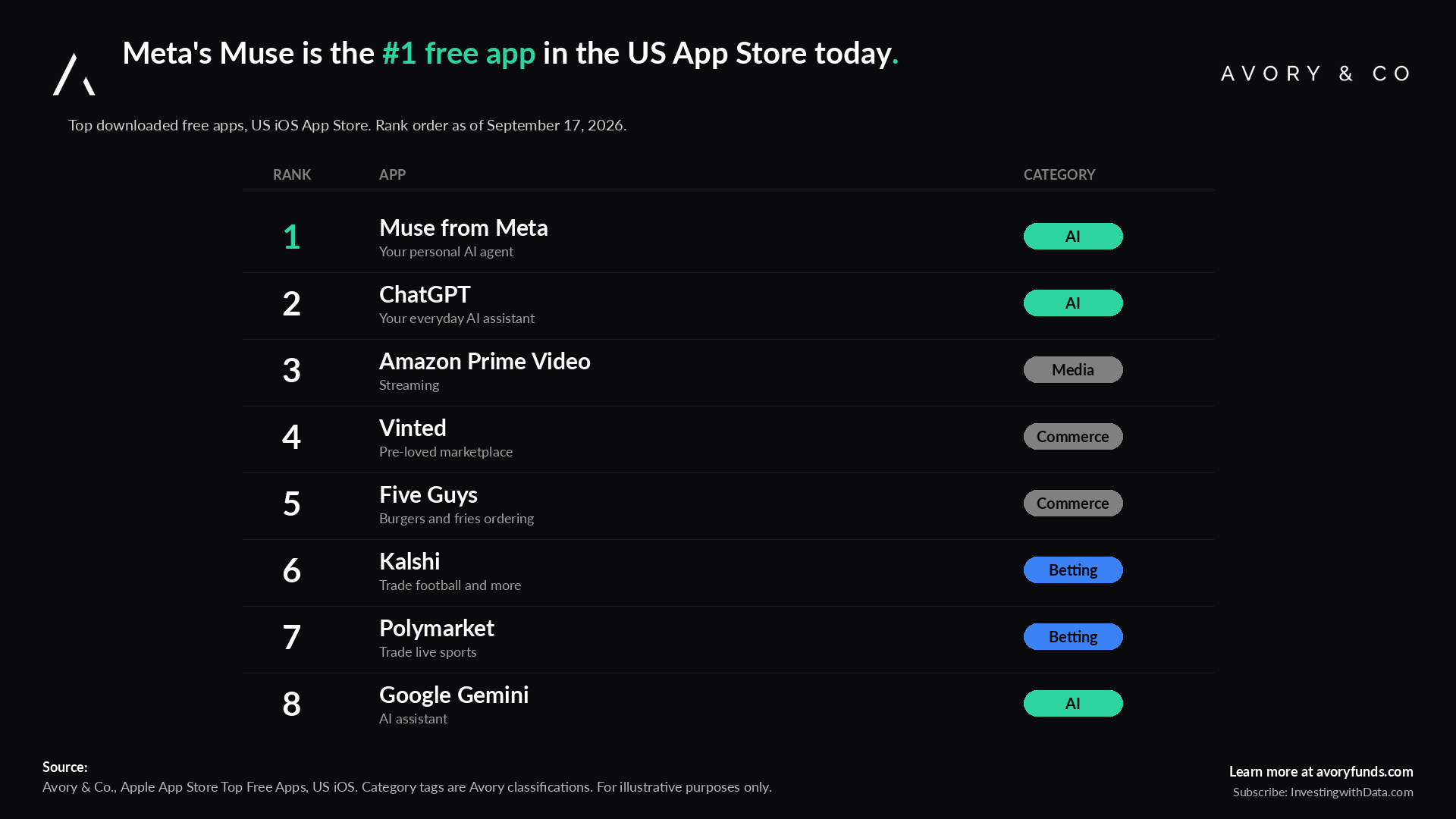
[1] App Store rankings show AI is now consumer default.
Lets kick it off with the more unexpected moves in AI.
Meta launched Meta Muse and boom. #1. More on that.
Another look here is how AI continues to dominate app rankings. Between social, AI and some prediction markets, we can clearly see what consumers are seeking. Good or bad, that is the reality of behavior today…
[2] Meta Crushed Agentic Peers.
Ok so again I have a podcast on what makes Meta Muse special. (Apple , Spotify , YouTube). But more important is the why…
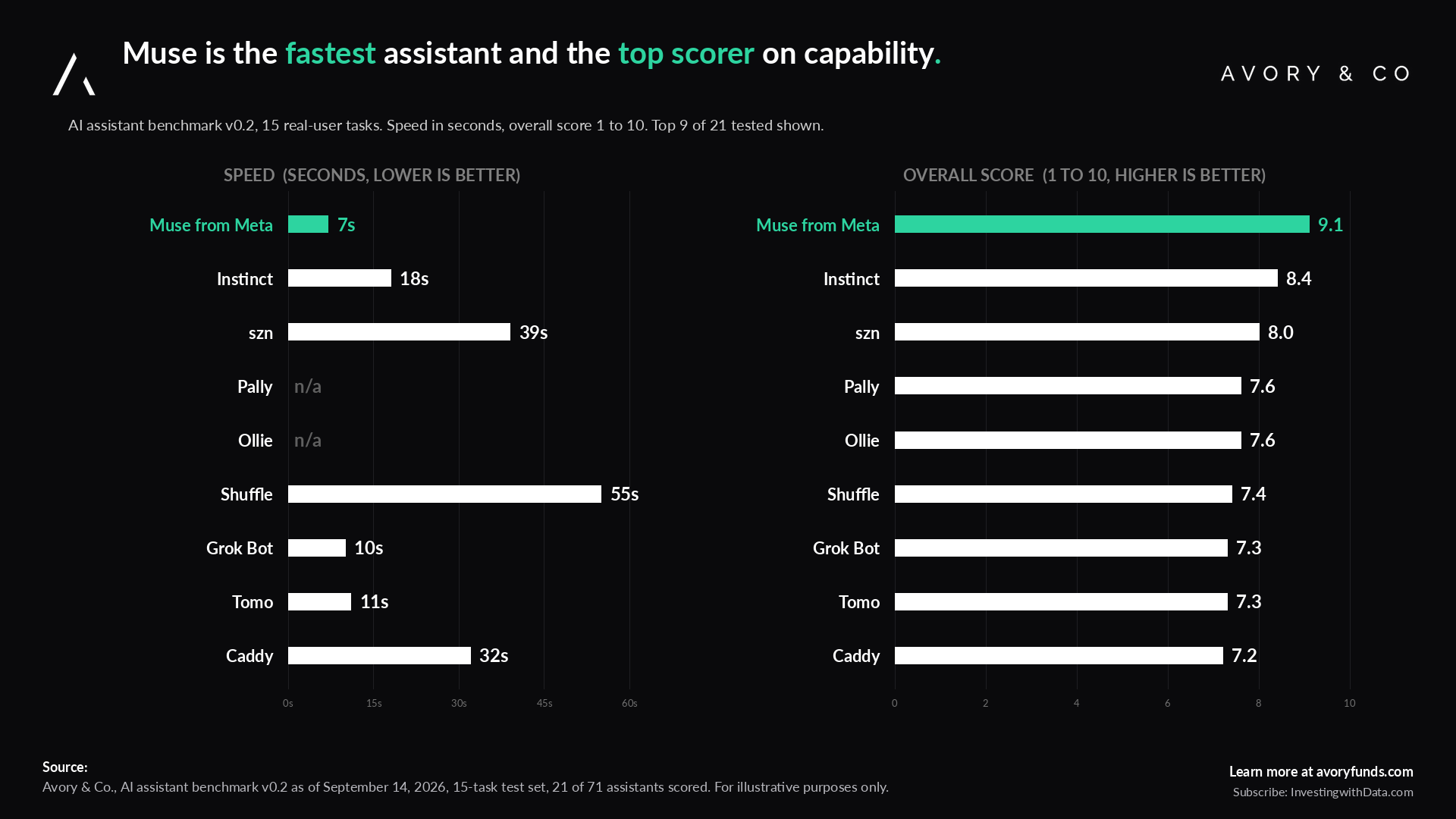
Below is a platform that tries to break down which AI agentic consumer apps performs better on certain key attributes. The overarching conclusion is that Meta Muse is leading in many ways. From speed, to experience, to costs, to capabilities.
This moment for Meta should not be overlooked. They have spent, they discussed importance of AI, and now a product is delivering for them.
We have expressed our views time and time again that Meta is the #1 AI play. They have what we consider the 3 important C’s. Context, Capital, and Compute.
[3] AI referrals are taking share and improving conversions…
You can see the impact on how people search.
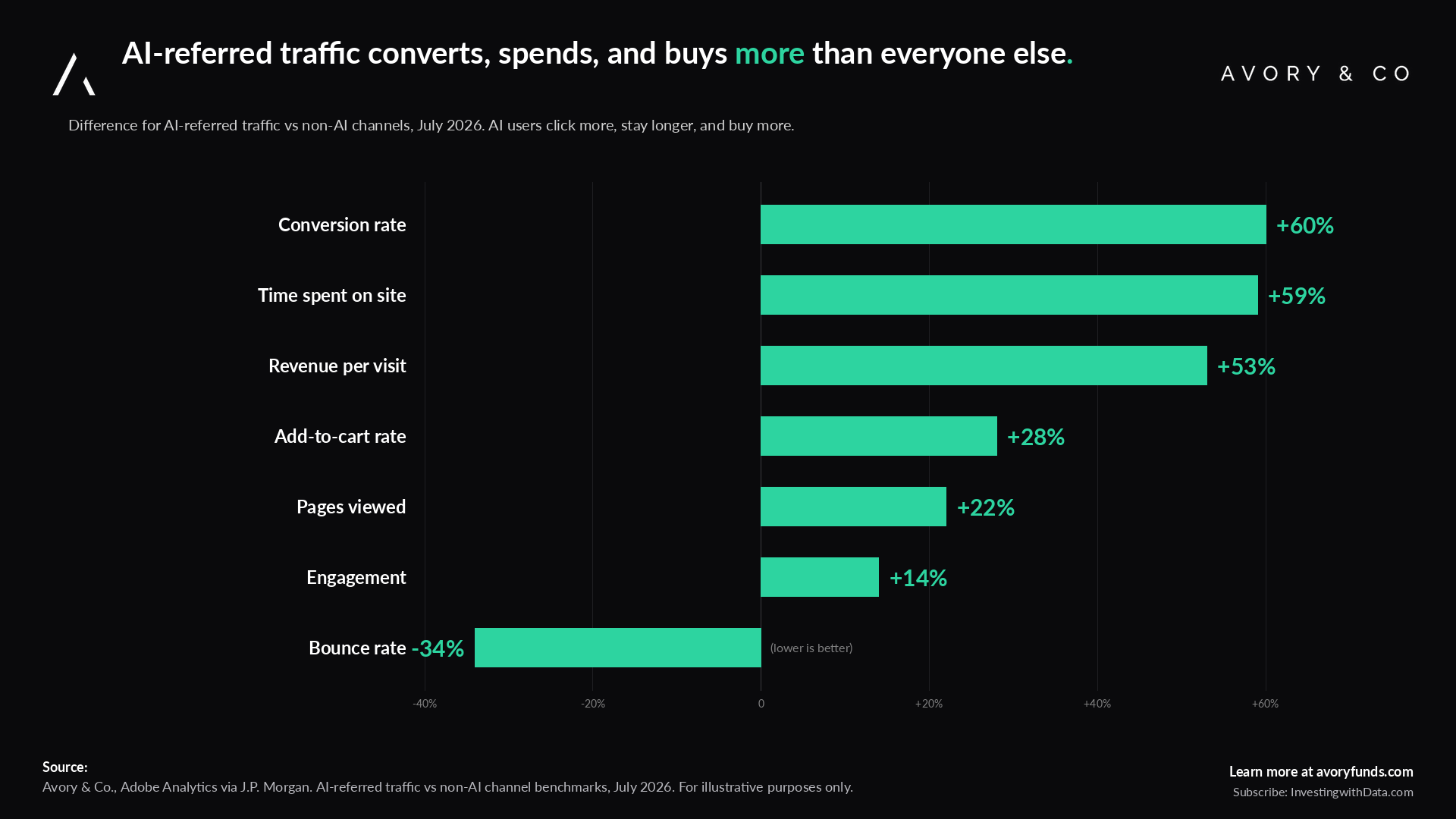
AI-driven referrals for high-intent commercial queries continue to grow their share, and the traditional search interface is losing ground.
Now some will say this is a negative for the legacy SEO platforms. I think that is partially true. However, look at the conversion rate. What this says is, when people search on AI, they are more ready to convert than basic Google search queries.
So yes, companies are getting LESS referral traffic, but when that traffic shows, it is 60% higher conversion. My take is that companies that have mostly organic traffic can possibly lean in on referred traffic more, and those that have mostly referral traffic have to probably lean in now on social and more authentic ways to get in front of audiences. This should benefit YouTube AND Instagram…
[4] OpenAI vs Anthropic battles continues…
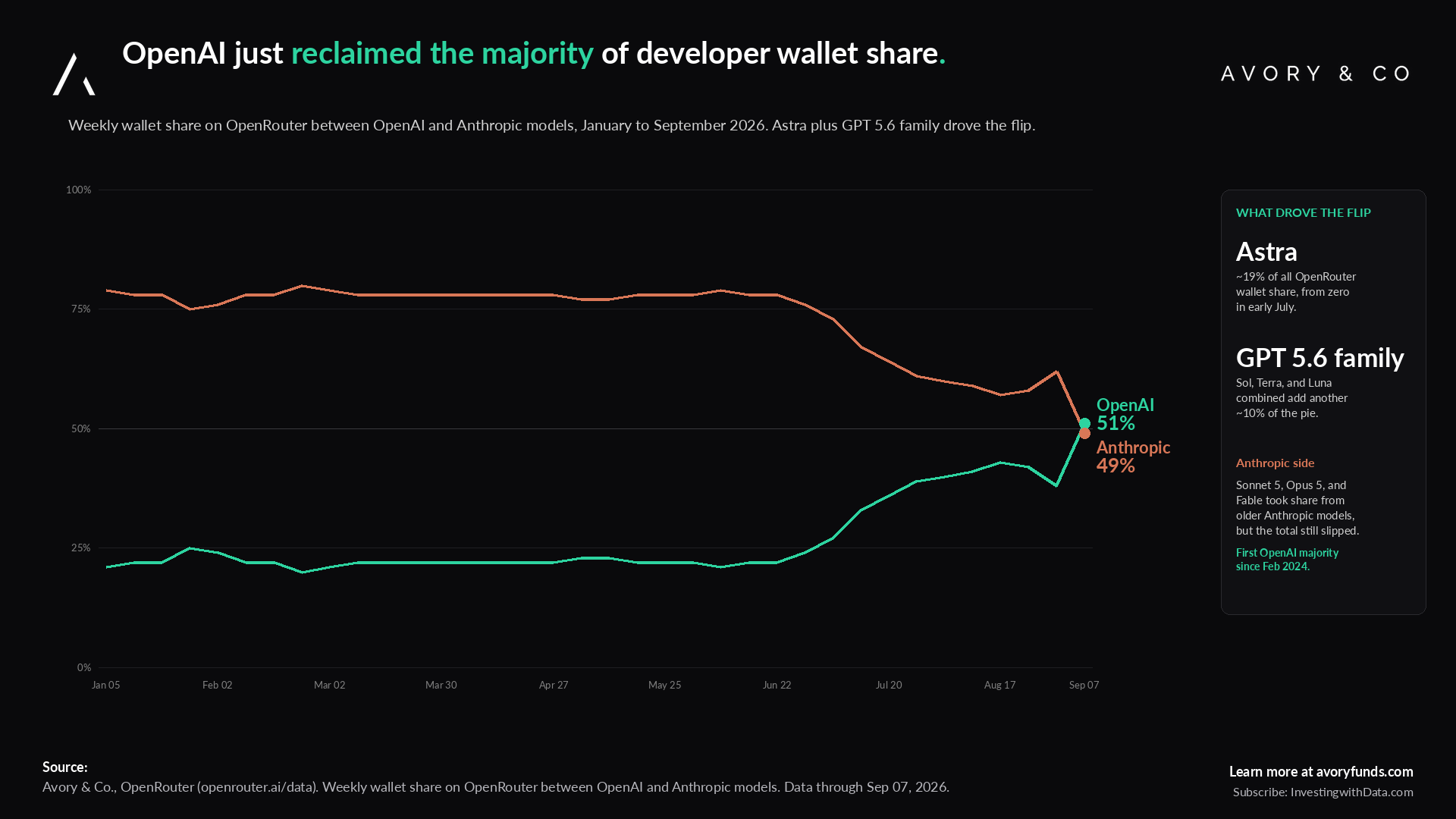
Under the hood at the model layer, the leaderboard flipped this month.
OpenAI moved back to majority share of OpenRouter wallet volume for the first time since February 2024, with Astra driving this change. Anthropic is still right there, but the crown is back on OpenAI for now.
Time will tell. Not shown here too is just how open source continues to take even more share from these two.
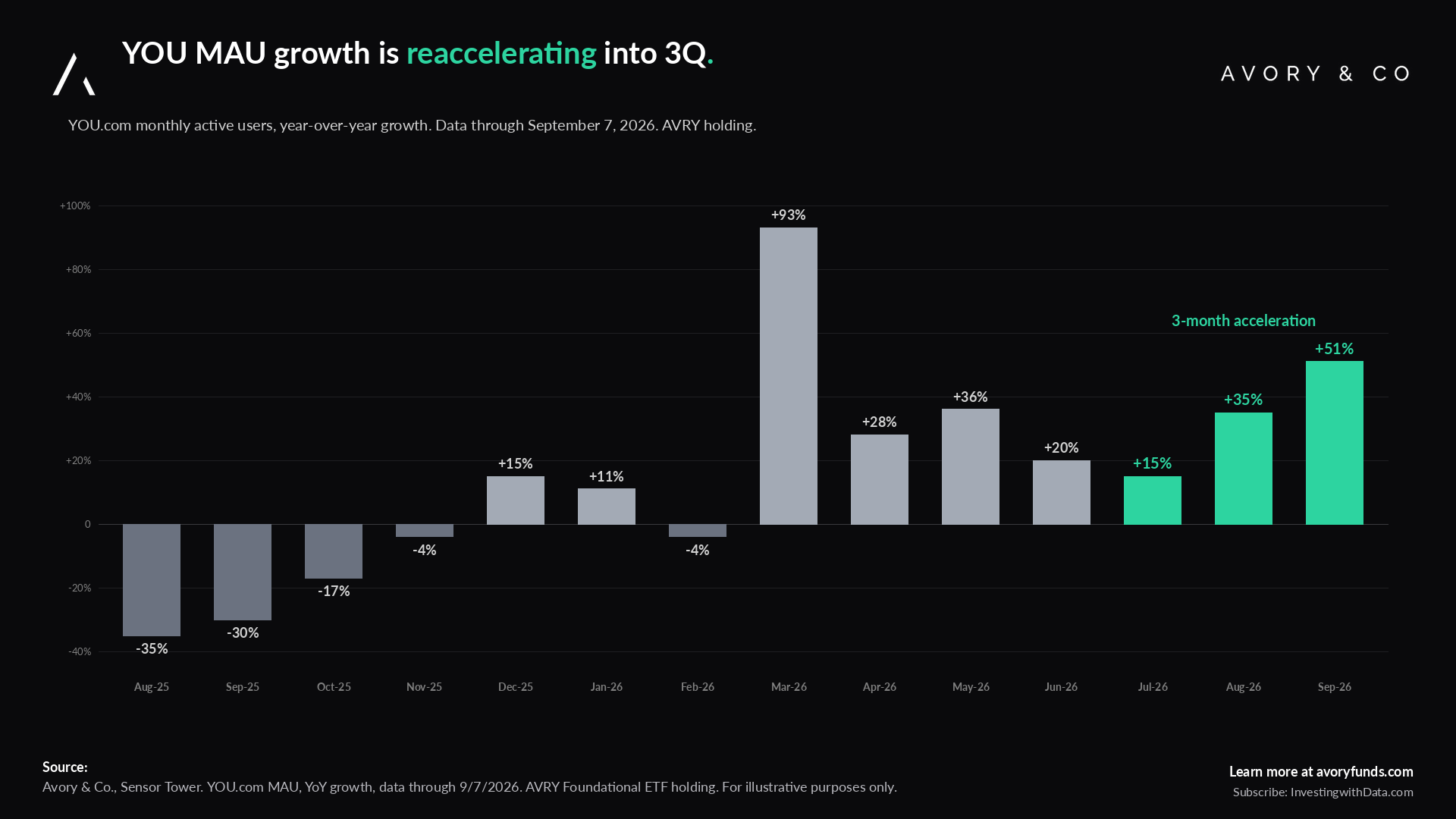
[5] Clear MAU seeing strong monthly active user growth.
Two things here. We know Clear’s identity products are in the airports, along with their emerging and fast growing (5x last quarter) non airport verification business. So this gives us signal for travel broadly, but also their verification business.
Full disclosure, this is an AVRY ETF holding.
So monthly actives or MAU has continued to build.
We have seen a 3 month acceleration just as people question the consumer. For me this says the opposite. We will share more on this later with OpenTable and retail sales data…
.
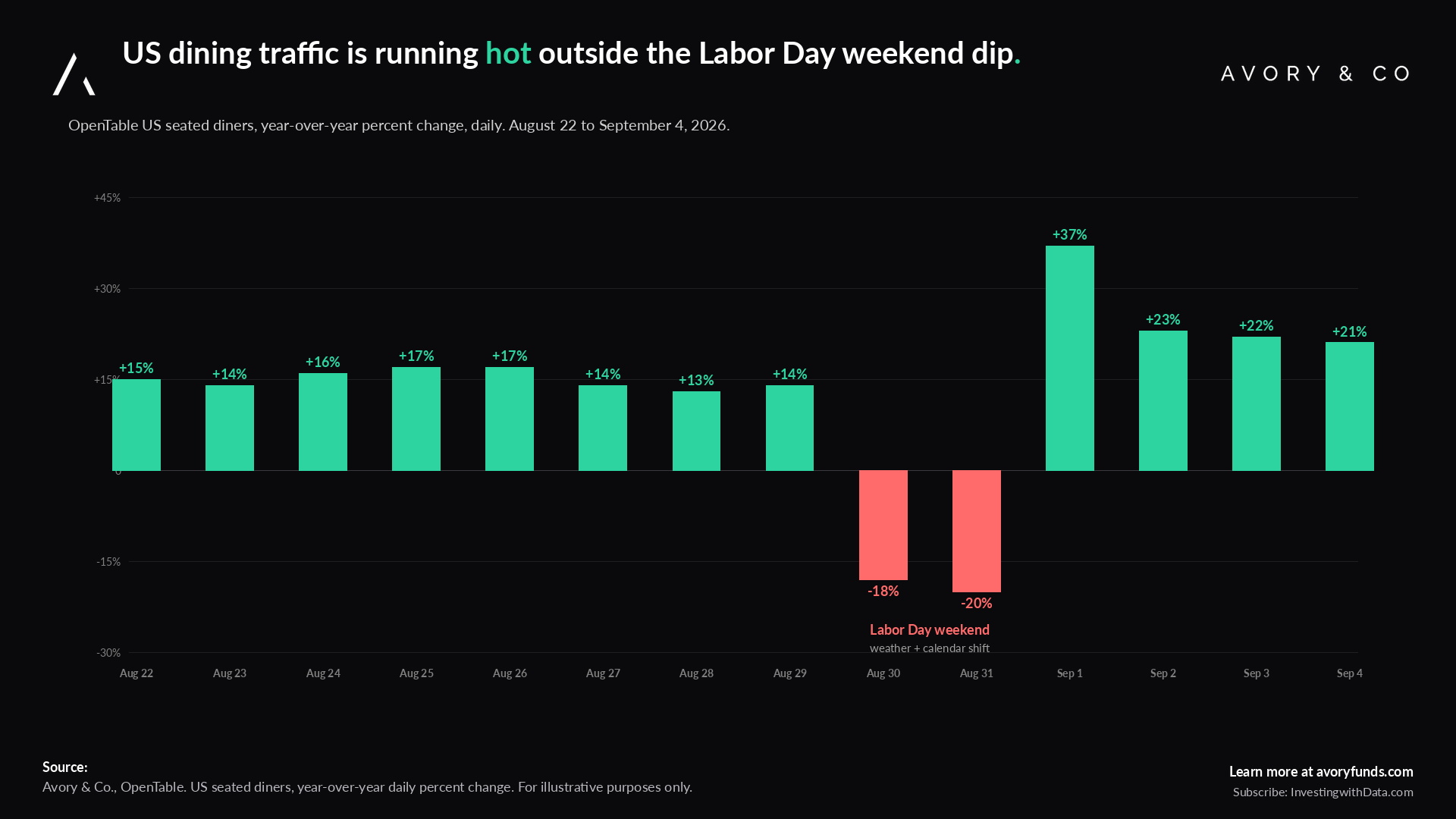
[6] OpenTable says the consumer is fine.
Now more consumer data… “the consumer is weak", "the consumer is resilient”, “real wages are negative”.
Nope… nope… and nope.
It has now been 3 years we have heard the same thing. A weak consumer. Yet here we are, with most consumer datapoints continuing to chug along. So feels like then that your avg economist is using bad, stale, old, garbage data.
OpenTable US seated diners are running plus 13 to plus 17 percent year over year through late August and early September.
You would expect to see this retrench if consumer was weak…
[7] Hormuz throughput is rebuilding toward normal.
Now in between consumer info and retail sales data, we look at a couple other items.
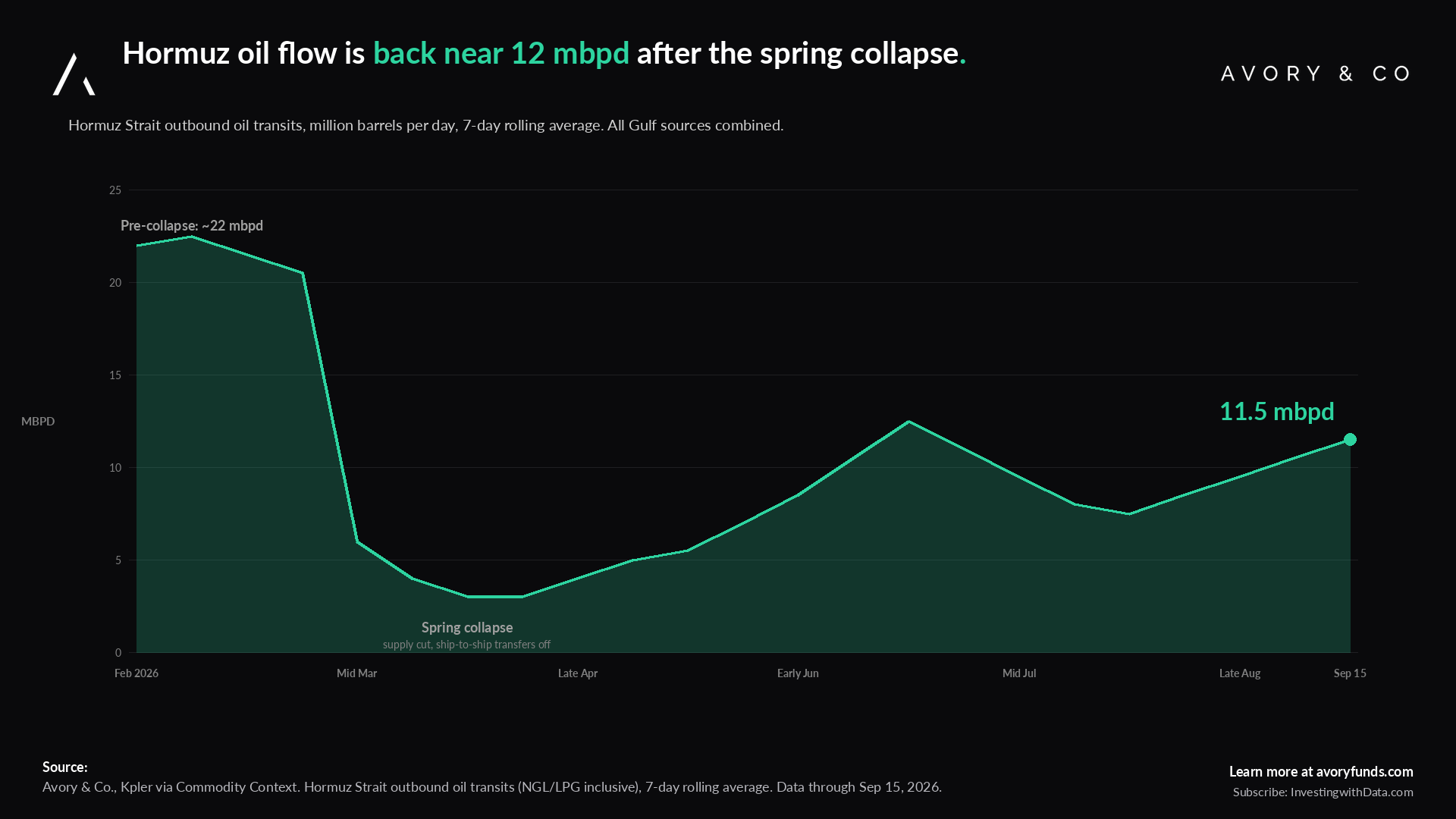
On the geopolitical front, Kpler shipping data through the Strait of Hormuz shows a recovery.
The data collapsed from around 22 million barrels per day to 3 to 4 million barrels per day this spring, and we are now back near 12 million barrels per day. Not fully restored, but the throughput is trending in the right direction as most continue to say that it is shut down. I do not know where this is headed short term, but nobody really wins here with it being shut down…
[8] Weekly Economic Index is running above trend.
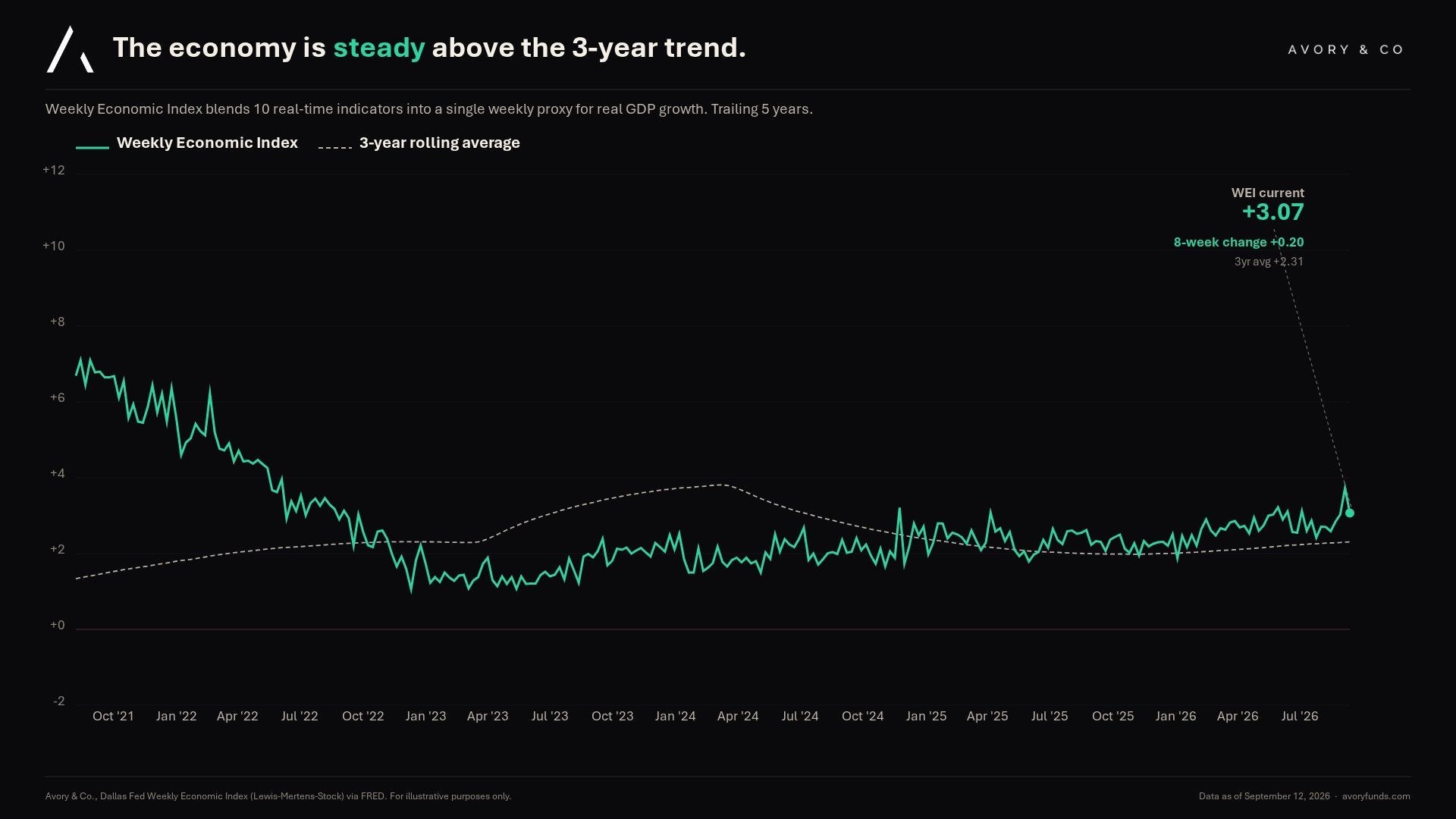
Now if we aggregate some economic data and turn into a Weekly Economic Index we see that it is still running at plus 3.07, and the eight-week change is plus 0.20.
That is materially above the three-year average of plus 2.31, so the growth impulse is broadening rather than fading. Hmm.
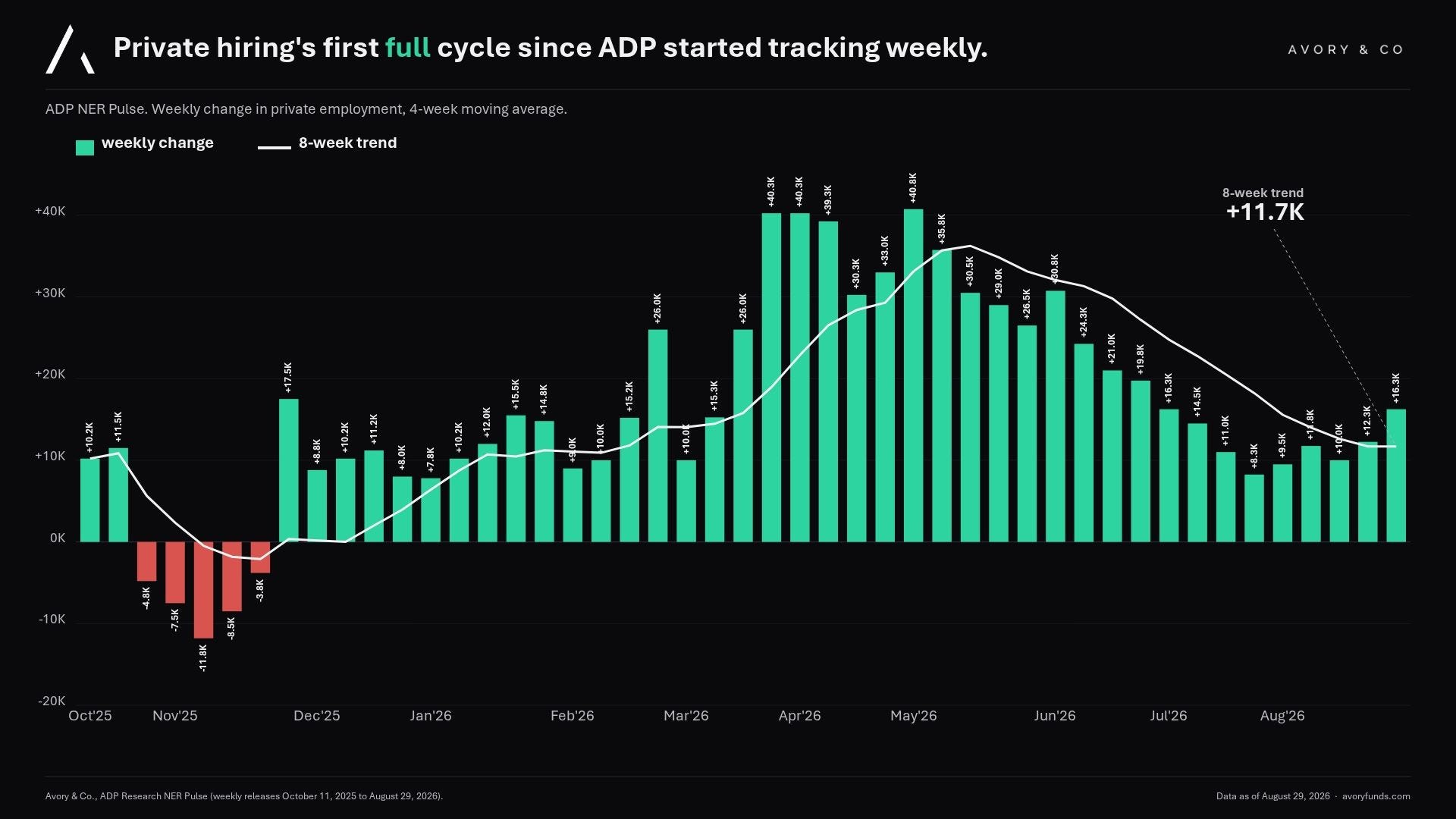
[9] ADP weekly pulse is adding real hiring.
Now jobs data. ADP’s weekly pulse is getting stronger, not weaker. The Fed called out the economy improving, I agree. The eight-week trend on private employment sits at plus 11.7 thousand per week, so the labor market is stabilizing, not deteriorating. This is a good thing. But for a second, remember just 3-6-9 months ago every economist was saying that the employment market is breaking? Or that AI would eat 40-60% of jobs by now?
We follow the data.
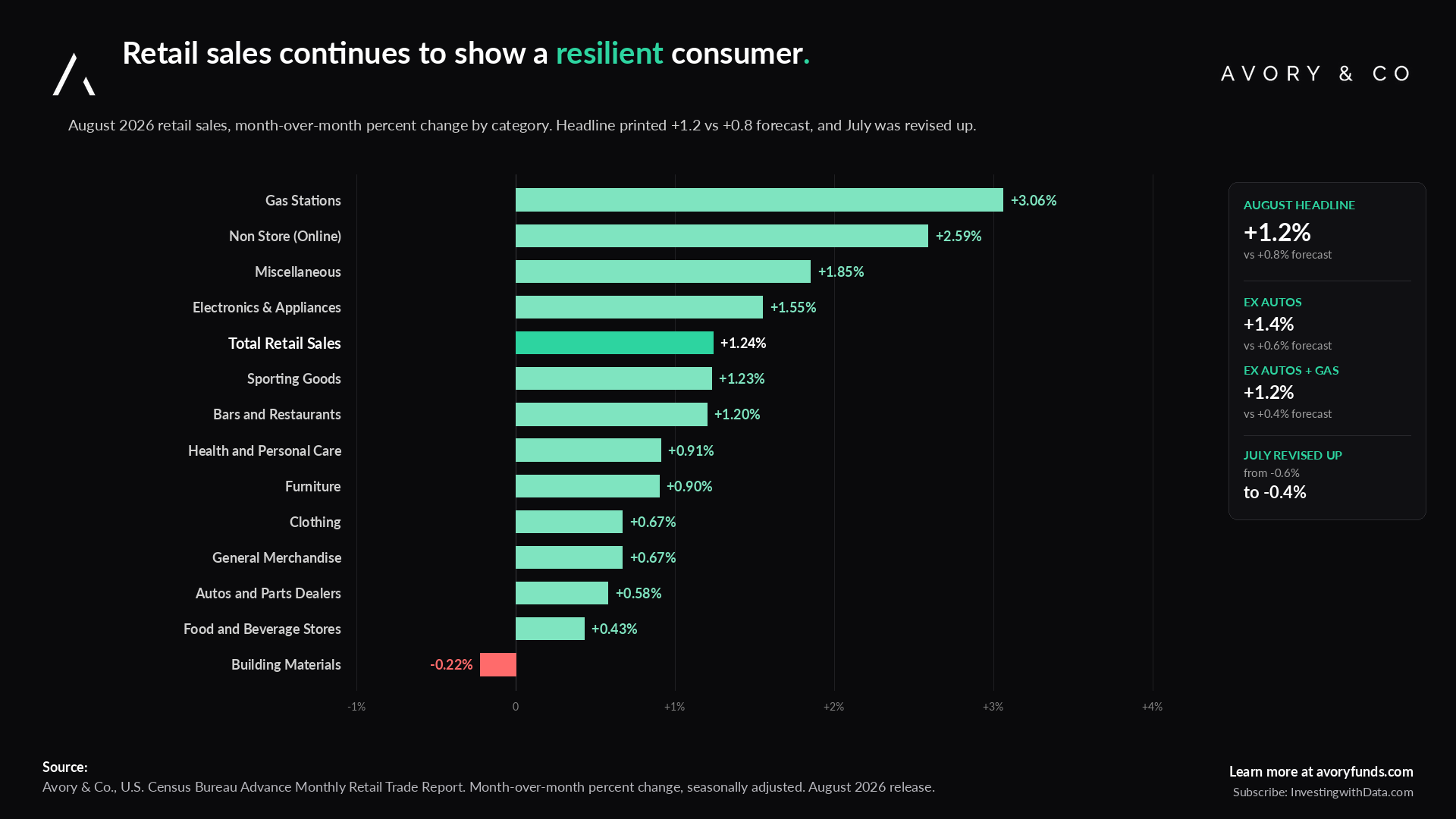
[10] Retail sales continues to show a resilient consumer.
NOW…
All that showed up this week in the retail sales report. “ Bad jobs market” “weak consumer” ….
And we get 1.2% month over month against a plus 0.8% forecast, ex-autos plus 1.4% versus plus 0.6%, and July revised from minus 0.6% to minus 0.4%.
Almost every segment for retail sales did well…
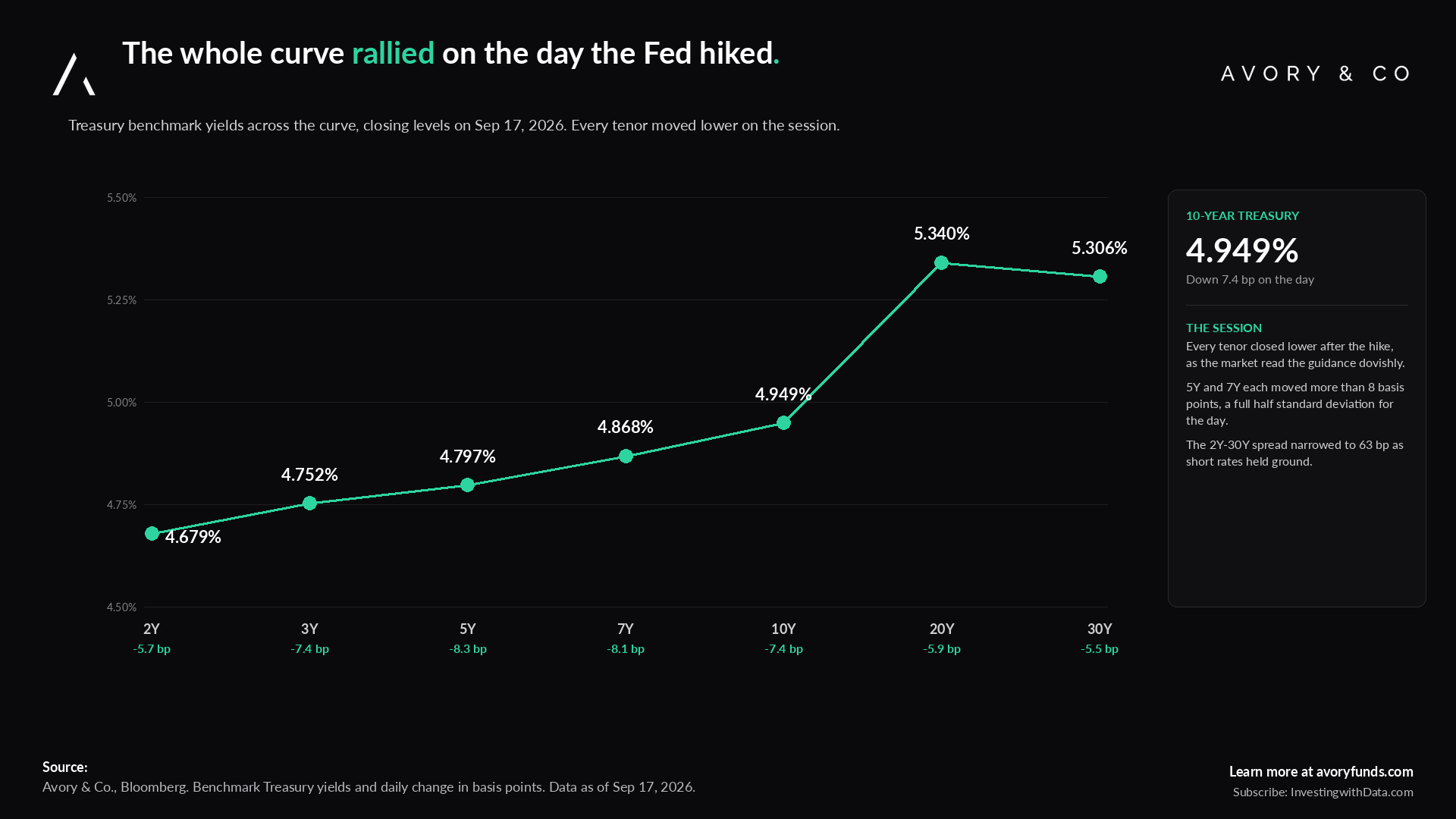
[11] The whole curve rallied on the day of the hike, but will it hold?
Ok this is getting long, so let me make it quick.
After the rate hike, rates actually fell, which is counter to what you would normally expect. But again, markets move ahead of the action.
Will rates stay lower? Hard to say. There are a lot of variables at play here and abroad. But the Fed and Treasury both want rates to stabilize, and markets do too.
Volatile rates tend to create more equity volatility, especially as quant funds adjust positioning and sizing based on those moves.
[12] High and rising rates have historically been fine for stocks.
This one is easy to read.
History has actually been kind here. In the high-and-rising rate regime we are in now, using the Cleveland Fed’s modeled real yield above 2% and rising, forward 12-month S&P 500 returns have averaged plus 11% . So the setup of higher rates plus a functioning economy has historically been a fine one for equities…
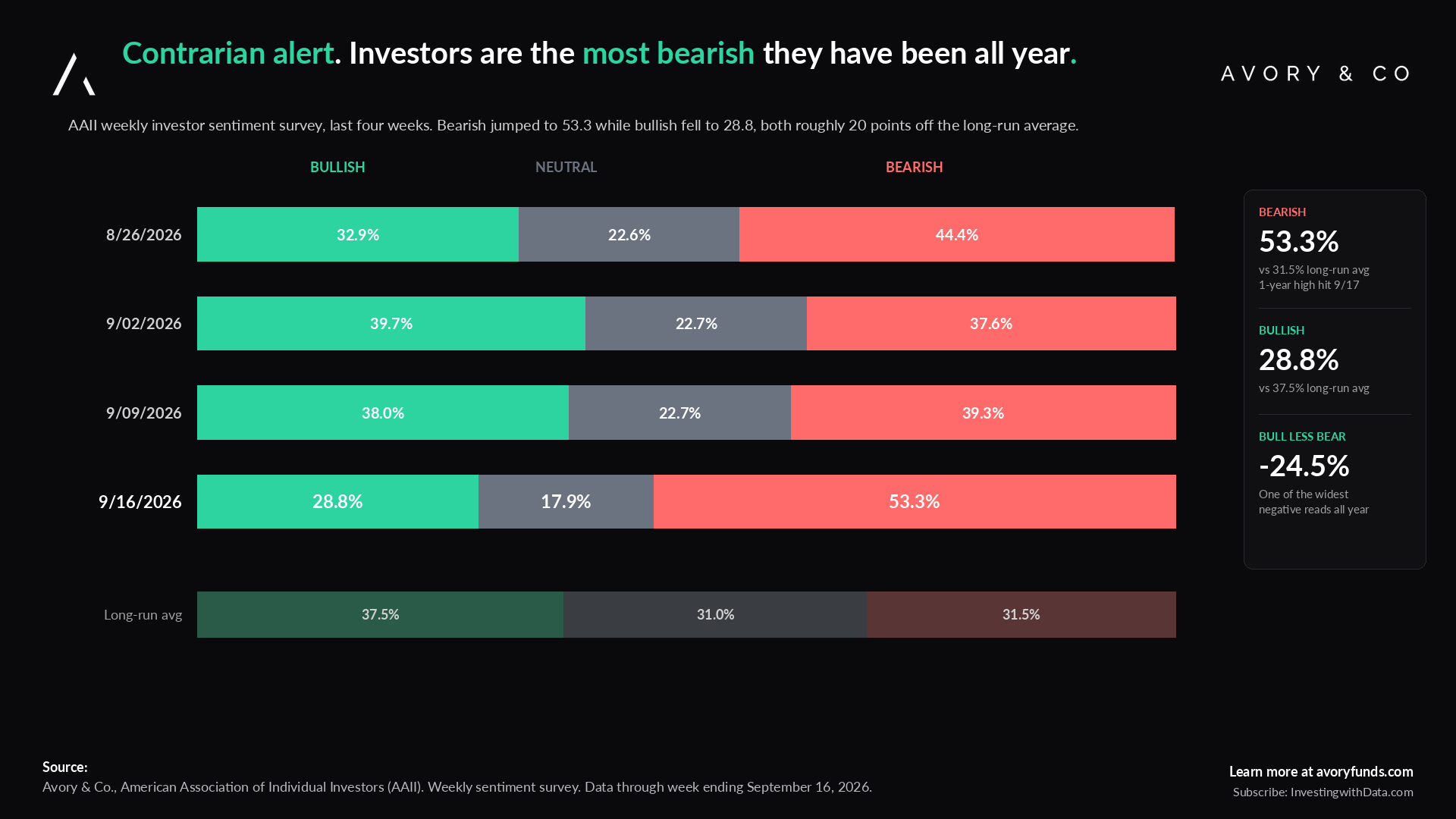
[13] Contrarian alert, investors are the most bearish all year.
And investors are nervous. 53% bears in latest survey. That is near highs. Only 20% of stocks are above 20 day moving avg, so lots of chop has happened here.
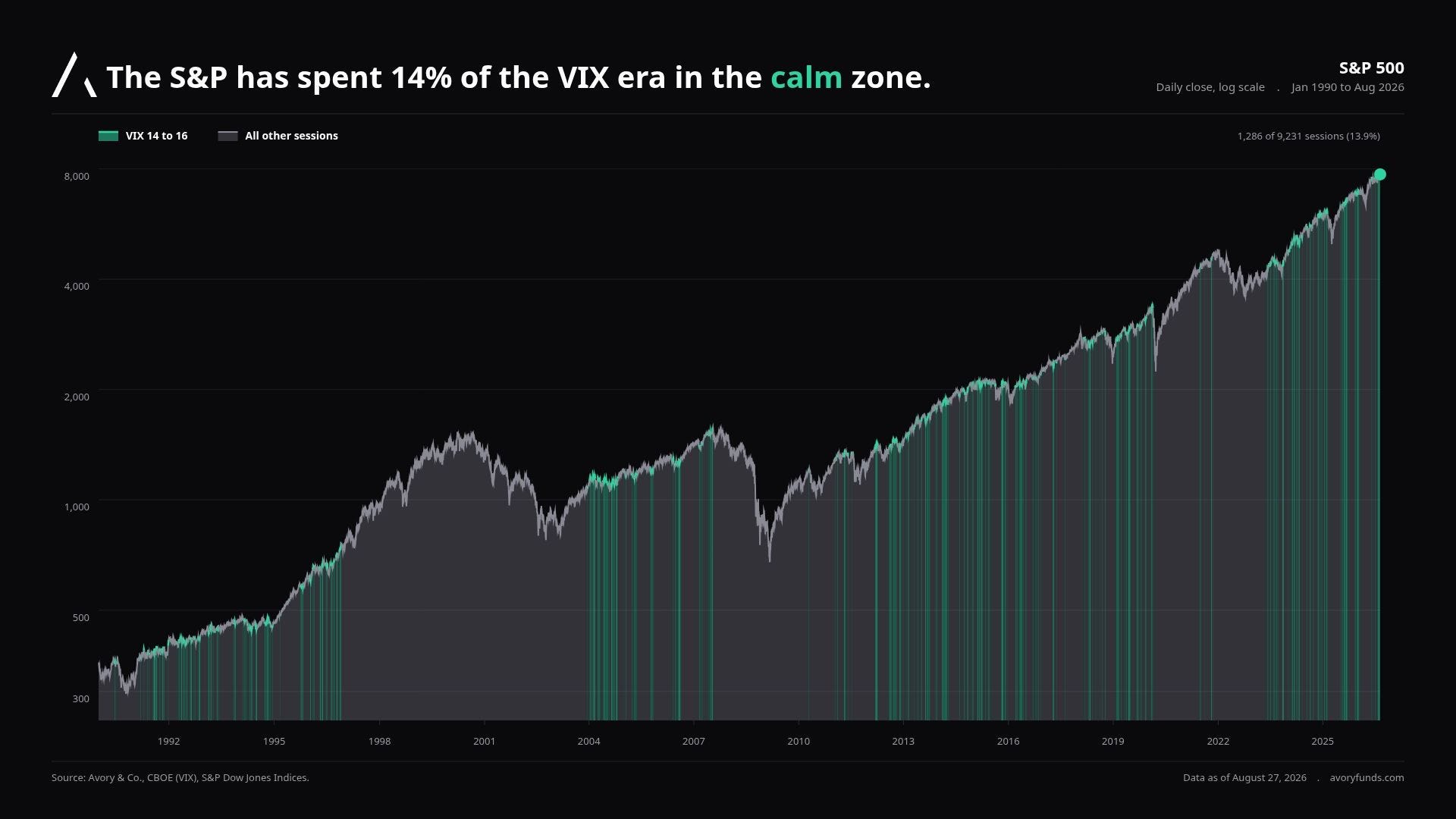
[14] Realized vol is back in the calm zone.
Then we have had little volatility, and we should expect some growing volatility with midterms. But low vol as shown on this chart is normal and does not signal good or bad market enviorments ahead…
.
Net Net
The consumer remains firm, so if corporate earnings are a function of the health of the consumer and economy, then our tone should be constructive. Yes the Fed hiked, and yes that is never a positive, but we do know that historically that hikes in an environment where rates are elevated and the economy is growing is met with healthy returns going forward. As a firm we expect this to continue. Lots going on in AI and stay tuned as we bring Meta Muse retention data here weekly.
Have a good week ahead.
About Avory & Co.
Investing Forward.
Avory specializes in high-conviction equity strategies, emphasizing Secular Growth and Transformation Stories driven by exceptional teams. Data guides decisions. We cater to high net worth investors, family offices, and institutional investors. Note: This information doesn’t constitute a recommendation to buy or sell any mentioned securities. Avory is based in Miami, Florida with clients all across the globe.
Speak to us:
Send us an email: Team@avoryco.com
Want to invest? We are on most platforms.
Want More
🎥 Avory YouTube: Channel
🎙️ Avory: Podcast
Disclaimer: Not a recommendation to purchase or sell any securities mentioned. This is for educational purposes only.