

Big Picture
💡 Selling Okta, What We Bought, and Rates + Coreweave
First, some portfolio news. We sold Okta. (See our write up here) It went from about $70 to $210 for us in just under seven months, roughly a 3x, and it had become one of our largest positions. The business got better, but the stock moved far more than the fundamentals, and at more than 10 times revenue we couldn’t justify the price without pushing our forecasts past our comfort. It helped us, and there’s plenty of stuff out there to buy that is cheap and durable in our view.
We put the proceeds to work in a few places. We added to names we already own that got sold off on inflation, rate and software fears, the biggest being Omnicell. We started two new positions in precision health, Quest Diagnostics and Labcorp. And we bought ServiceNow, which we think may be one of the leaders in orchestrating AI.
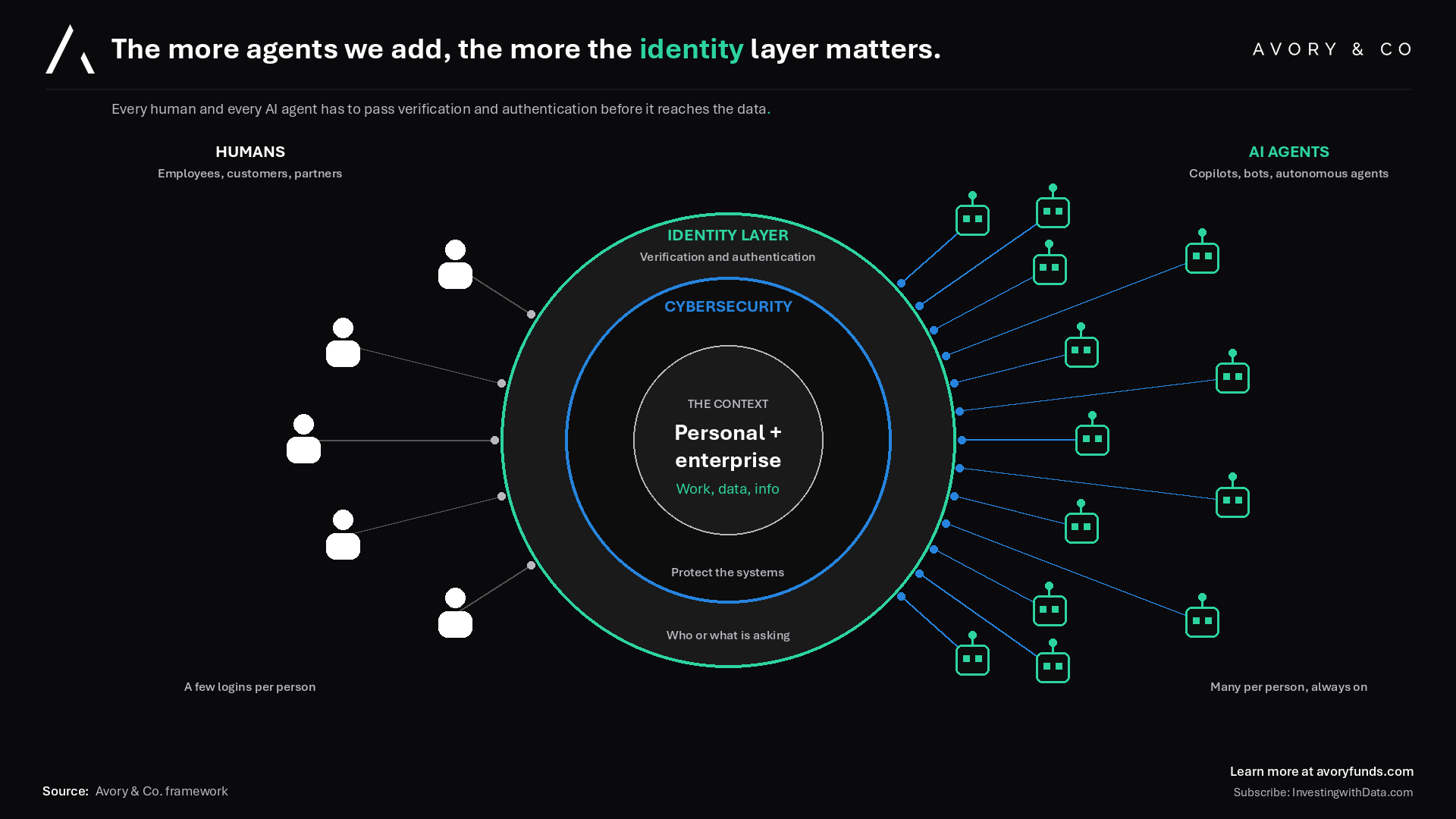
We still like the space. We still think cyber and identity remain the biggest risk, and opportunity, in AI. That’s why the identity illustration is chart 1, and the full rationale on why we sold is attached below…
Now to the markets.
Last week and the week prior we shared that we thought yields were looking peakish… so far so good.
The 10-year topped at 5.31% on October 5 and has come back to about 5.09%. And what has that done? It has led to the everything else rally once again, something we have now seen about 2-3 times this year.
We tend to do well in those, it’s no secret why. That’s where we have exposure. We aren’t chasing shiny objects over here. Market breadth also finally cleared the washout we pointed to, you can see the updated chart on chart 4.
Now this week, under the surface the data was better than the headlines as you’d expect these days… CPI ran hot on the headline, but most of that was energy, and the part of inflation the Fed can actually influence with rates isn’t the problem. The Fed can’t do much about the drivers of inflation right now. We also got retail sales. Retail sales looked healthy across the board, and the big banks reported, and if you tuned in then you heard that the consumer and the economy are in good shape. They see it first.
Then a few things we are watching closer. Crypto and gambling are attached at the hip. For a while, I think this was more of a hypothesis, but in this update we’re starting to see real conviction in that hypothesis.
Now the big one for AI this week was CoreWeave. I’m not as worried about the debt itself, but if you’re an equity holder, I think there’s somewhat of a hopium here. And look, I like management over there I like what they’re doing, but certainly, there’s a lot of speculation embedded in it. On AI, we also got Meta’s Muse Wonder, Mark Zuckerberg is now at the frontier, and their consumer app Meta Muse is still sitting #1 on the App Store.
We are investors, not traders. Lets get into the details and data!
[1] Why cyber and identity remain the biggest risk.
First, here’s the basic reason we think cyber and identity remain the biggest risk in AI.
In the middle is your personal and enterprise context, the data that makes an AI agent useful. Around it sits cyber, then the verification and auth layer. On the outside are humans AND AI agents, all trying to get in.
More agents means more identities to verify, and every one of them is a door into the context.
That was the backdrop to the Okta purchase (Clear Secure to some extent also). The full rationale on why we sold, and where the proceeds went, is below… To be clear, we still like the space, and we still have exposure through ServiceNow, which is leaning into security.
Why we sold OKTA, and what we bought…
[2] Since the 10-year peaked, everything else beat Tech.
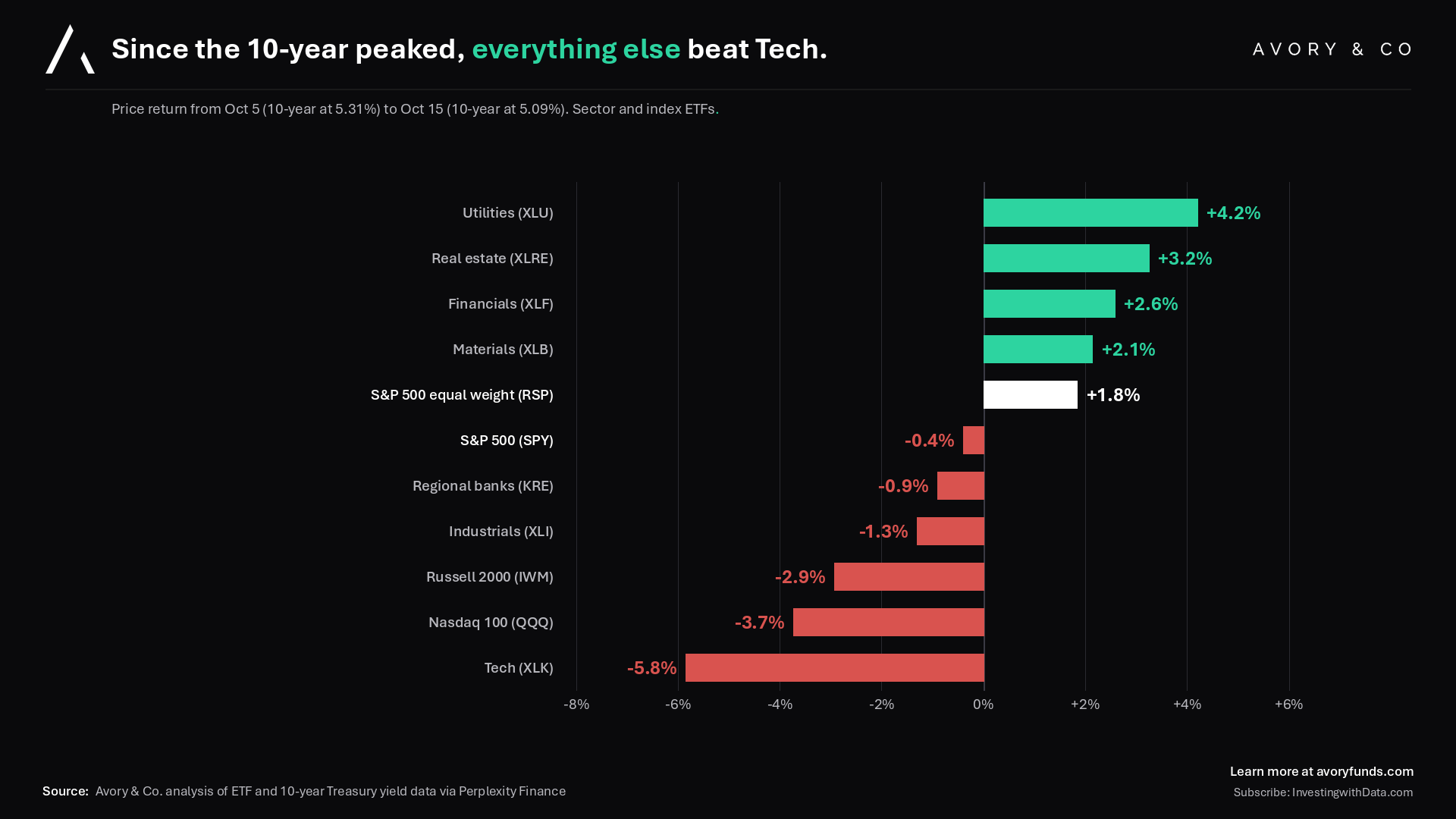
Now switching to markets. From October 5 to October 15 the 10-year went from 5.31% to 5.09%, and here you can see what moved.
Utilities +4.2%
Real estate +3.2%
Financials +2.6%
Materials +2.1%
Equal weight S&P 500 +1.8%
versus the S&P 500 at -0.4%, the Nasdaq 100 at -3.7% and Tech at -5.8%.
The rate-sensitive side of the market is the one that responded first to yields coming off the top. To be fair, small caps and industrials are down too over this short window, so it’s not everything… but the direction is the one we laid out.
[3] Equal weight has outrun the Nasdaq 100 three times this year.
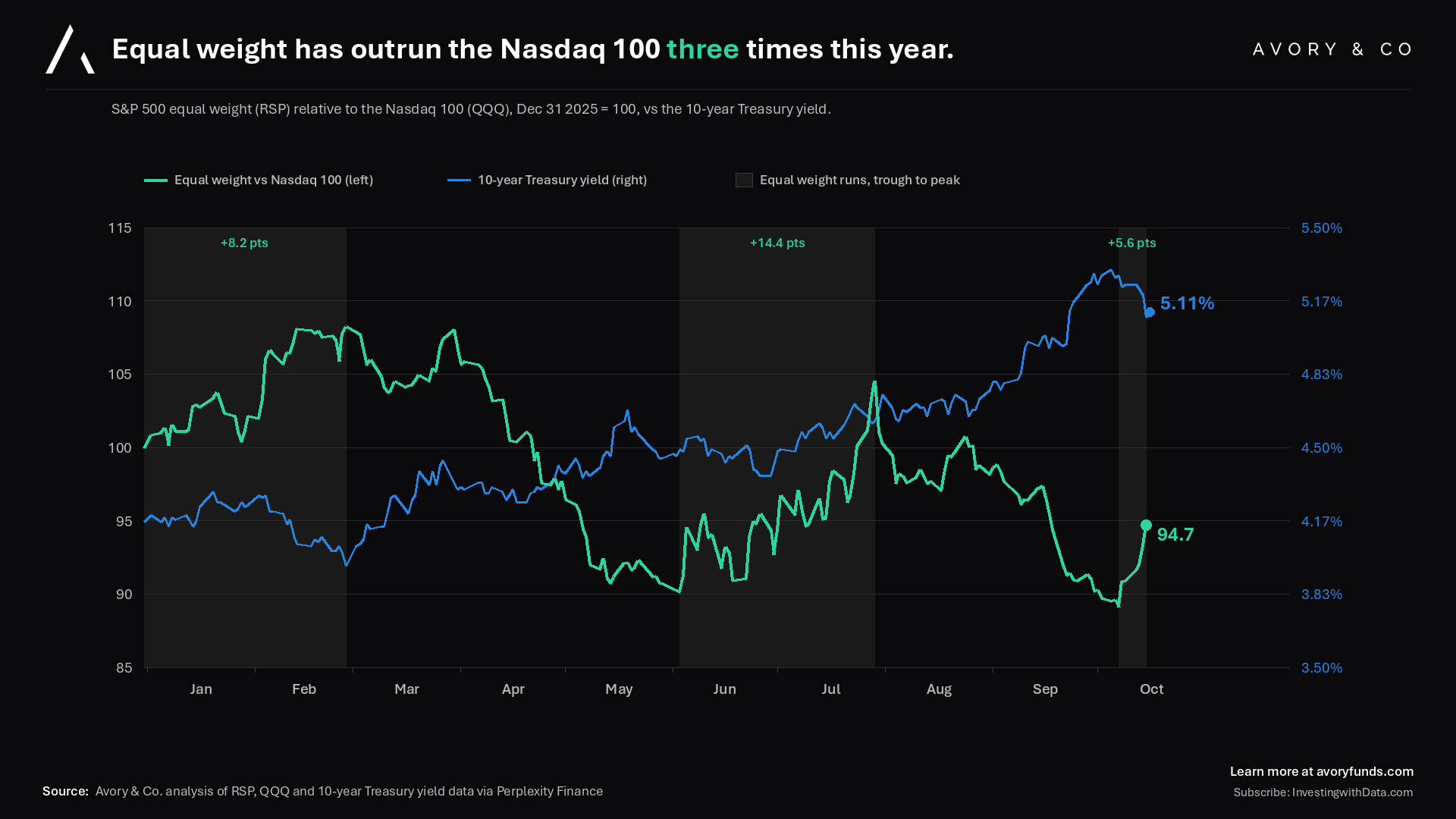
This is the third time this year the equal weight S&P has run ahead of the Nasdaq 100.
+8.2 pts from the start of the year through late February
+14.4 pts from early June through late July
+5.6 pts since October 7, and still going
Interesting part is the summer run happened while yields were rising, so it’s not only about rates. It’s about the market finally paying for the rest of the economy, not just the AI trade. Something we have been explicit about in terms of our thesis.
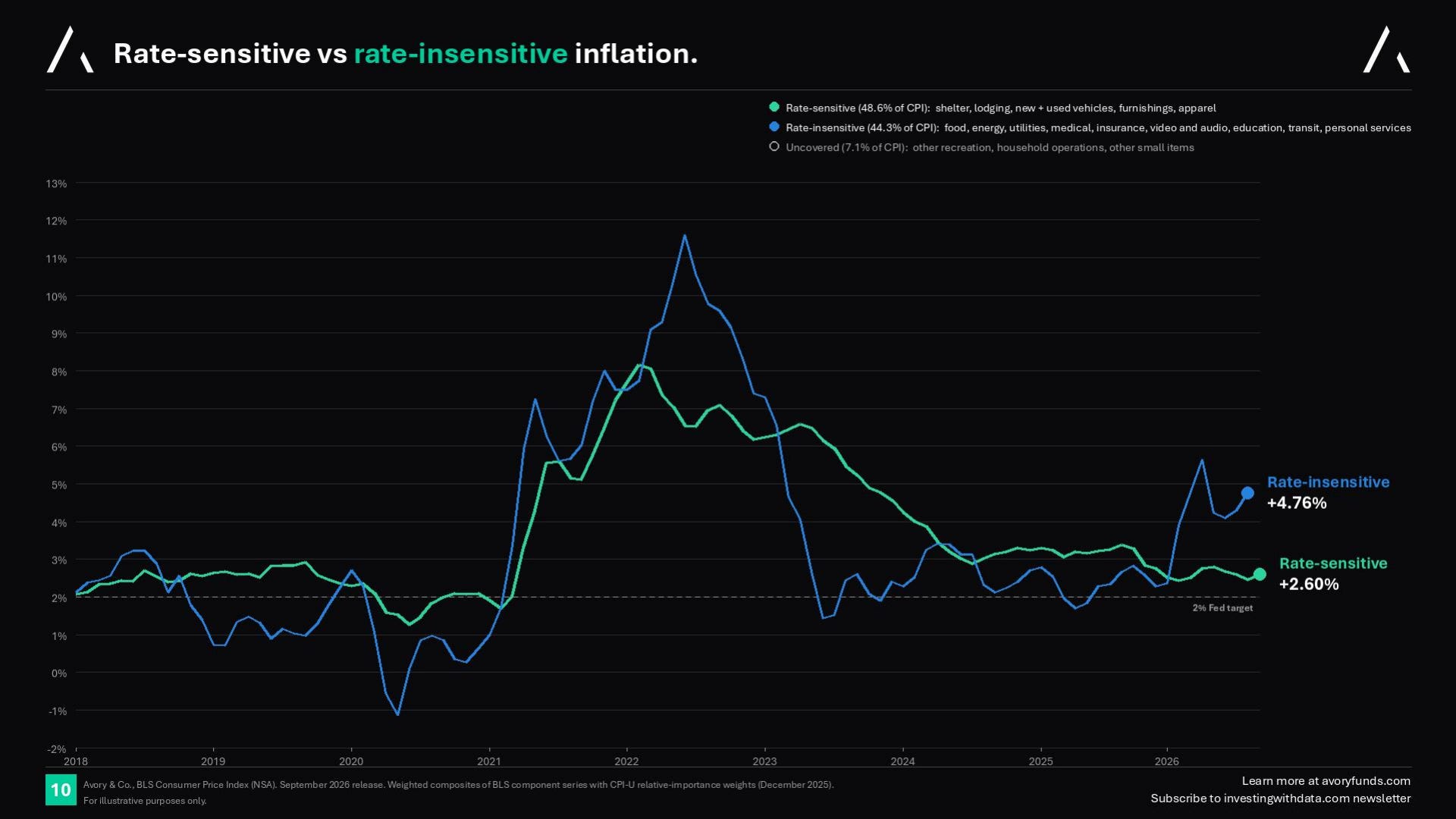
[5] The rate-sensitive side of CPI isn’t the problem.
Now switching to inflation. The inflation reports this week under the surface were not as bad as some headlines. As always.
The bigger thing is the more rate-sensitive part of CPI again isn’t the issue.
Rate-insensitive (food, energy, utilities, medical, insurance and more, 44.3% of CPI) is running +4.76% Y/Y
Rate-sensitive (shelter, vehicles, furnishings, apparel, 48.6% of CPI) is running +2.60% Y/Y (lower if you use alt rent data)
The Fed can’t do much about the drivers of inflation. Raising rates does not lower the price of gas or insurance. So what drives it?? You can see that on the next chart.
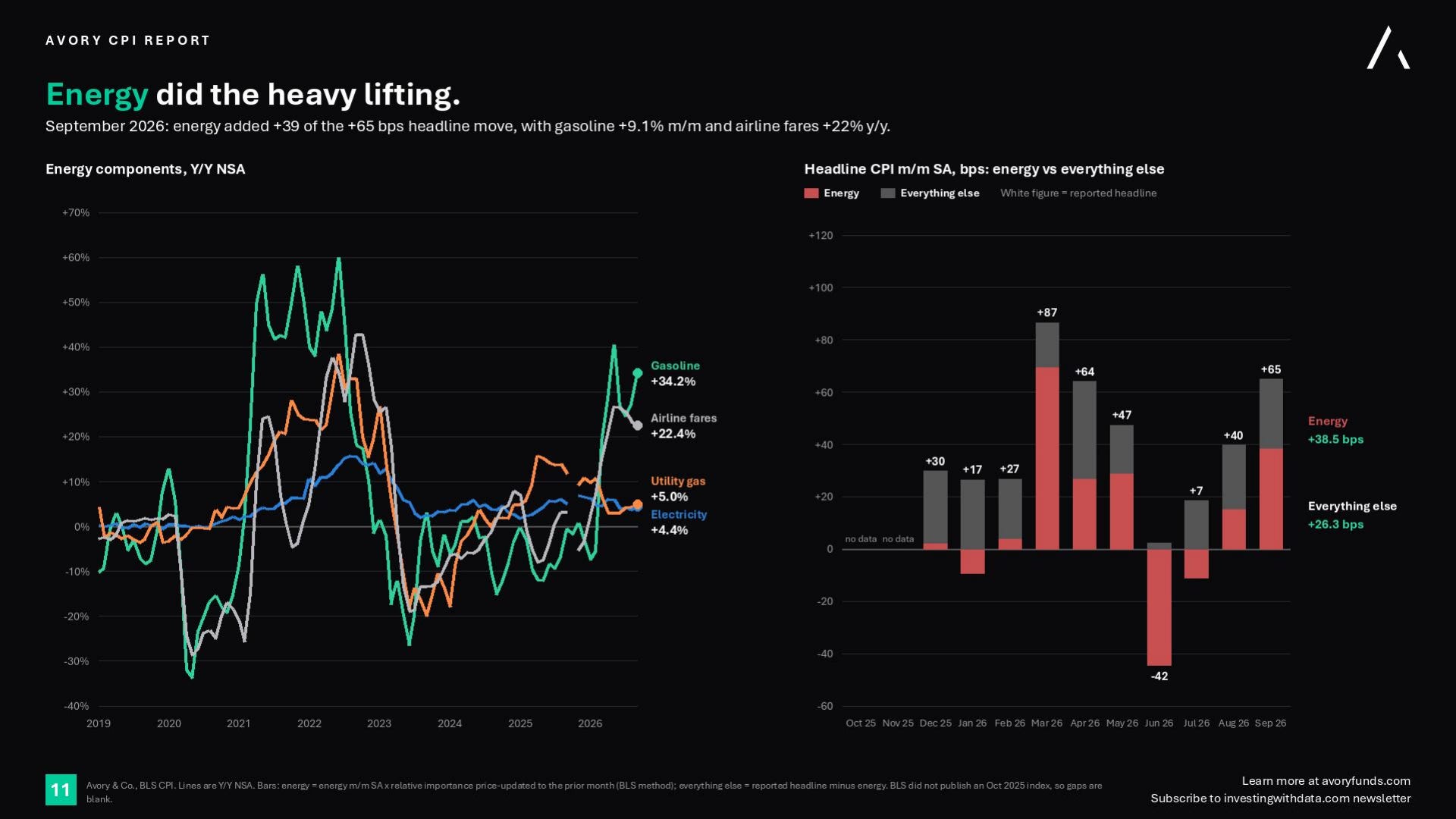
[6] Energy = Main Driver.
Here you can see most of it is being driven by energy.
Energy added +38.5 bps of the +65 bps headline M/M move. Everything else combined added about +26 bps.
Gasoline was +9.1% M/M and +34.2% Y/Y, and airline fares were +22.4% Y/Y. Take energy out and the month looks a lot calmer.
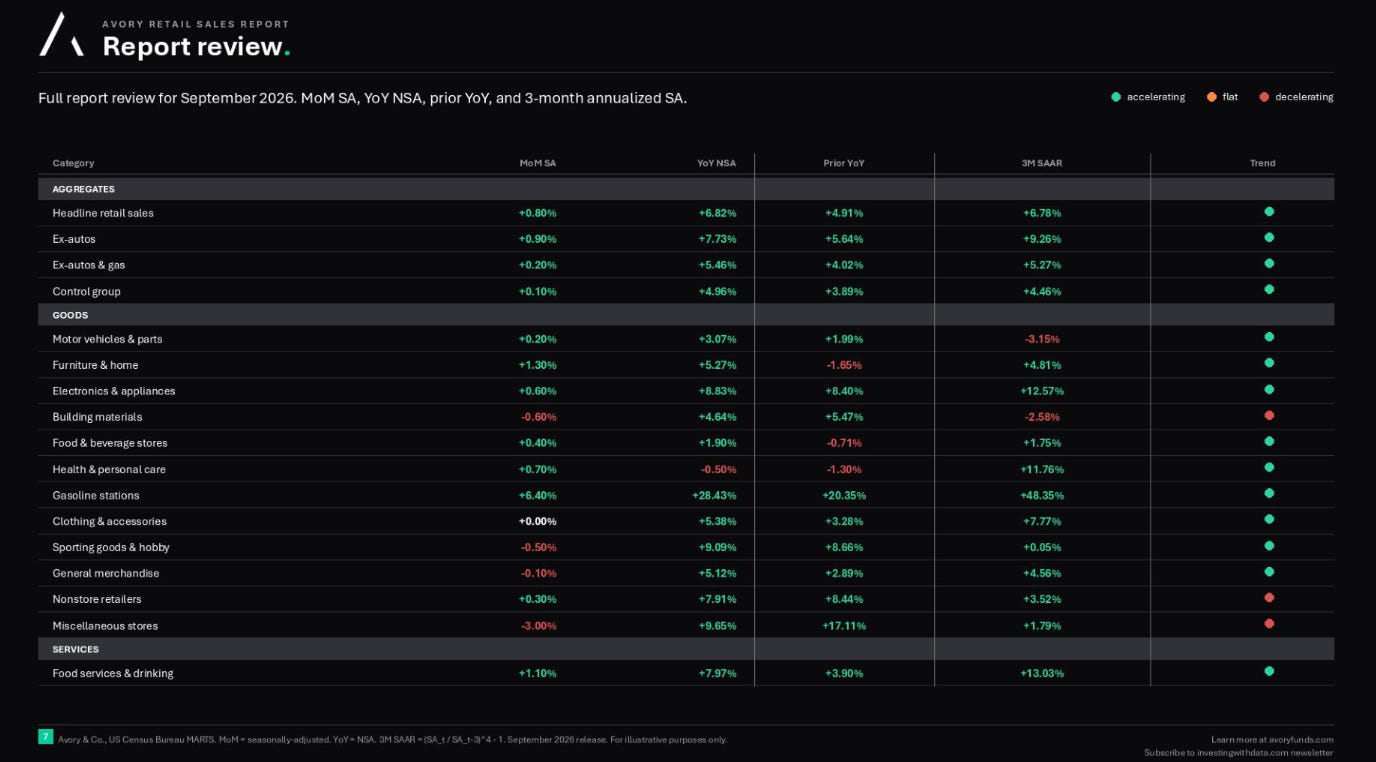
[7] Retail sales still look healthy across the board.
Retail sales continues to look pretty healthy across the board. Yes gas and energy are driving some of it, but at the core it’s strong.
Headline +0.80% M/M and +6.82% Y/Y
Control group +0.10% M/M and +4.96% Y/Y
Gas stations +6.40% M/M
Food services +1.10% M/M
The control group, which strips out gas, autos, building materials and restaurants, is still running close to +5% Y/Y. And people are still going out to eat. That is not a consumer pulling back.
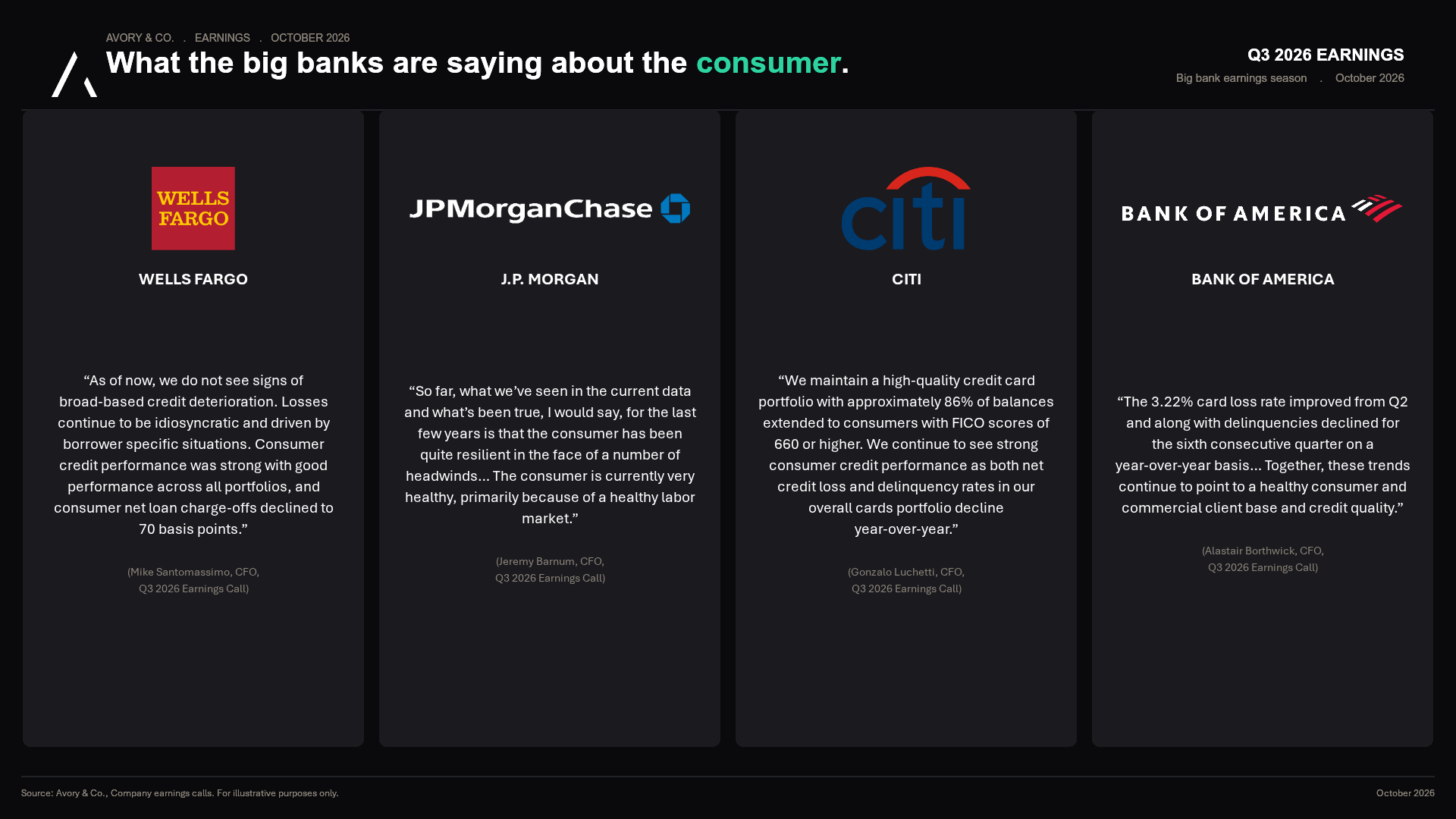
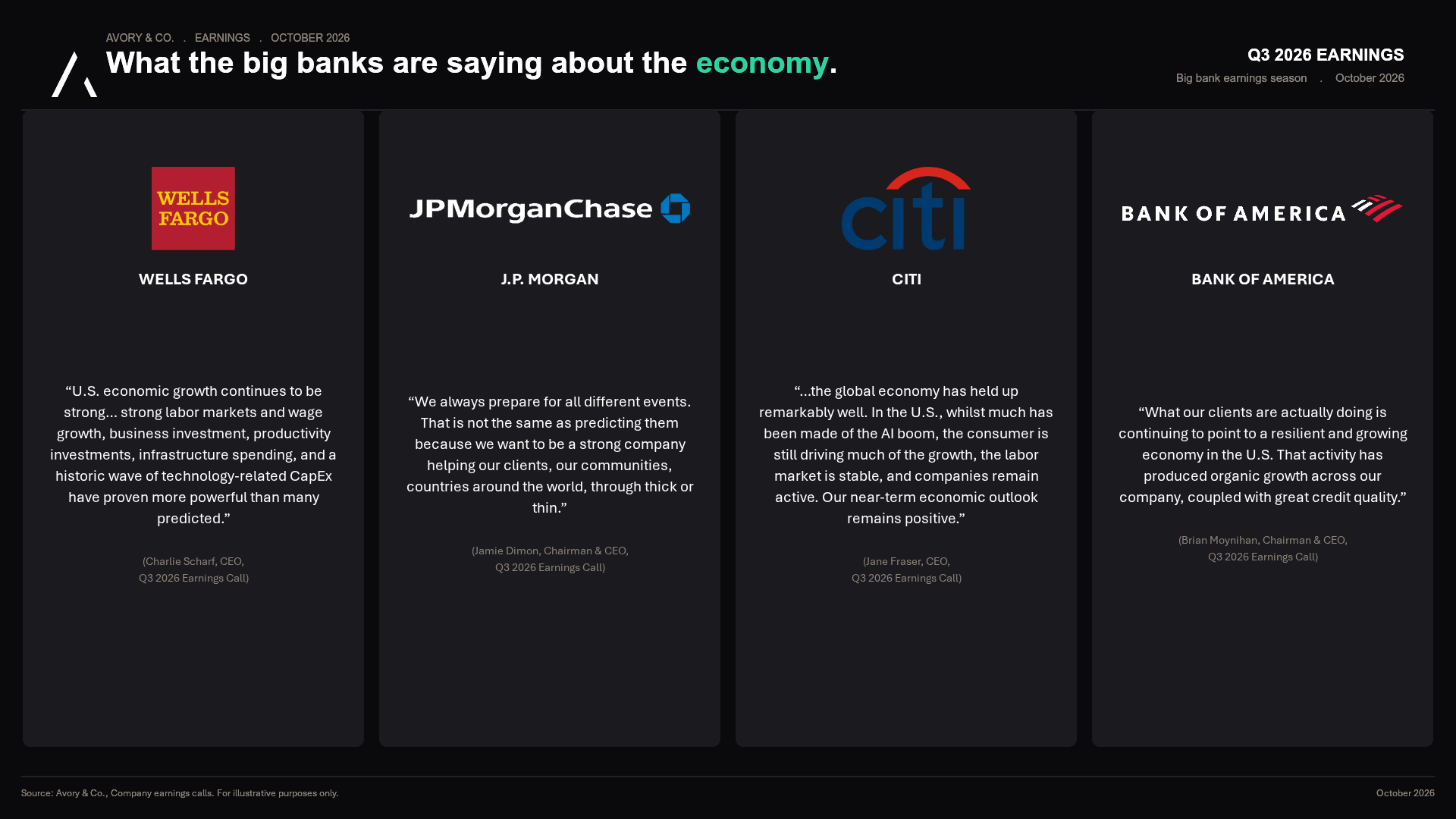
[8] What the big banks are saying about the consumer.
Now the banks. They see the consumer before anyone else does, through cards, deposits and loans, so we always pay attention to what they say.
Wells Fargo said they do not see signs of broad-based credit deterioration. JPMorgan said the consumer is currently very healthy, mostly because of a healthy labor market. Bank of America’s card loss rate was 3.22%, with delinquencies down Y/Y for the sixth consecutive quarter.
The banks are the safety net here, and the safety net is in good shape.
[9] What the big banks are saying about the economy.
Same story on the economy. Wells called US growth strong, Citi said the consumer is still driving much of the growth, and Bank of America said client activity points to a resilient and growing economy.
When the biggest balance sheets in the country say growth is fine and credit is fine, we listen to them over the TV economists.
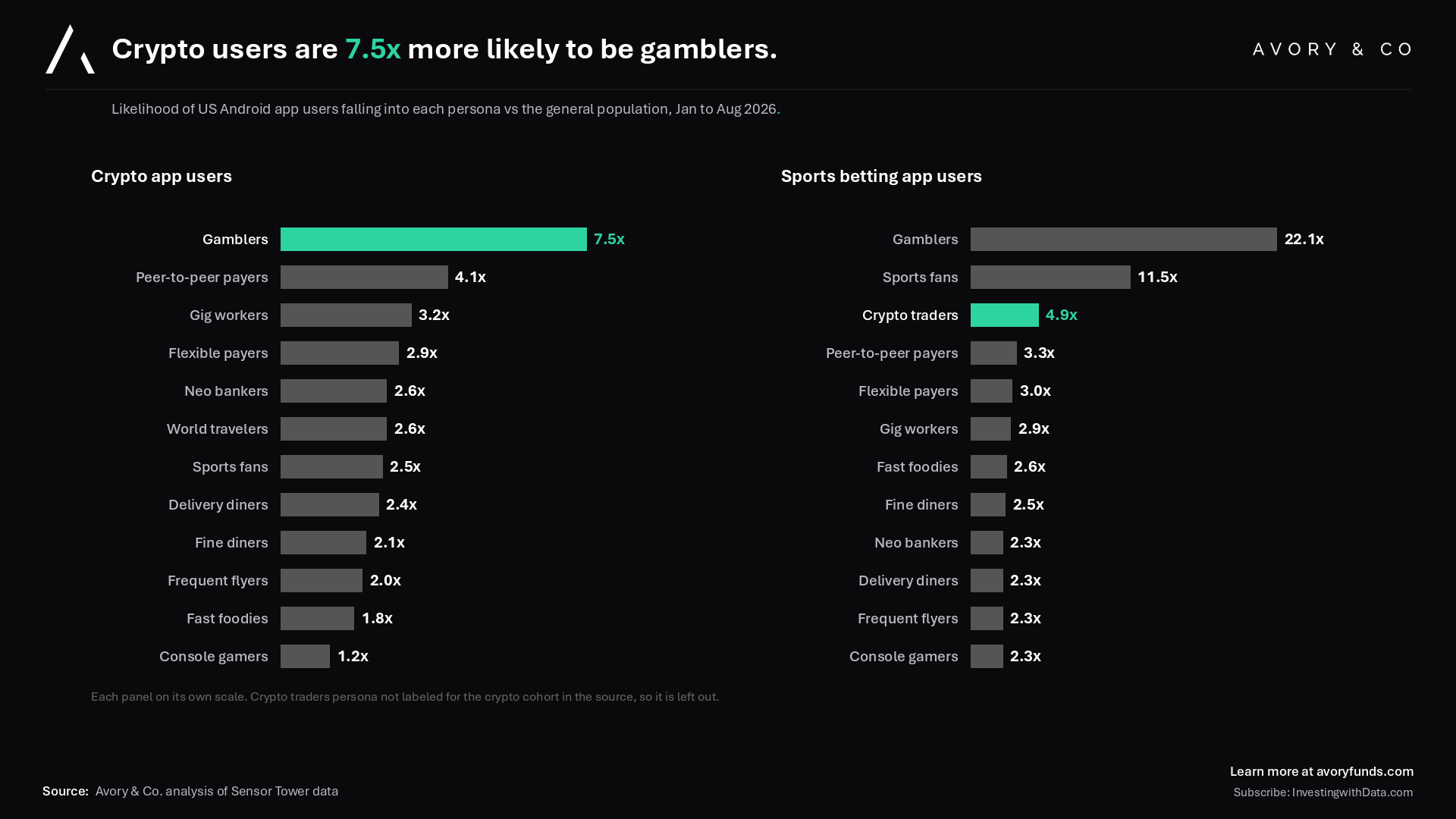
[10] Crypto users are 7.5x more likely to be gamblers.
Crypto and gambling are attached at the hip. Most assumed this connection, but this is reality. Yikes
Crypto app users are 7.5x more likely to be gamblers than the general population, and sports betting app users are 4.9x more likely to be crypto traders.
Take that as you want, but speculation at its finest.
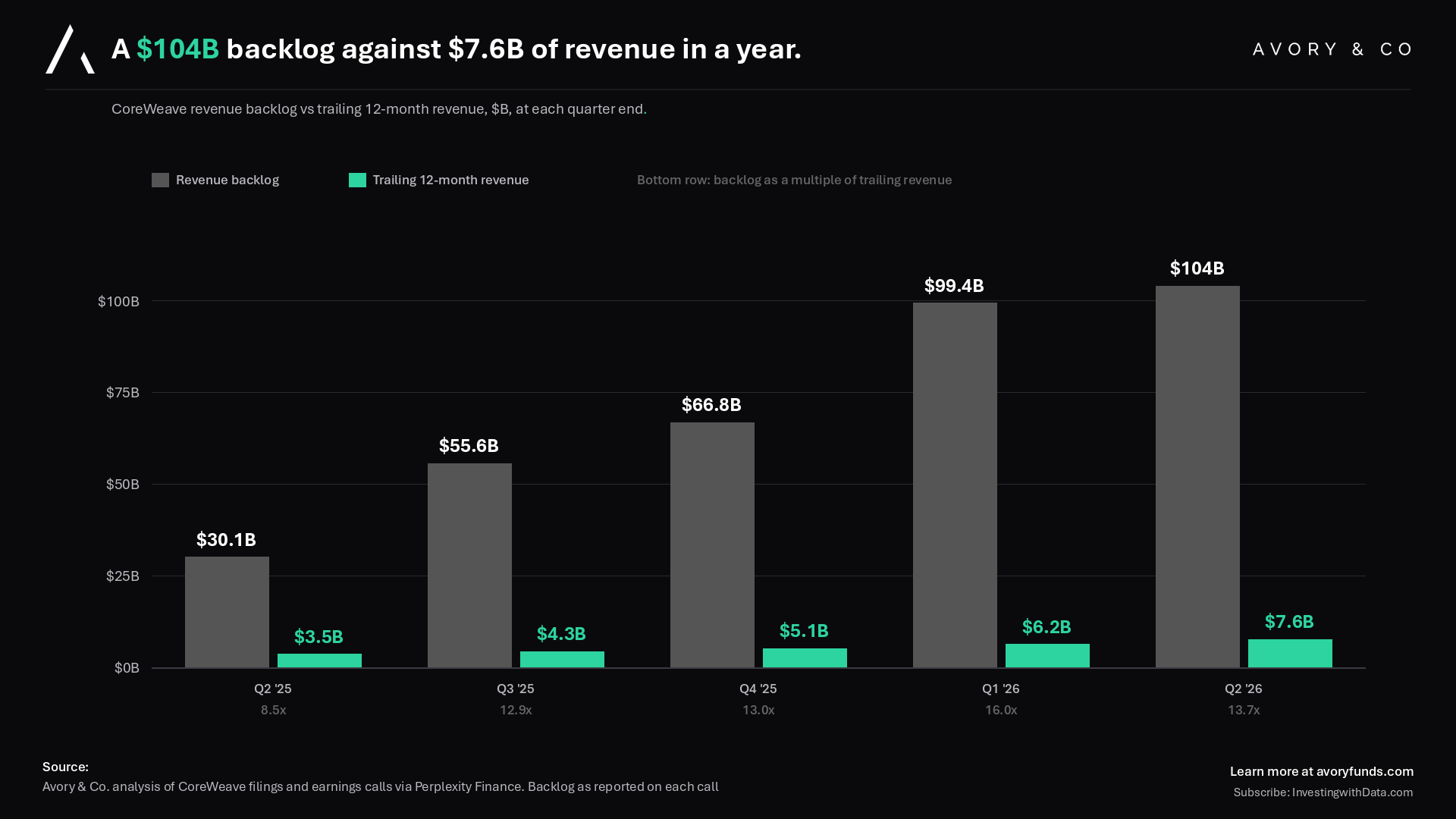
[11] CoreWeave’s backlog is 13.7x its revenue.
Now switching topics to AI financing, and CoreWeave is a good example of what we have been watching.
The backlog is $104B. Trailing twelve-month revenue is $7.6B. That’s backlog, not collected. Signed contracts are not cash, and the gap between the two has to be financed in the meantime. Which brings us to the next chart…
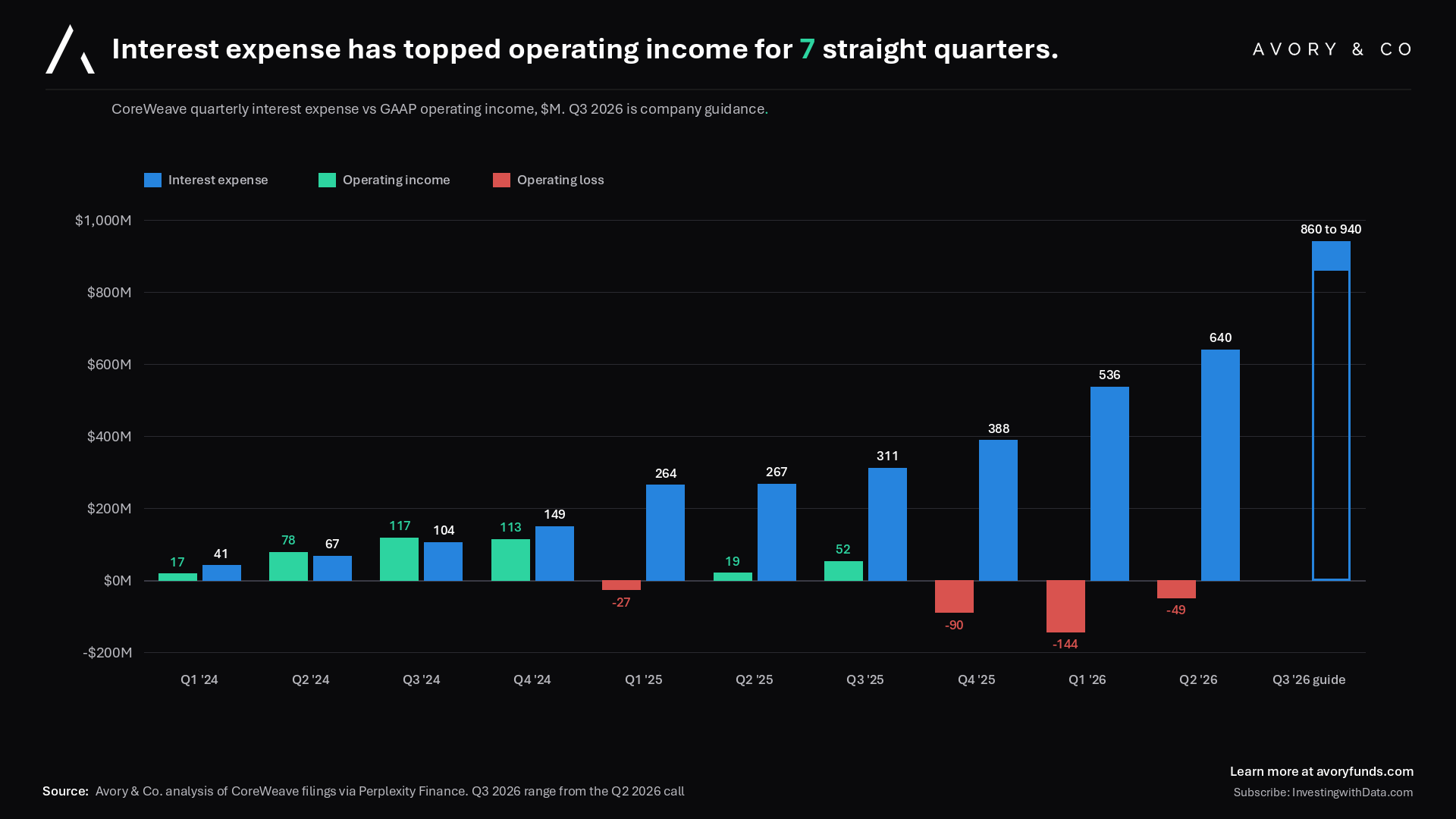
[12] Interest expense is bigger than operating income.
Here you can see interest expense against operating income each quarter.
In Q2, interest expense was $640M and operating income was -$49M. And management guided Q3 interest to $860M to $940M.
When interest is more than operating income, the business is working for the lenders first. It can work as long as the backlog converts, but there is not a lot of room.
[13] The debt rose as yields rose.
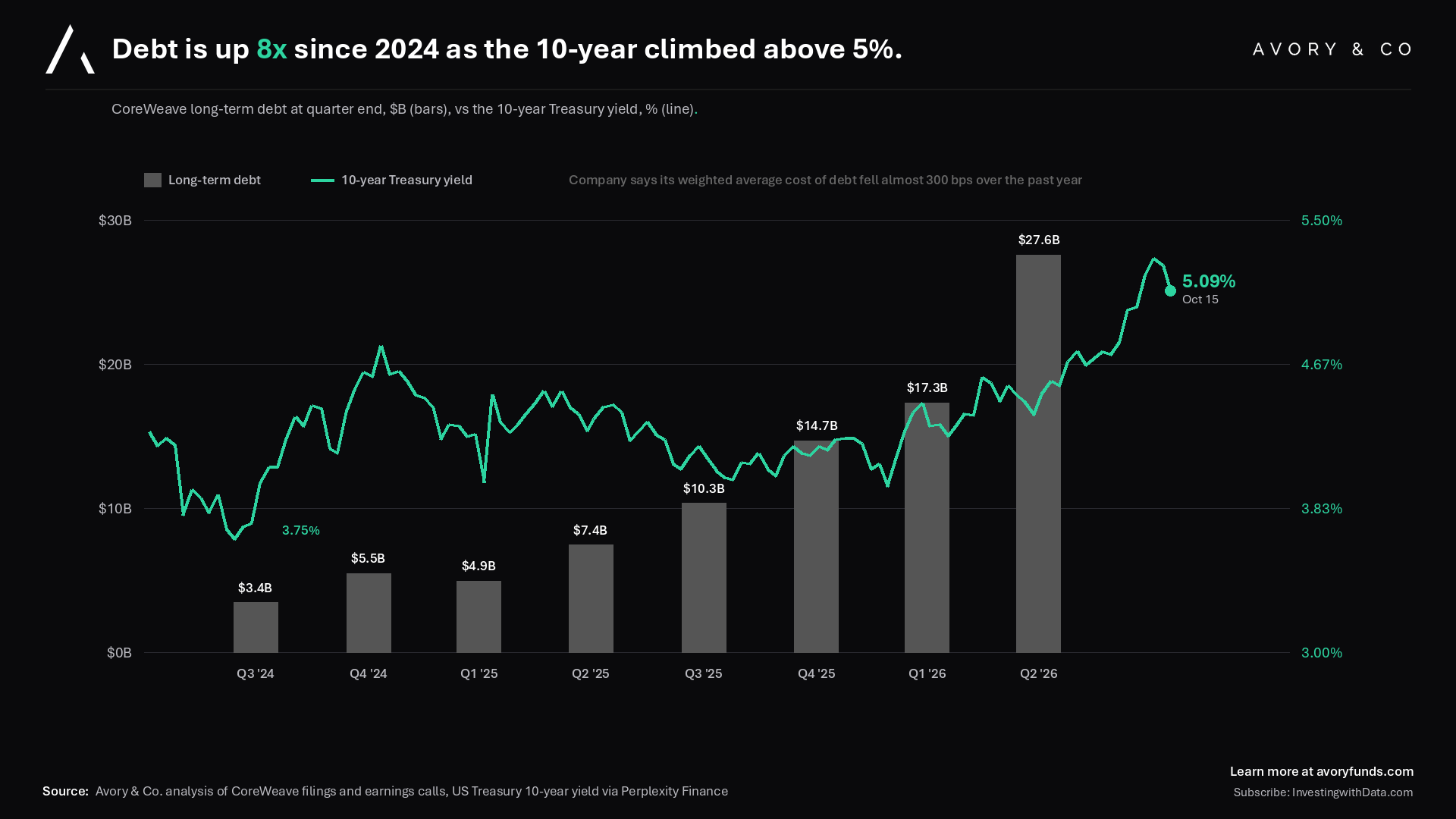
Long-term debt went from $3.4B to $27.6B, about 8x, while the 10-year went from 3.75% to 5.09%.
To be fair, management said they reduced their weighted average cost of debt by almost 300 basis points, so they are getting better terms as they scale. HOWEVER, the risk is on the new and floating debt. If yields stay high, every new dollar of AI capacity costs more to finance. We just think investors need to separate the AI trades, and this is a very different one than cyber or even chips.
[14] Meta Muse and Meta Wonder are at the frontier.
I also want to update the Meta AI situation!
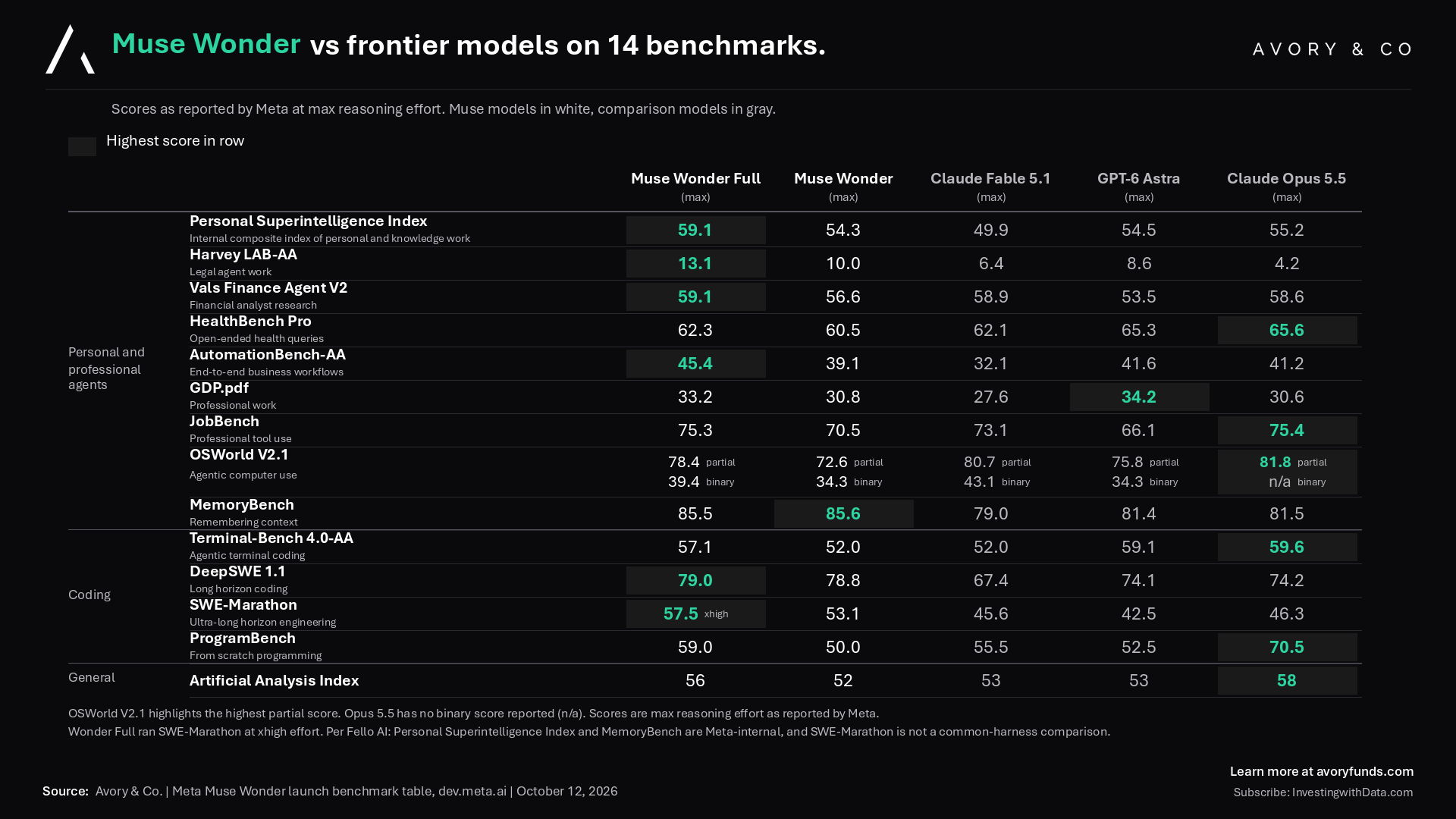
Here you can see Muse Wonder against the frontier models on 14 benchmarks, as reported by Meta.
The Muse models had the top score in 7 of the 14 rows, including legal agent work, business automation and long horizon coding.
Not long ago people were writing Meta off in AI. Now it’s competing at the top.
[15] Muse is still the number one app.
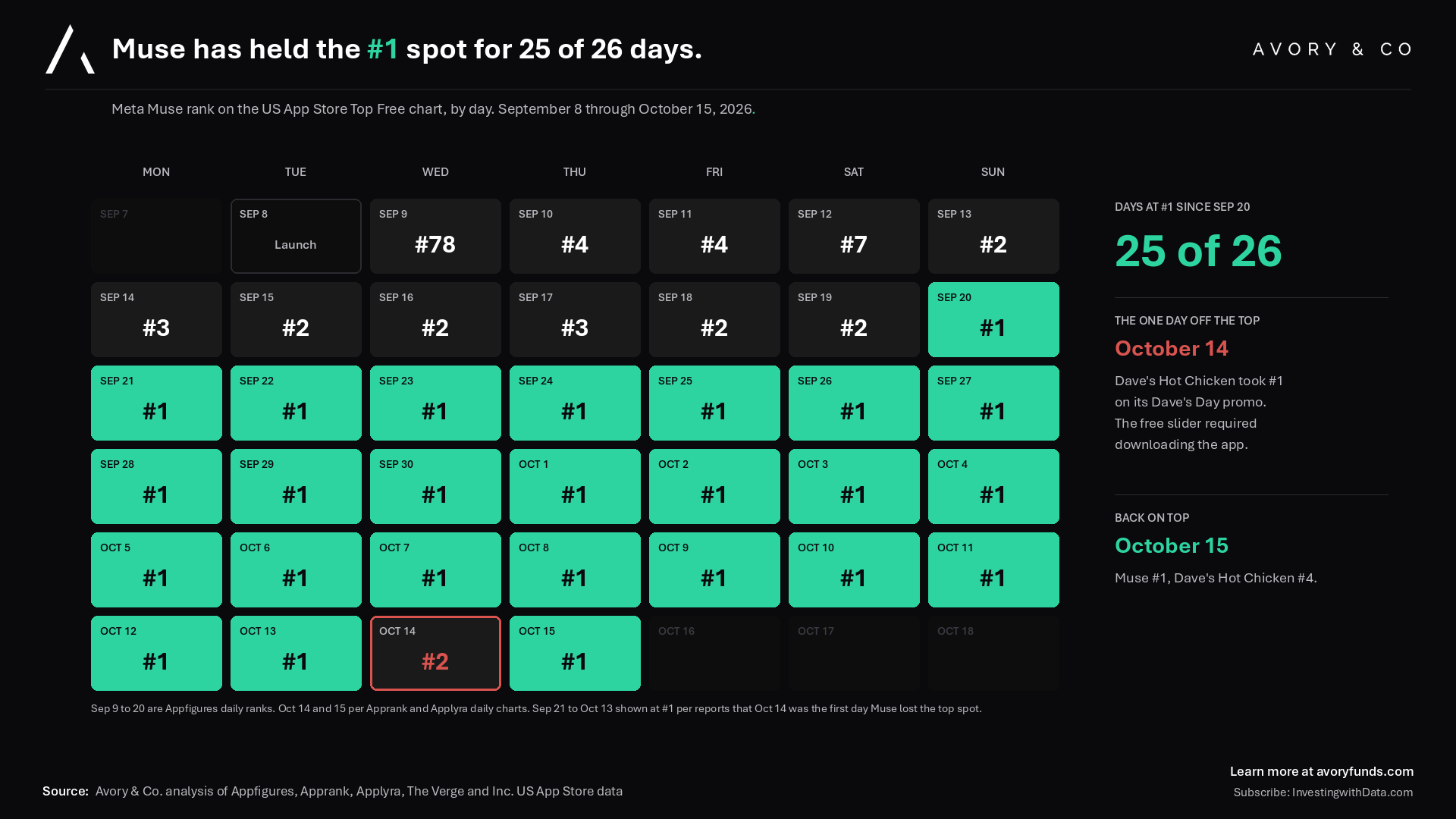
And people are using it. Muse has been the #1 app on the App Store for 25 of the last 26 days.
The one day it wasn’t, Dave’s Hot Chicken took over for its Dave’s Day promo, where the free slider required downloading the app (Inc., The Verge). That’s very much a marketing push.
Muse was back to #1 the next day.
Net Net
We called peakish yields and so far so good. The 10-year came off the top, the everything else rally came back (for now), and breadth confirmed it here.
Under the surface inflation is mostly energy, the consumer is healthy, and the banks are backing that up. We will forsure keep watching how AI gets financed, but the setup still favors what we own.
That’s all for this week!
About Avory & Co.
Investing Forward.
www.avory.xyz / www.avoryfunds.com
Avory specializes in high-conviction equity strategies, emphasizing Secular Growth and Transformation Stories driven by exceptional teams. Data guides decisions. We cater to high net worth investors, family offices, and institutional investors. Note: This information doesn’t constitute a recommendation to buy or sell any mentioned securities. Avory is based in Miami, Florida with clients all across the globe.
Speak to us:
Send us an email: Team@avoryco.com
Want to invest? We are on most platforms.
Want More
🎥 Avory YouTube: Channel
🎙️ Avory: Podcast
Disclaimer: Not a recommendation to purchase or sell any securities mentioned. This is for educational purposes only.