

Big Picture
So what do we think about this week's flood of earnings and Fed commentary—and what does that mean for markets and the economy?
It was a packed week again, with names like Pinterest standing out. As we track both individual companies and the broader policy tone, one theme continues to hold: the macro environment remains stable. I joined Bloomberg TV this week to share our take—yes, the Fed has a lot to think about with tariffs and the economy but the market left the meeting pricing in three cuts between now and the end of 2025. So far we’re not seeing signs of broad inflation from the already announced tariffs. Also real-time data like OpenTable reservations continues to suggest steady consumer activity, and most earnings calls reinforce a resilient economy.
Tariffs and trade risks are real, but so far they’re not showing up in the data in a meaningful way. We’ve been saying for months that watch the real-time data to have a leg up on the delayed data, and that sentiment readings are broken (for now)—and so far that’s been a pretty accurate call. For long-term investors, the story here is not about fear—it’s about staying focused on signals, not noise, and positioning ahead of confirmation.
Let’s get to the info.
Here is the summary if you want just that:
• OpenTable reservations remains positive.
• Jobs market remains healthy.
• FED spoke this week and market still pricing in 3 cuts in 2025.
• Zillow strong rentals growth.
• Pinterest is key to watch!
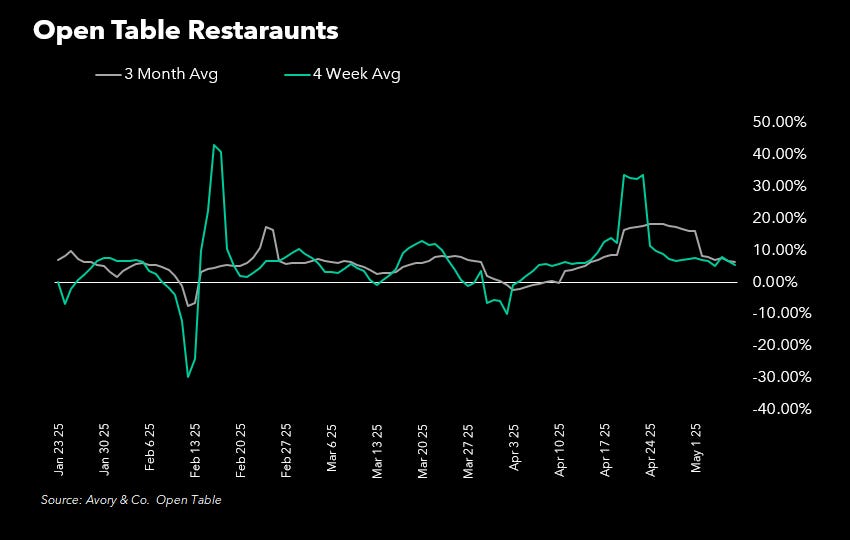
Lets jump into some real time data here. We track OpenTable reservations. They are hovering above 5% Y/Y on a 4-week average and have spiked multiple times over the past two months. This shows that despite headlines, consumer activity is still churning along. February saw weather and leap year impact, but April and May seem to humming along. Real-time demand metrics matter more than sentiment. Consumers are still spending on experiences.
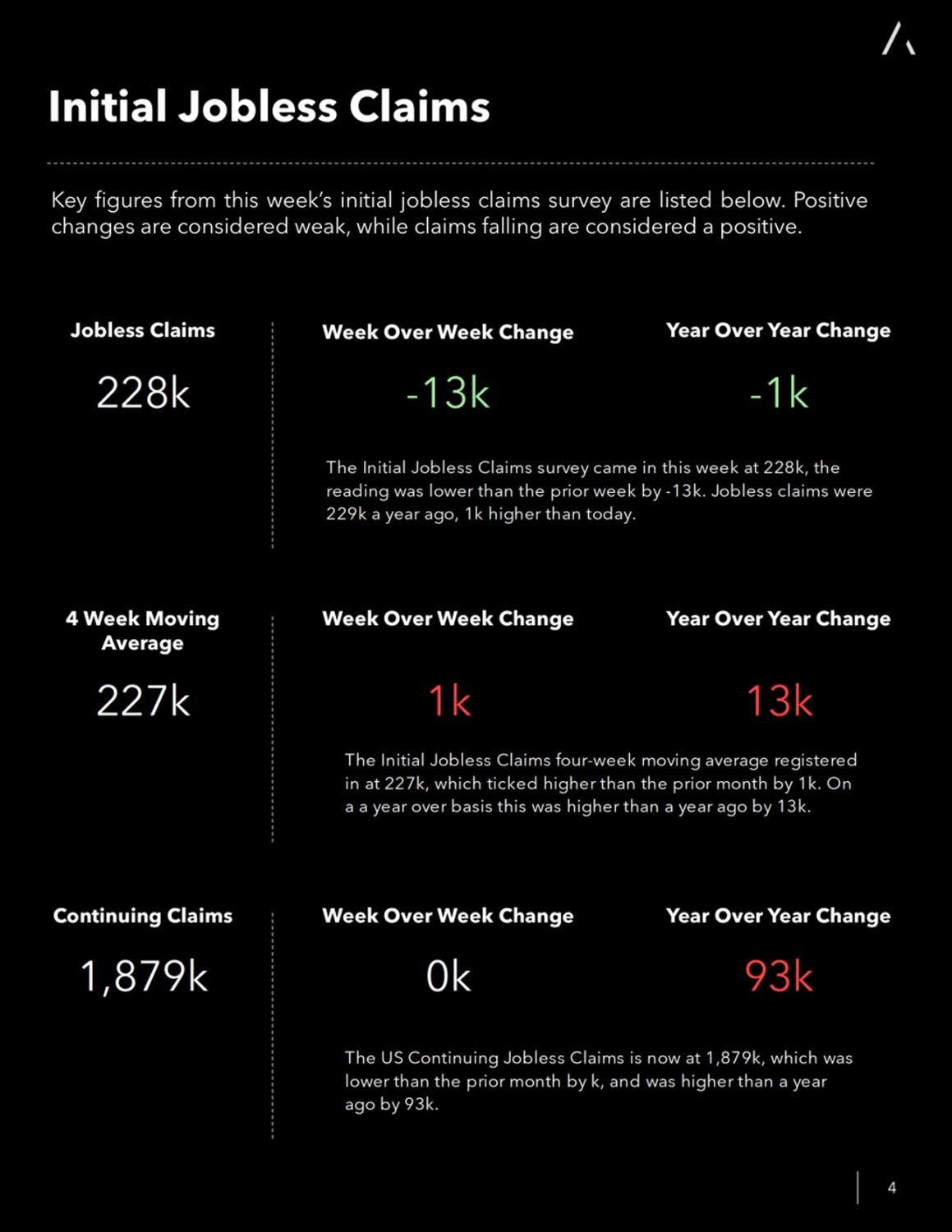
We are watching jobless claims closely. With DOGE, tariffs and general uncertainty, weekly jobless claims can provide early signal into corporate health. So far so good. Initial claims fell by 13K this week to 228K. More importantly, the 4-week average remains steady at 227K, showing limited upward drift.
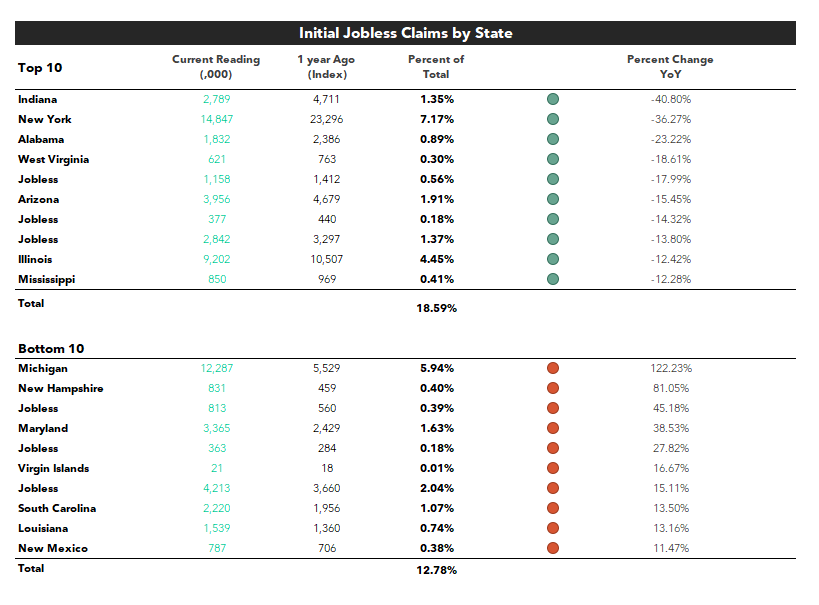
State-level data shows declines in New York, Indiana, and Alabama offsetting increases in Michigan and Maryland. Net net steady jobs market still.
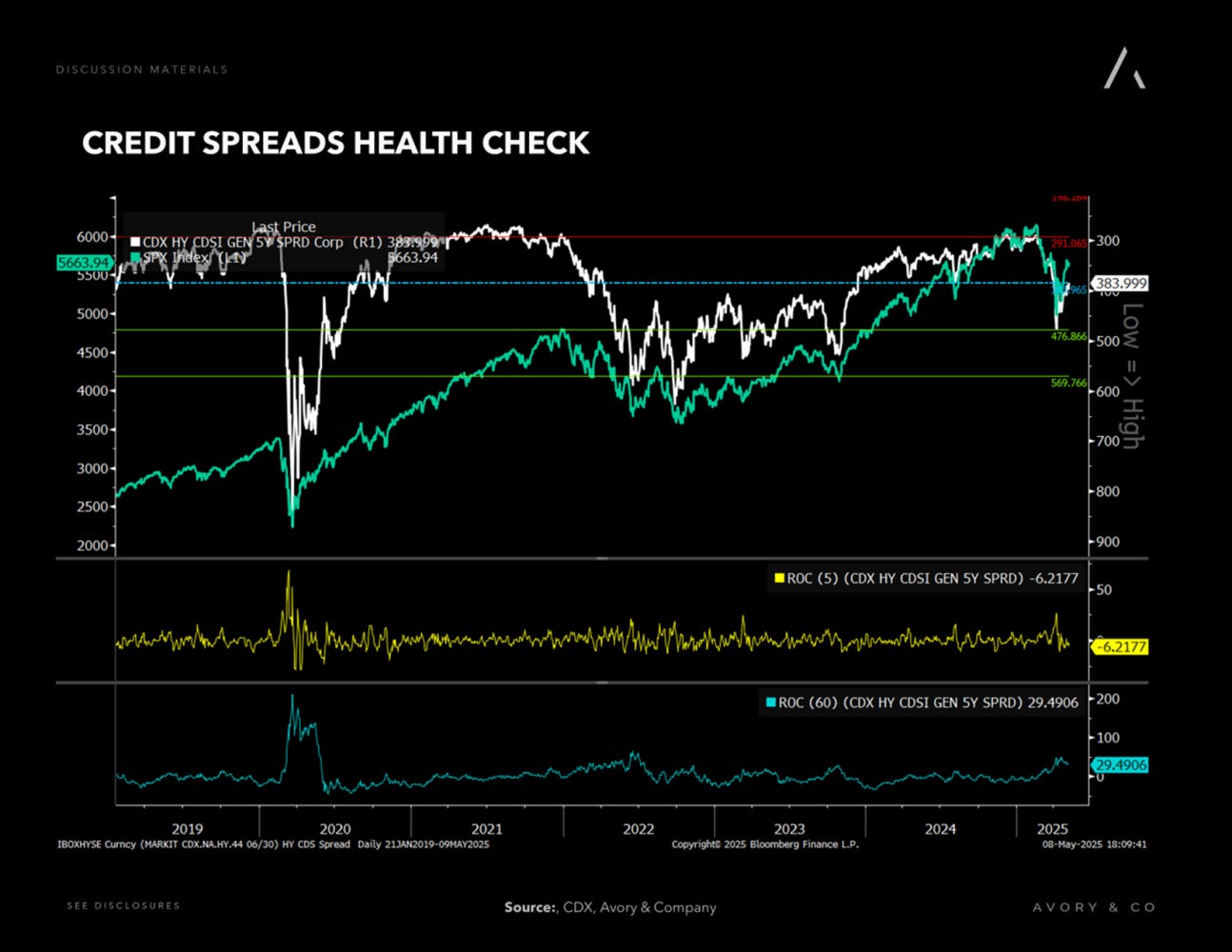
Now let’s turn to credit spreads.
They’re one of the cleanest ways to gauge how markets are pricing in bankruptcy risk—a useful proxy for real economic stress, not just sentiment-driven fear.
Despite the recent volatility, high-yield credit spreads (CDX HY 5Y) remain well-behaved. The current spread is around 384 bps, comfortably within its multi-year range and far from any panic signal.
Even more important: The longer-term trend in spread movement is improving, suggesting that credit conditions aren’t deteriorating.
This reinforces the view that while markets may still be jittery, the real economy still looks resilient under the surface.
The Fed is watching both sides of its mandate now. I joined Bloomberg TV this week to break it down.
My view was simple: Trump holds the cards on tariffs, and that makes him the key driver of Fed inflation expectations.
If he moves quickly and strikes deals, the Fed gains clarity—giving them room to ease without second-guessing inflation risk.
• But if this drags out, the Fed may be forced to wait for confirming data before cutting, even amid slowing growth.
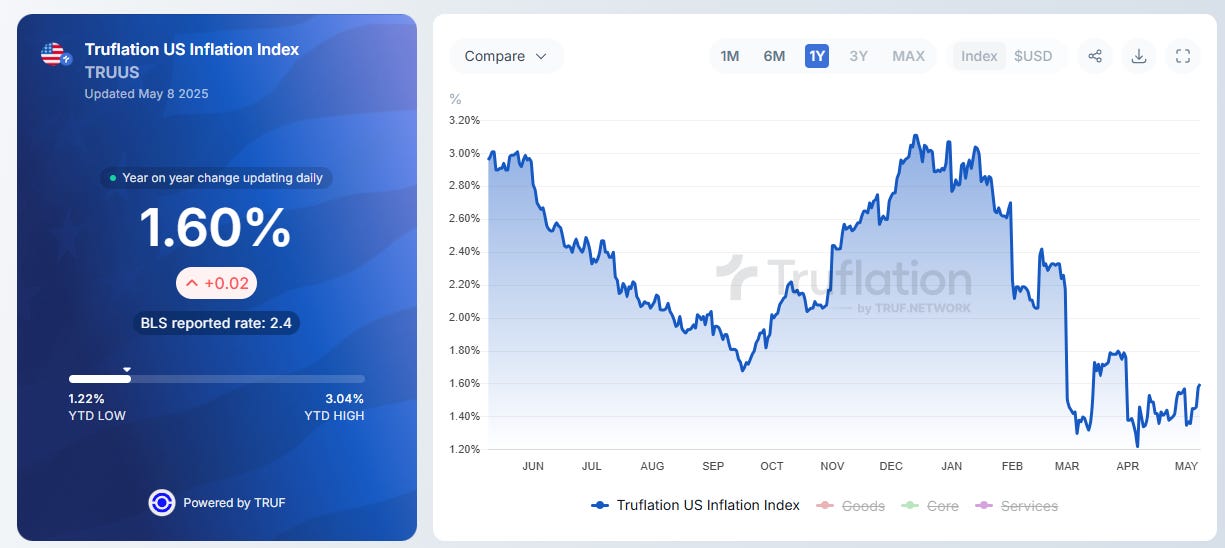
Right now, real-time inflation is tracking around 1.6%, so we remain comfortable with the inflation backdrop for now.
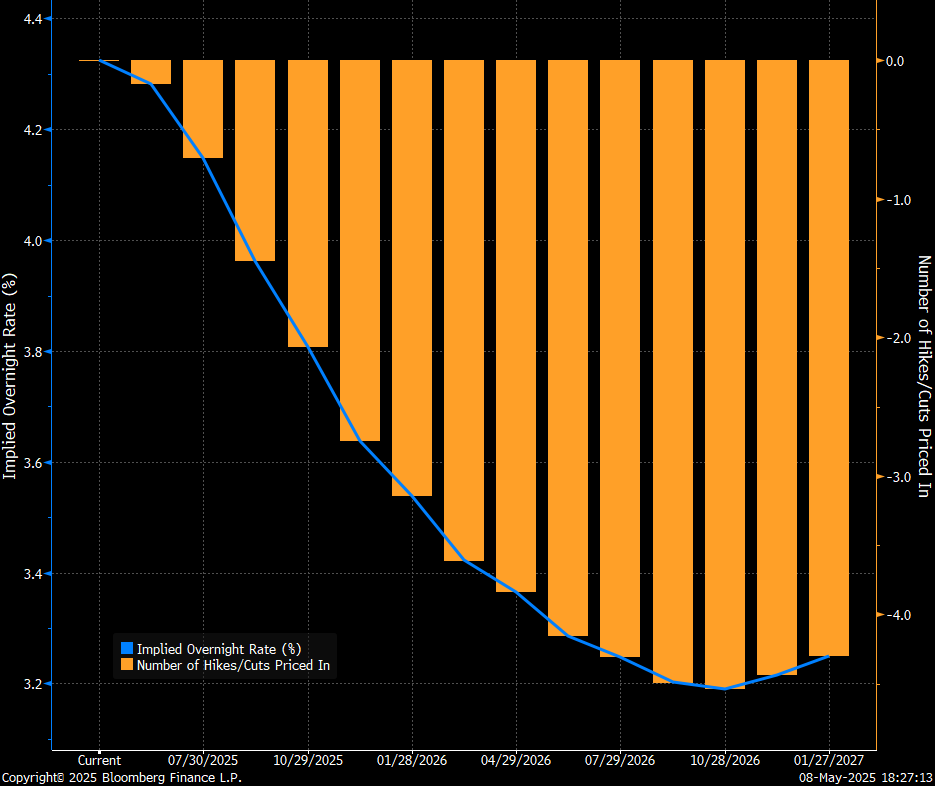
That brings us to rate cut expectations. The Fed held rates steady this week but acknowledged risks on both sides of its mandate—growth and inflation. Markets are still pricing in three cuts by December, and we think that’s reasonable regardless of how the tariff situation unfolds. The data supports easing, and unless inflation reaccelerates meaningfully, the path to cuts remains intact which is ultimately good for asset prices over the medium term.
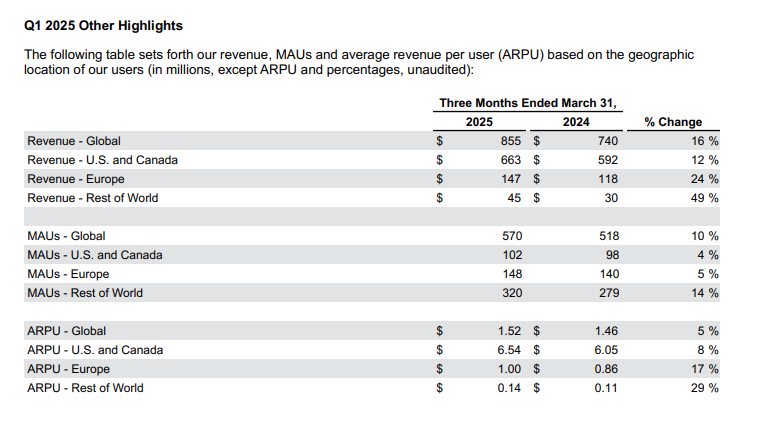
We got earnings this week once again. Some major names reported. One we were eager to watch was Pinterest. We think this is a key company to watch in the tariff conversation.
Why? It’s a Tier 2 ad platform, meaning it’s not as core to ad budgets as Meta or Google. That makes it more sensitive to budget cuts—and more reflective of macro conditions. It's also heavily skewed toward goods advertisers, not services, making it a potential early signal on tariff impacts.
If Pinterest is holding up, it tells us two things:
Long-tail ad budgets are still intact, suggesting a healthy macro backdrop.
Goods companies—the segment most exposed to tariffs—aren’t pulling back yet.
Bottom line: Pinterest is showing broad-based growth in both users and monetization. And so far, no real signs of macro stress in one of the more tariff-sensitive corners of advertising.
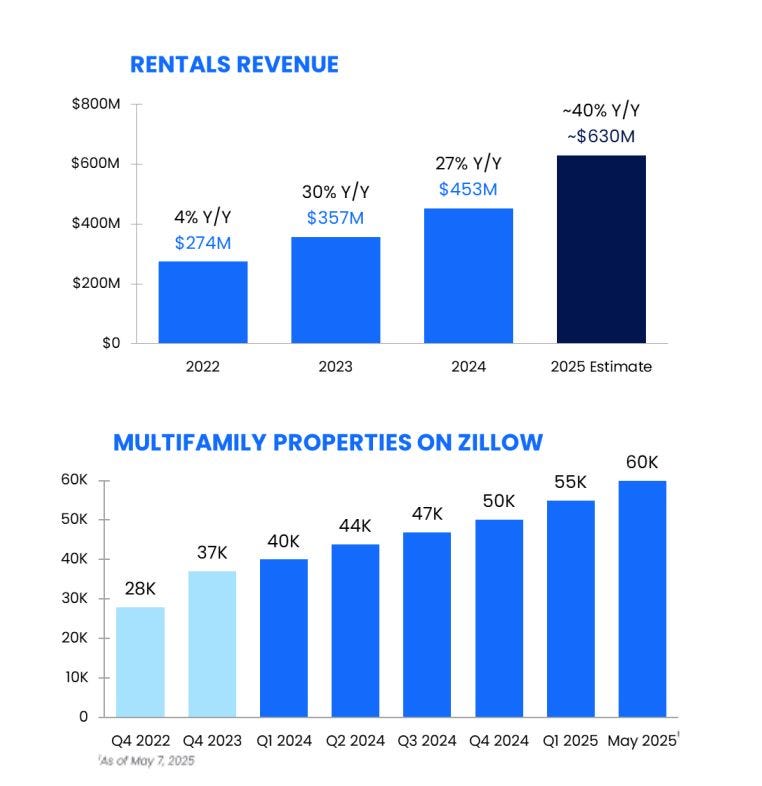
Zillow also reported this week and delivered a big beat on guidance—plus announced a $1B increase to their buyback. We’re investors here and remain confident in both the execution and long-term growth potential.
What stands out is how tied Zillow is to the largest part of the economy: housing. Despite a multi-year slowdown in housing demand, the housing market has remained stable at these levels. Zillow continues to shows its execution by growing.
Their rentals business is humming, and they now expect it to grow 40% this year. That’s an impressive number, especially given the broader macro environment.
It’s a strong reminder: great companies can still perform in depressed conditions.
And when rates eventually come down and housing activity picks up, we’re excited to see what Zillow can do with a tailwind behind it.
All in all, earnings season has been better than expected.
Companies are executing well, macro signals remain broadly healthy, and now the market waits for more clarity on trade deals to understand the path forward. We’ve been saying this for a while—the economic foundation is firm, and there’s very little in the hard data to justify an overly negative view.
That said, we always stay on our toes.
More next week.


About Avory & Co.
Investing where the world is headed.
Avory specializes in high-conviction equity strategies, emphasizing Secular Growth and Transformation Stories driven by exceptional teams. Data guides decisions. We cater to high net worth investors, family offices, and institutional investors. Note: This information doesn't constitute a recommendation to buy or sell any mentioned securities. Avory is based in Miami, Florida with clients all across the globe.
Speak to us: Schedule a Brief Zoom Meeting
Send us an email: Team@avoryco.com
Want to invest? We are on most platforms.
Want More
🎥 Avory YouTube Channel
🎙️ Avory Podcast
Disclaimer: Not a recommendation to purchase or sell any securities mentioned. This is for educational purposes only.