

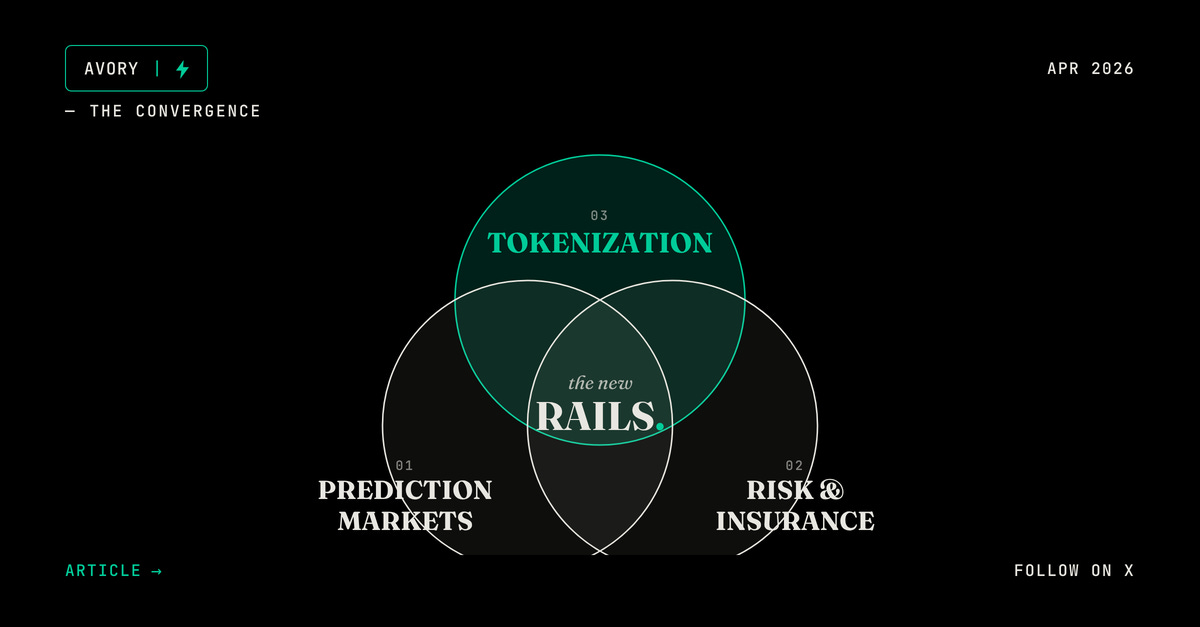
Regulation can change everything but sports betting apps, insurance companies, and traditional financial rails must pay attention now! Things are coming together…
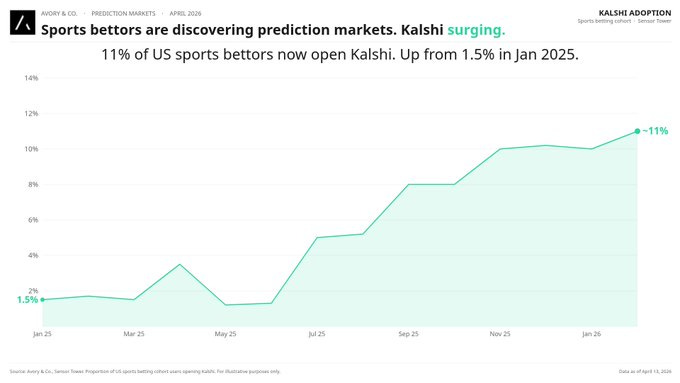
11% of US sports bettors now open Kalshi.
Why? Because this is already happening.
The easiest way to see it is not through theory. It is through behavior. We can speculate all we want, but the data is already moving: roughly 11% of U.S. sports betting users now also open Kalshi, up from roughly 1.5% to 2% in early 2025. That is a very large shift in a short period of time.
More importantly, prediction markets are no longer sitting outside the sports betting ecosystem. They are beginning to merge with it. What started as “betting” or “predicting” elections is evolving into something much broader and, over time, likely much more meaningful for society.
I think some people believed this could happen. But this may be the first real sign that the category boundary is starting to give way.
Kalshi is no longer niche.
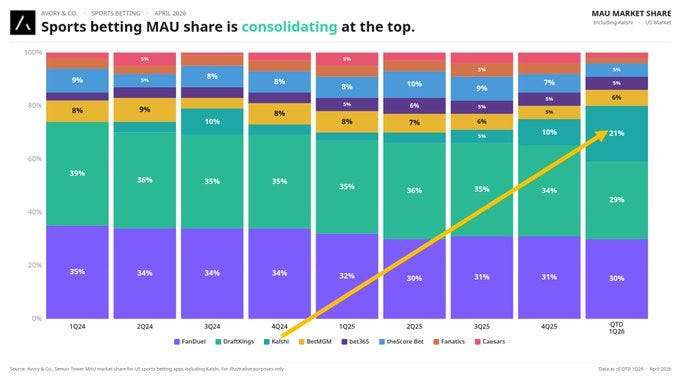
Kalshi reached 21% MAU share within the combined sports betting cohort in QTD 1Q26, up from just 3% in 1Q25.
That is not niche anymore. That is a real part of the market mix.
And it did not happen in a vacuum. FanDuel, DraftKings, BetMGM, Caesars, theScore Bet, and Fanatics all lost share over that same stretch. So this does not look like simple category expansion. It looks more like encroachment.
An Uber analogy is interesting here.
It is not a perfect comparison because that market led to direct category expansion, but I’d say that the lesson still matters. Legacy structures can remain important until a new model starts routing around them. Sportsbooks still operate inside a more constrained, state by state framework. Prediction markets may be building a parallel access layer that reaches users faster and more broadly.
That does not mean incumbents disappear. But it can absolutely change who captures growth at the margin.
And think back to Uber. It was criticized. Cities pushed back. Regulators tried to block it. But users loved the product, and that mattered. Over time, Uber did not just enter the market. It exposed how broken the legacy system was. The old structure had become more focused on protecting its position than building a better product for users.
Prediction markets feel similar, but potentially much bigger. And here’s why:
The distribution advantage
Part of this rise is structural, and part of it is being paid for.
Structurally, prediction market platforms have had more room to operate across geographies where traditional sports betting remains restricted. I think this matters because habit businesses are often won early. The first product a user installs, opens, and trusts during a live event has a real edge.
But Kalshi is not only benefiting from broader access. It is also spending aggressively. More than half of its downloads in QTD 1Q26 came from paid channels, well above the sports betting cohort average.
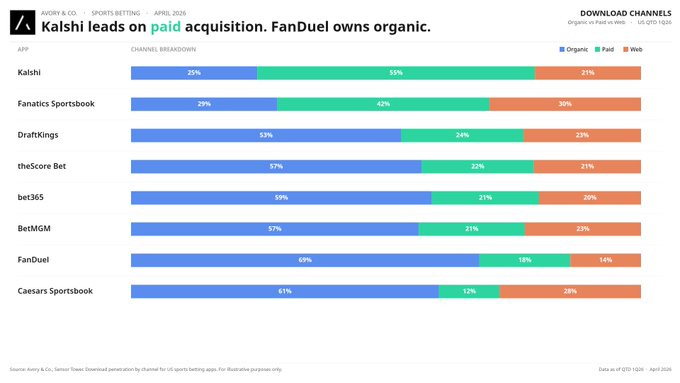
So yes, some of this adoption is being bought. But that does not make it less important. It may actually be the point here.
Prediction markets are no longer spreading only through niche internet communities. They are now being pushed into mainstream consumer awareness.
Sports are the wedge, not the endpoint.
This is where I think the story gets much bigger than Kalshi versus DraftKings.
Sports may just be the easiest wedge.
What prediction markets are really doing is turning outcomes into tradable exposure. At first that looks like betting. Over time it starts to look like something broader: speculation, yes, but also hedging, protection, and insurance.
That is the part I do not think people fully appreciate yet.
Because once people get comfortable using markets to express a view on a sports outcome, it is not a huge leap to imagine them doing the same thing around weather, inflation, travel disruption, political events, business conditions, crop yields, local economic shocks, or even highly personal risks. At that point prediction markets stop looking like a gambling adjacency and start looking more like a flexible risk transfer system.
That is a much bigger story.

From speculation to insurance
The most interesting version of this may not be betting at all.
It may be insurance. Not insurance in the traditional sense of heavy underwriting, deep intermediation, and slow moving claims processes. Insurance in the practical sense: protecting yourself against an event that would hurt you financially or personally.
That could be macro.
A company hedging a rate move.
A household hedging inflation.
A traveler hedging disruption.
Or it could get much more micro.
A hurricane.
A delayed wedding.
A heat wave.
A regional crop issue.
A missed local event.
If these markets become liquid enough, simple enough, and trusted enough, you can start to imagine a world where people do not just speculate on outcomes. They insure themselves against them.
That is where prediction markets start to become much more important than sports.
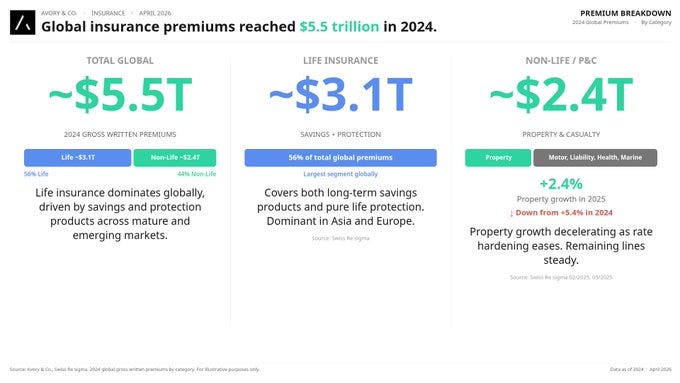
Just look at the size of the insurance market.
Why tokenization matters
If prediction markets become broader risk-transfer systems, then tokenization starts to matter a lot.
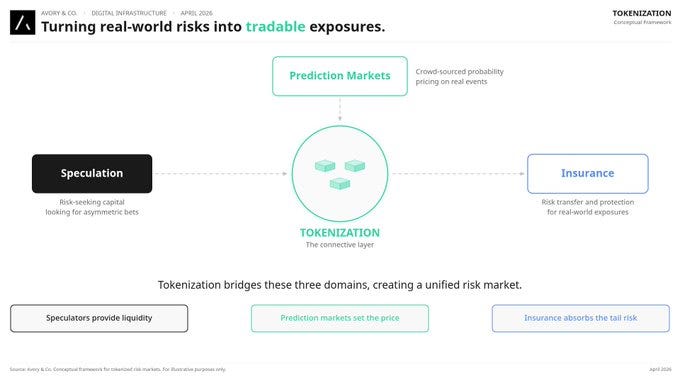
Because tokenization can turn fragmented exposures into programmable, tradable, and composable units. It’s going to happen. And that matters if the future of this category is not just “who wins the game?” but “how do I hedge a specific real world outcome that affects me?”
The more granular the exposure, the more important the infrastructure becomes.
You could argue tokenization provides that substrate. A way to represent risk, transfer it, settle it, and eventually bundle it across many forms of real world exposure. Decentralized, non decentralize, it doesn’t matter, that’s a side convo.
Truth is we are still early but logic and gravity are going this way. But that is part of why this category feels much bigger than most people think. Throw in AI agents also I can already see it.
but look sports may be where the consumer behavior shows up first.
But the longer term opportunity may be building the rails for a much broader market in OUTCOMES.
Conclusion
JUST TO PUT A BOW ON IT…
Prediction markets are already here, and they are moving faster than many expected. As I mentioned sports may be the first mainstream consumer entry point, but it is unlikely to be the endpoint.
If this model keeps gaining trust and liquidity, the category could expand far beyond gambling and into hedging, protection, and insurance like use cases.
And if that happens, tokenization becomes more than an adjacent theme. It becomes part of the infrastructure layer that helps the whole system work.
About Avory & Co.
Avory & Co. is an investment firm focused on investing forward.
or contact us at team@avoryco.com
To learn more, visit www.avory.xyz
To explore more of our research, analysis, and conversations:
Podcast: Around the Desk
Website: www.avory.xyz
Email: team@avoryco.com
LinkedIn: Avory & Co.
X / Twitter: @_seandavid
YouTube: @AvoryCo
Substack:

We publish ongoing research, market commentary, earnings analysis, and long-form discussions with founders and operators shaping the next decade.
Disclaimer
This article reflects the personal views of the author and is provided for informational and educational purposes only. It should not be construed as investment advice, a recommendation, or an offer to buy or sell any securities. The opinions expressed are subject to change without notice and are based on publicly available information believed to be reliable, though no representation is made as to its accuracy or completeness. Any forward-looking statements involve risks and uncertainties, and actual results may differ materially. Readers should conduct their own research and consult with a qualified financial advisor before making any investment decisions.